Before thumb-controlled drones and app-connected RC racers, there was a louder, shinier kingdom of speed ruled by vintage tin litho toys. These colorful mechanical racers rattled across living room floors with clockwork fury, metal wheels humming like miniature Indianapolis roadsters after too much root beer and optimism.
From the 1930s through the 1960s, companies such as Louis Marx & Co., Japanese makers like Aoshin and Linemar, and German firms including Bing and Lehmann turned stamped tinplate into tiny automotive theater. Many of the cars featured wind-up motors, friction drives, or primitive electric systems. Bodies were formed from lithographed steel sheets using colorful offset printing methods developed in the late 1800s. (Fab Tin Toys)
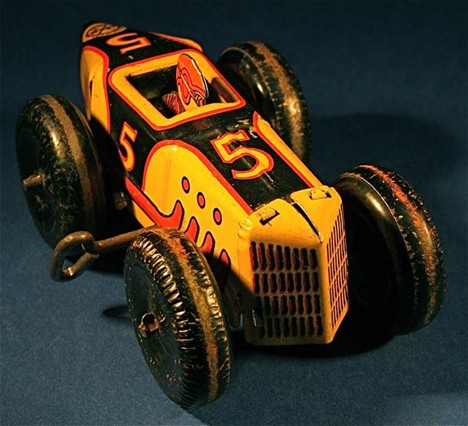
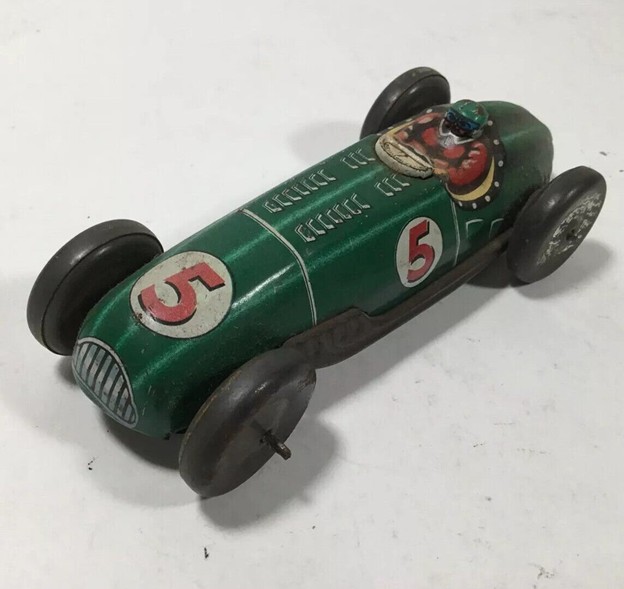
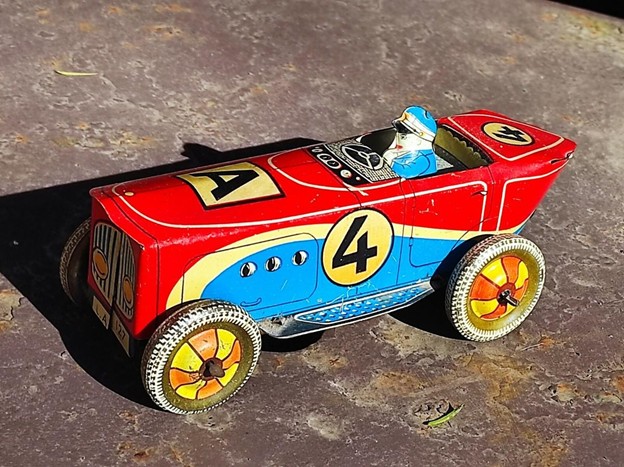
Popular racers included Marx “Boattail” speedsters, Japanese “Grand Prix” cars, Scalextric tinplate Maseratis, and streamlined Indy-style racers with oversized numbers and fearless painted drivers. Some models carried tiny bells, sparking wheels, or steering gimmicks. Others screamed around elaborate folded-metal tracks featuring bridges, tunnels, and scenic grandstands. The famed Technofix “Grand Prix” set looked less like a toy and more like a tiny Formula One circuit assembled by a cheerful appliance engineer. (Old Classic Car)
The engineering was surprisingly clever. Early clockwork models relied on coiled spring motors wound with removable keys. Friction-drive cars used rubberized flywheels that spun after being pushed along the floor. Electric slot racers later evolved into slotted-track systems, where metal pickups drew power from rails embedded into the track surface. Scalextric’s early systems began with electric tinplate cars before eventually switching to molded plastic bodies in the 1960s. (hornbyhobbies-us)
Back then, a small wind-up racer might cost 50 cents to $3 at department stores or five-and-dime shops. Deluxe racing sets could hit $15 or $20, especially imported Japanese versions with battery-powered features. Today, collectors routinely pay $150 to $800 for rare examples in working condition, with boxed sets reaching several thousand dollars at specialty auctions. Reddit collectors still trade stories about uncovering forgotten Marx racers in dusty basements like archeologists discovering chrome-plated treasure. (Reddit)
Children loved them because they felt mechanical and alive. These weren’t silent plastic shells. They clicked, sparked, rattled, and occasionally flew off tables at medically concerning speeds. Adults appreciated them too because many resembled actual Grand Prix machines from Brooklands, Monza, and Indianapolis. In a way, these toys brought European racing glamour into ordinary American homes long before cable television. One could argue they were the original fun place to hang out for aspiring gearheads too young for a driver’s license.
Collectors today often visit toy museums, antique expos, automotive swap meets, and vintage racing conventions to admire surviving examples. Specialty toy fairs in Pennsylvania, Ohio, and Germany still showcase elaborate lithographed race tracks with hand-painted scenery and polished tin surfaces bright enough to make an industrial polisher grin with pride.
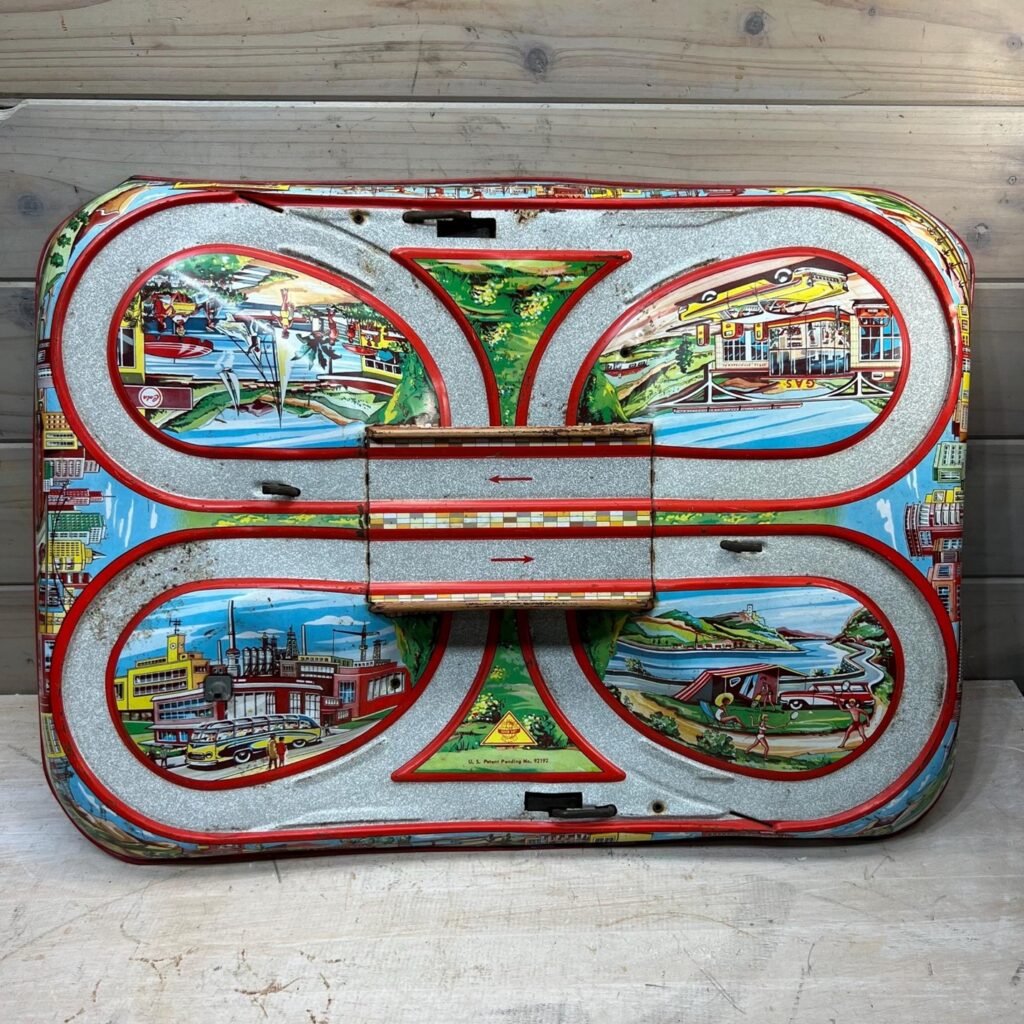
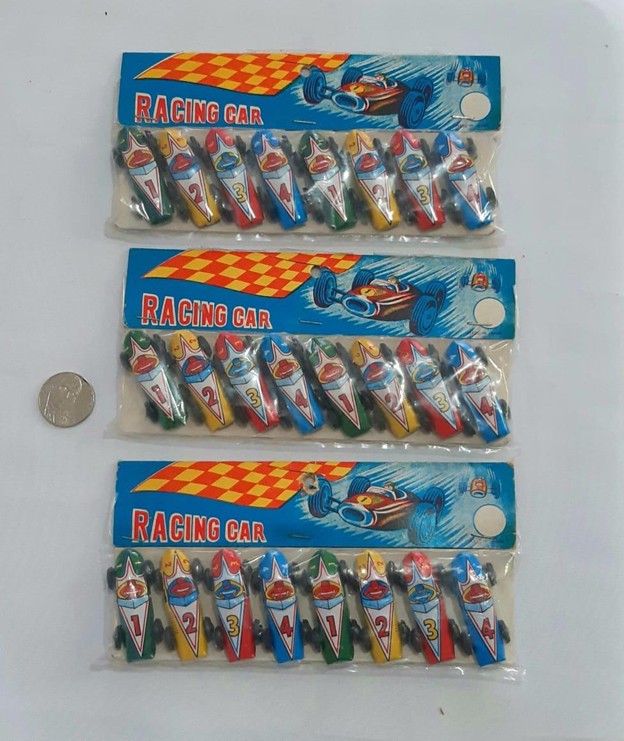
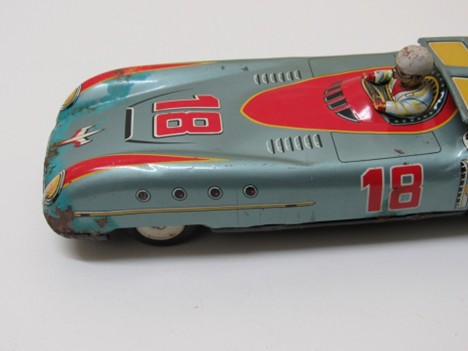
The differences between vintage and modern racing toys are dramatic. Older models used stamped metal bodies assembled with folded tabs and hand-fitted mechanisms. Modern products rely heavily on molded plastics, computer-designed chassis, neodymium magnets, and digital lane-switching electronics. Vintage racers possessed charm and unpredictability; modern racers deliver precision and speed. One was crafted by a good manual machinist with oily fingertips and a keen eye on the press stamp. The other arrives assembled by robotics and shipped in foam packaging.
Ironically, many collectors now spend more traveling to toy conventions than families originally spent buying the toys themselves. Yet enthusiasts happily chase swap meets and auctions with the same determination others pursue cheap travel deals. Nostalgia, after all, has its own fuel mixture.