By Gracus Bloom, City-Paper.com
Long before electric motors, diesel engines, and industrial machinery transformed America, water wheels provided the horsepower that powered colonial communities. These ingenious machines converted the energy of flowing rivers into useful mechanical work, helping settlers grind grain, saw lumber, forge iron, and manufacture goods essential to daily life.
While many colonial water wheels have disappeared, their legacy helped lay the foundation for America’s Industrial Revolution.
The Grist Mills of Pennsylvania
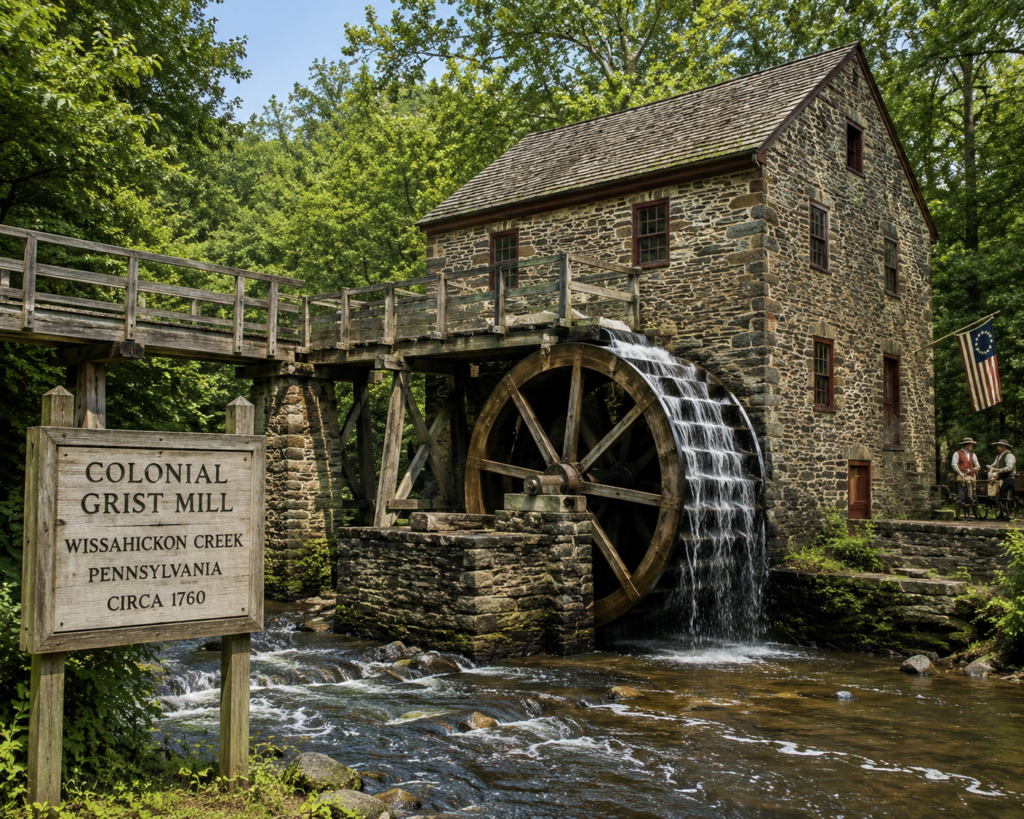
One of the most famous colonial water-powered operations was located along Wissahickon Creek near Philadelphia, Pennsylvania. Throughout the 1700s, dozens of mills operated along the creek, taking advantage of steady water flow descending toward the Delaware River.
Most wheels were constructed from heavy oak timbers by local craftsmen rather than large manufacturing companies. A typical overshot wheel measured between 12 and 20 feet in diameter and could generate roughly 5 to 15 horsepower.
In Saugus, Massachusetts, the famous Saugus Iron Works relied heavily on water power during the 1600s and early 1700s. Located along the Saugus River, the operation used water wheels to power bellows, trip hammers, and rolling machinery.
The ironworks represented one of North America’s earliest integrated manufacturing facilities. Several water wheels worked together to produce iron products needed throughout the colonies.
Depending on river conditions, some wheels generated enough power to operate equipment that would have otherwise required dozens of laborers. Historians estimate that individual wheels produced between 10 and 20 horsepower.
Today, visitors can tour reconstructed portions of the site and witness demonstrations of colonial manufacturing techniques. It’s a fascinating destination for anyone seeking a cheap travel deal to a unique historical attraction.
Virginia’s Tobacco Economy
Virginia’s rivers powered countless mills throughout the colonial period. Along the James River and its tributaries, water wheels processed grain and supported industries connected to tobacco farming.
By the late 1700s, many mills featured improved wheel designs influenced by European engineering. These larger installations often employed skilled craftsmen capable of maintaining complex mechanical systems.
In many ways, their responsibilities resembled those of a modern skilled millwright, ensuring gears, shafts, bearings, and wheel assemblies remained in working condition.
New York’s Hudson River Mills
Settlers along the Hudson River quickly recognized the value of water power. By the mid-1700s, numerous mills operated throughout New York’s river valleys.
Many were built by local entrepreneurs who contracted carpenters and blacksmiths to fabricate components. Wooden gears transferred energy from the wheel to milling stones, saw blades, and manufacturing equipment.
The largest installations could process several tons of grain daily, making them critical pieces of regional infrastructure. Some communities literally grew around successful mills, creating commercial centers that would later become towns and cities.
Rhode Island and Early Manufacturing
Rhode Island’s rivers helped pioneer America’s transition from agricultural production to manufacturing. Water-powered textile operations began appearing in the late colonial era and expanded rapidly after independence.
The Blackstone River became particularly important because of its reliable flow and proximity to growing population centers. Water wheels here eventually evolved into more sophisticated turbine systems during the nineteenth century.
The precision required to fabricate gears and shafts for these mills would later inspire the machining trades. Historians often note that the craftsmanship found in colonial mills helped establish the foundation for today’s industrial workforce, including professionals’ careers like broacher, equipment mechanics and manual machinist jobs.
Maryland’s Water-Powered Communities
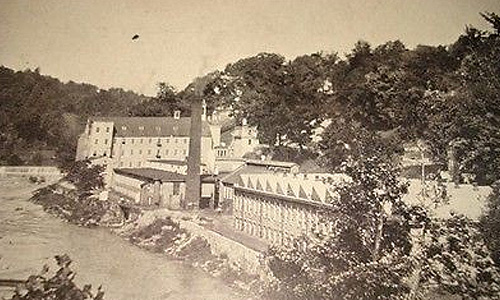
Maryland’s Patapsco River supported numerous flour mills during the colonial period. Baltimore’s growth as a commercial center depended heavily on water-powered industry.
Some larger mills utilized multiple wheels operating simultaneously. These systems increased capacity and improved reliability when river conditions fluctuated.
A well-designed flour mill could process hundreds of bushels daily, supporting both local markets and export trade with Europe and the Caribbean.
More Than Just Milling
Water wheels performed many tasks beyond grinding grain. Colonial industries used them to power sawmills, paper mills, ironworks, textile machinery, and pumping systems.
In mining operations, primitive water-powered pumps helped remove unwanted water from shafts. The workers who maintained these systems possessed mechanical knowledge that would be familiar to an experienced pump mechanic today.
Though simple by modern standards, these machines represented remarkable engineering achievements. Built from wood, iron, leather, and determination, colonial water wheels transformed rivers into reliable sources of industrial power.
The Legacy Lives On
By the mid-1800s, steam engines began replacing many water wheels. Yet for more than two centuries, America’s rivers served as the nation’s first power grid.
The mills and workshops powered by water wheels fed communities, built economies, and launched industries that shaped the future of the United States. While most of the original structures have vanished, their influence can still be seen in historic mill towns scattered across the country.
The next time you visit a quiet creek or river, imagine the steady creak of wooden gears and the splash of a turning wheel. Chances are that stream once helped power the dreams of colonial America.