By Gracus Bloom | City-Paper.com
For decades, warp drive technology has belonged almost exclusively to science fiction. From the engines of the USS Enterprise to futuristic depictions of faster-than-light travel, the concept has inspired engineers and physicists alike. Surprisingly, warp-drive research is no longer confined to television or novels. Government-funded researchers, universities, and private research institutes have published peer-reviewed studies examining whether spacetime itself could someday become a form of propulsion. Yet despite exciting mathematical breakthroughs, the scientific consensus remains clear: a practical warp engine by 2030 is extraordinarily unlikely. What may emerge instead are laboratory experiments that test tiny aspects of warp-field physics rather than a functioning spacecraft. (NASA Technical Reports Server)
The Foundation: Einstein Before Star Trek
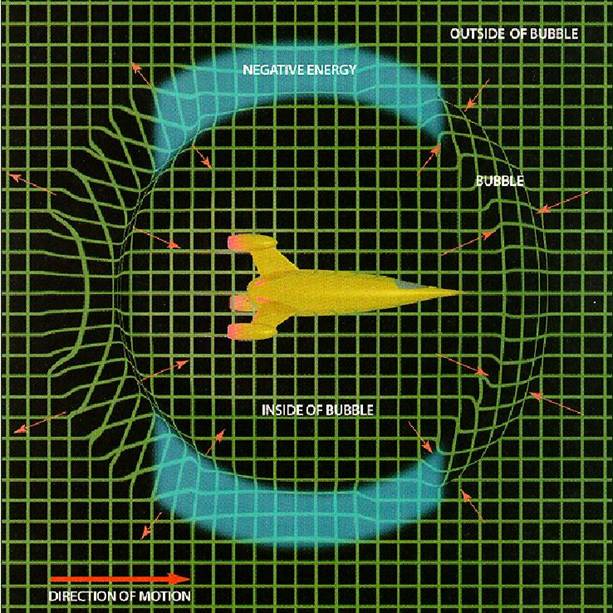
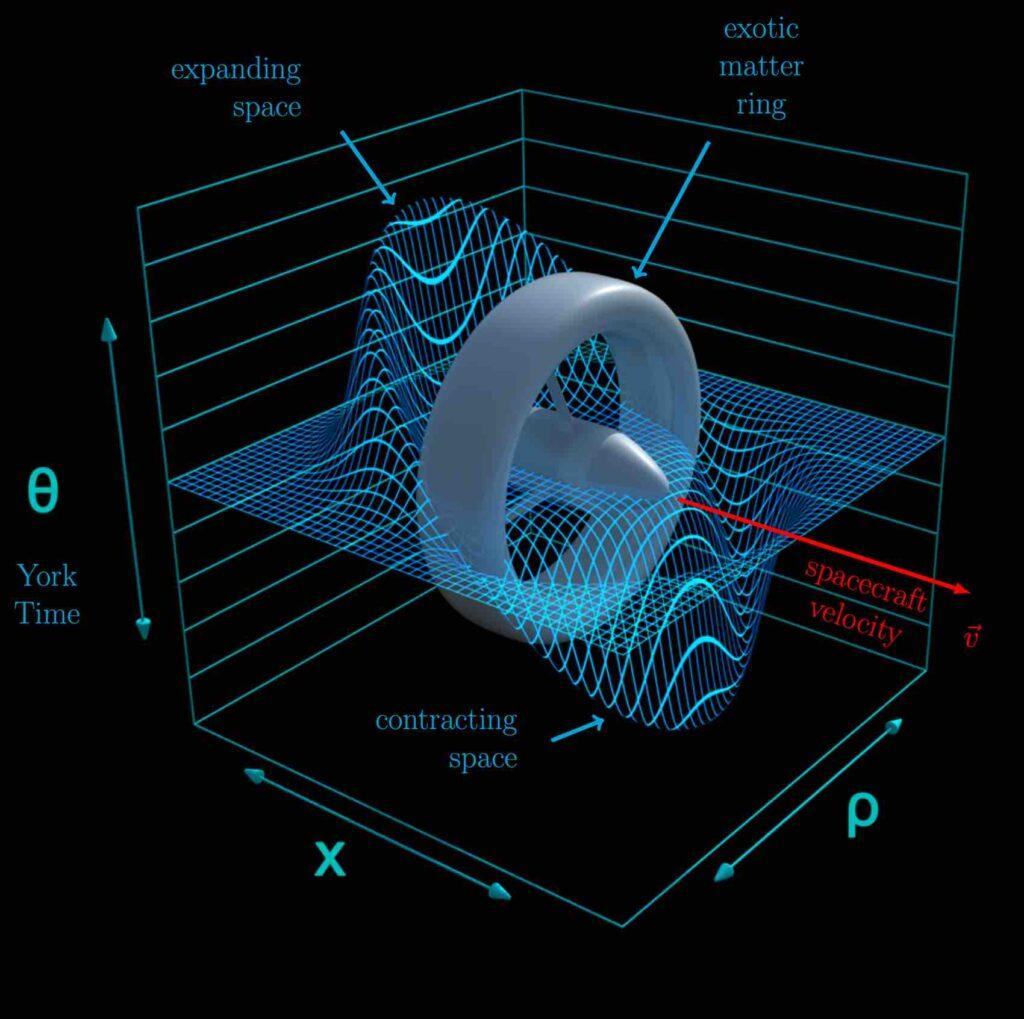
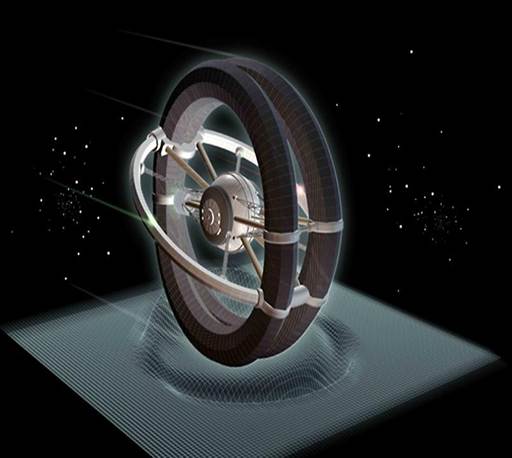
Every modern warp-drive concept begins with Albert Einstein’s General Theory of Relativity. Rather than moving a spacecraft faster than light through space, theoretical warp drives attempt something entirely different: moving space itself.
In 1994, Mexican physicist Miguel Alcubierre proposed a mathematical solution to Einstein’s field equations in which space contracts ahead of a spacecraft while expanding behind it. Inside the “warp bubble,” the spacecraft itself never locally exceeds the speed of light, avoiding one of physics’ most famous limits. (arXiv)
The central mathematical framework remains Einstein’s field equation:
This equation relates spacetime curvature to mass and energy. Every warp-drive proposal begins here.
NASA and Government Research
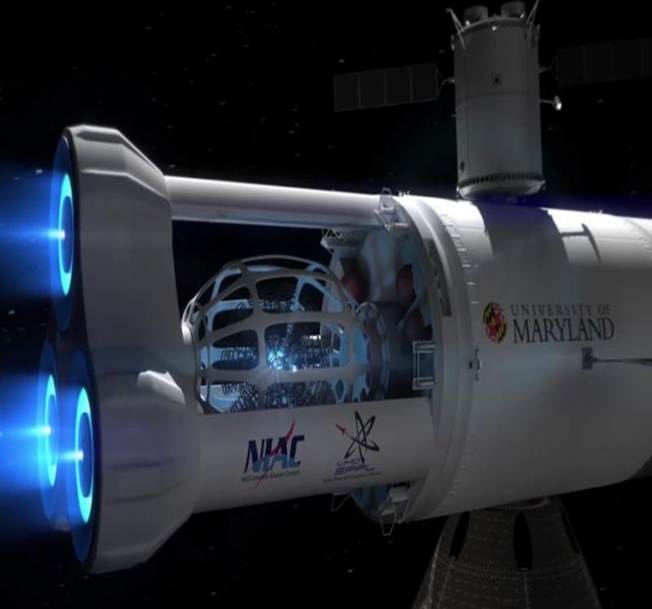
Although NASA is not building a warp engine, the agency has supported theoretical investigations into advanced propulsion through the NASA Innovative Advanced Concepts (NIAC) program and has archived studies examining warp metrics and field mechanics. Harold “Sonny” White’s work helped explore modifications to Alcubierre’s original concept that might dramatically reduce theoretical energy requirements. (NASA Technical Reports Server)
Government laboratories are also investing in technologies that indirectly support future advanced propulsion research:
- High-temperature superconductors
- Quantum sensors
- Precision laser manufacturing
- Gravitational-wave detection
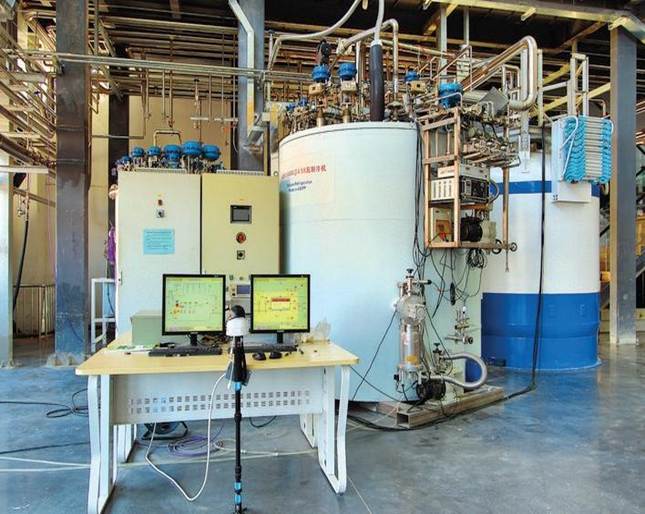
- Cryogenic engineering
- Ultra-high vacuum systems
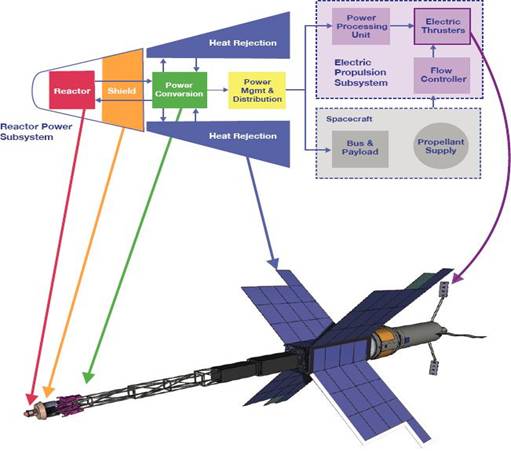
DARPA continues funding advanced manufacturing and space technologies that could someday benefit exotic propulsion research, even though none are warp-drive programs themselves. (NASA Technical Reports Server)
What Would Engineers Actually Need?
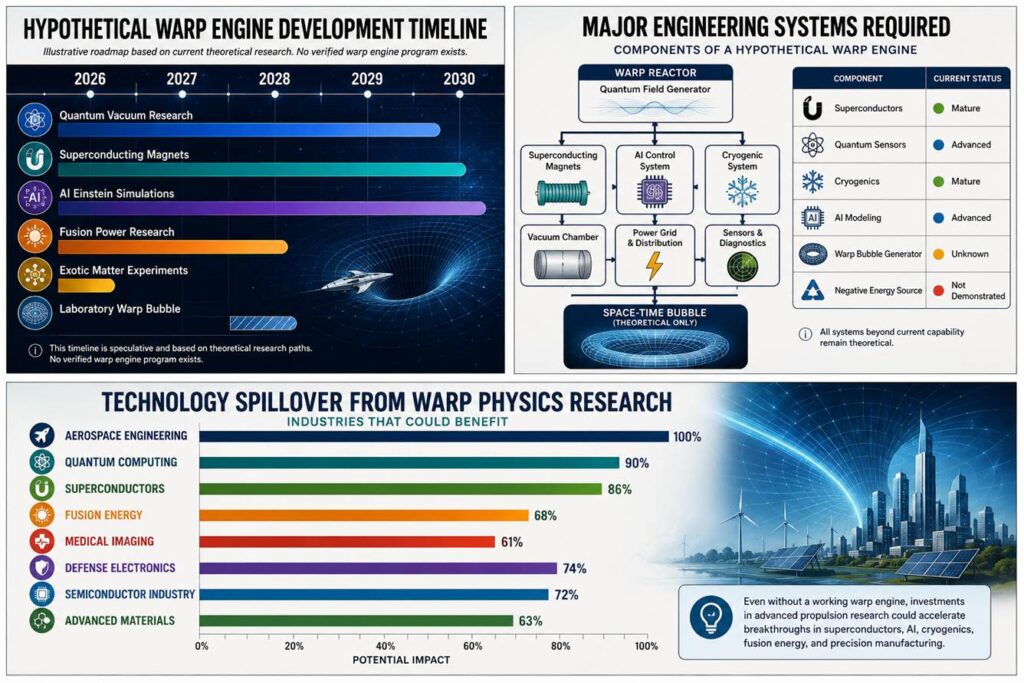
If scientists attempted to build even a laboratory-scale warp experiment by 2030, the engineering requirements would be staggering.
Hypothetical Warp Engine Components
| Component | Purpose |
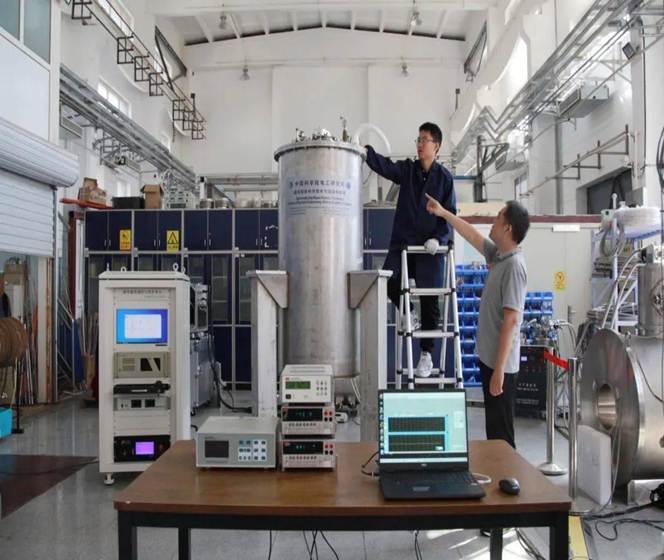
| Superconducting magnet arrays | Generate enormous magnetic fields |
| Ultra-high vacuum chamber | Isolate quantum experiments |
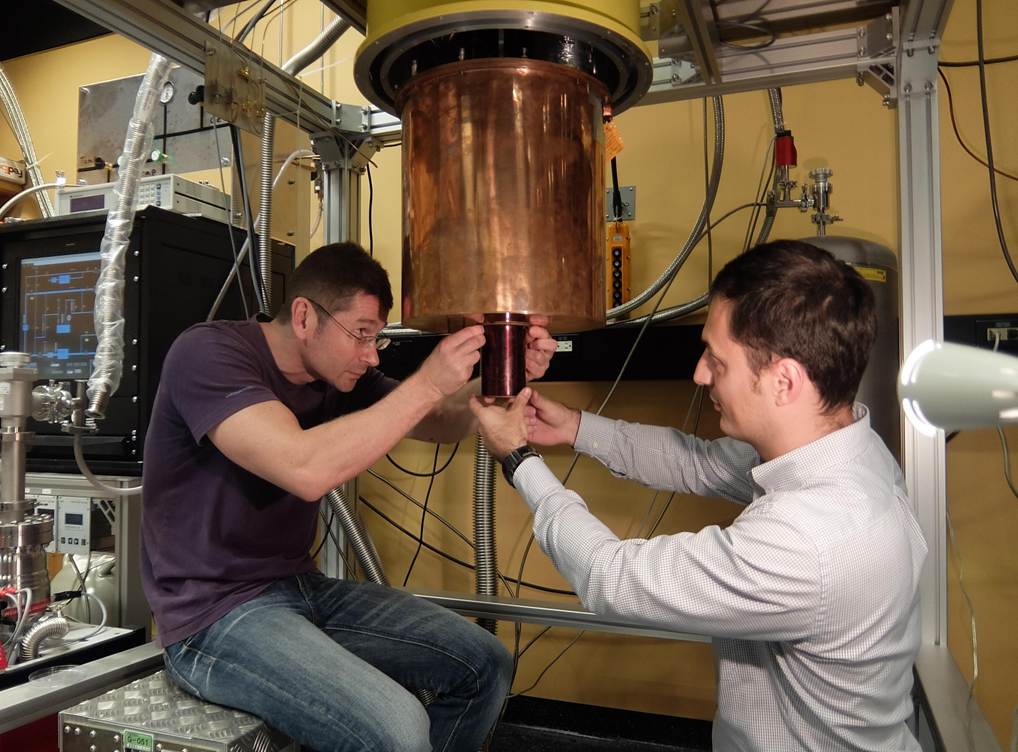
| Cryogenic cooling systems | Maintain superconductivity |
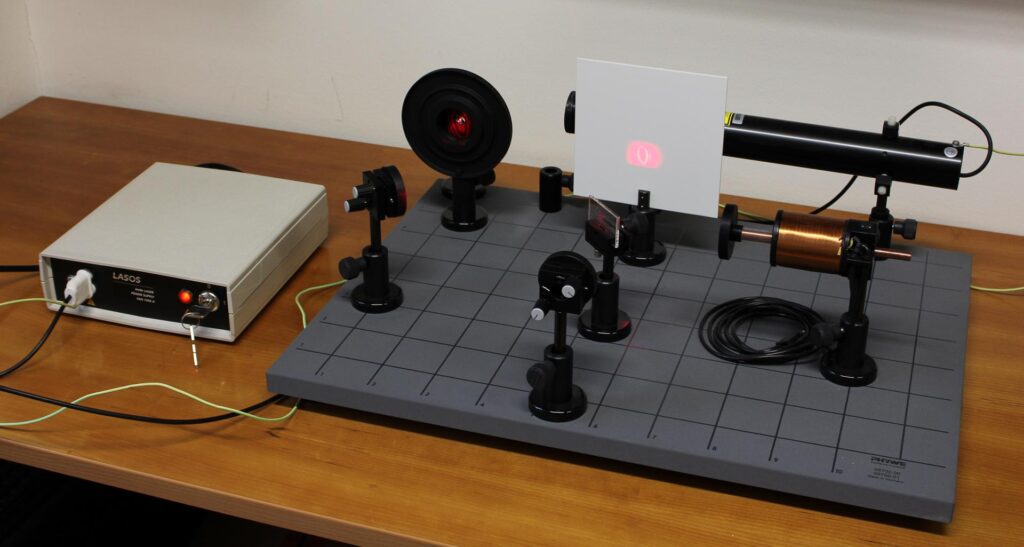
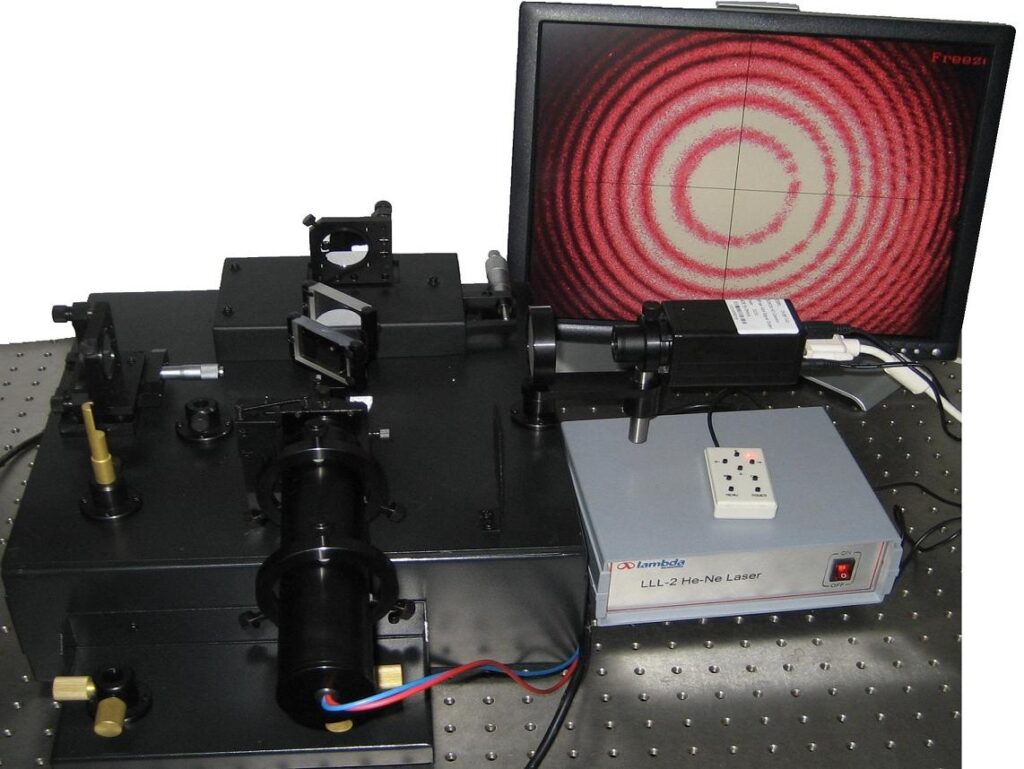
| Precision laser interferometers | Detect minute spacetime distortions |
| Quantum field generators | Explore vacuum-energy effects |
| High-performance supercomputers | Solve Einstein field equations numerically |
Many of these technologies already exist individually—but no one knows how to combine them into a functioning warp generator.
Materials Scientists Would Need
Warp-drive research pushes material science into unexplored territory.
Potential materials include:
- Niobium-titanium superconductors
- High-temperature ceramic superconductors
- Graphene composites
- Carbon nanotubes
- Ultra-pure copper busbars
- Radiation-resistant ceramics
- Exotic metamaterials
These materials are already being investigated for quantum computing, fusion reactors, and advanced aerospace systems.
Industries manufacturing superconducting magnets, cryogenic equipment, and precision electronics would likely benefit long before a true warp engine ever exists.
Experiments Happening Today
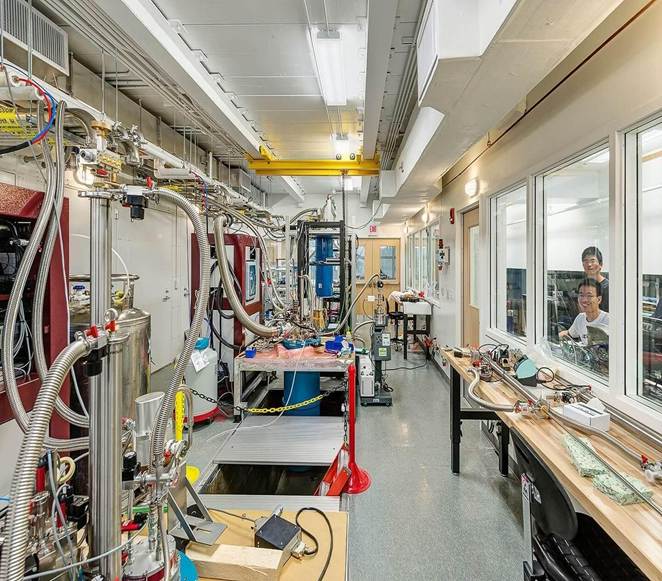
Researchers are exploring small pieces of warp physics rather than complete engines.
Current investigations include:
- Casimir-effect vacuum-energy experiments
- Quantum vacuum fluctuations
- Gravitational-wave astronomy
- Precision interferometry
- Numerical relativity simulations
- High-energy plasma confinement
None of these experiments generate warp bubbles. Instead, they attempt to understand whether spacetime can be manipulated under laboratory conditions. (arXiv)
Technical Readiness
The chart illustrates today’s imbalance: supporting technologies are advancing rapidly, while the essential ingredients for a practical warp bubble remain entirely speculative.
Mathematics Beyond Einstein
Warp-drive theory requires much more than classical mechanics.
Researchers routinely employ:
- Tensor calculus
- Differential geometry
- General relativity
- Quantum field theory
- Numerical relativity
- Partial differential equations
- Computational fluid dynamics
- High-performance numerical simulation
Powerful supercomputers may spend days solving equations representing only milliseconds of theoretical warp-bubble evolution.

Industries That Could Benefit
Even if no warp engine appears by 2030, research could accelerate innovation in several industries:
- Aerospace manufacturing
- Quantum computing
- Cryogenic engineering
- Superconducting cable production
- Fusion-energy research
- High-performance computing
- Precision optics
- Advanced semiconductor manufacturing
Demand for highly skilled technicians would also increase. Manufacturers of superconducting systems and laboratory equipment may find themselves hiring experienced electrical assemblers capable of building precision scientific hardware.
Likewise, industrial polishers are essential in producing mirror-finish vacuum chambers and optical components where microscopic surface defects can compromise sensitive experiments.
The specialized alloys used in cryogenic laboratories sometimes rival expensive jewelry in purity, machining precision, and finishing requirements.
Could It Happen by 2030?
The answer from today’s physics community is almost certainly no.
Recent theoretical work has reduced some of the enormous energy requirements originally associated with Alcubierre’s proposal, and alternative positive-energy or subluminal warp models have generated renewed scientific interest. Even so, major challenges remain, including energy generation, stability of a warp bubble, controllability, and the absence of any demonstrated method for producing the required spacetime geometry. (Popular Mechanics)
The most realistic expectation by 2030 is not a starship crossing the galaxy but rather incremental progress: improved mathematical models, more precise laboratory experiments, better quantum sensors, and deeper understanding of gravity itself.
For enthusiasts attending aerospace conferences or physics exhibitions, cheap travel deals to major science museums and space expos may be the closest anyone gets to warp travel this decade. Yet history shows that today’s impossible ideas sometimes become tomorrow’s engineering disciplines, making warp-drive research one of the most fascinating frontiers in modern theoretical physics.
Estimated readiness of warp-related technologies
Illustrative technology maturity, not a prediction.
| technology | readiness |
| General relativity models | 9 |
| Superconducting magnets | 9 |
| Quantum sensing | 8 |
| Vacuum experiments | 8 |
| Negative energy control | 1 |
| Stable warp bubble | 0 |