Science & History Report | City-Paper
Long before automated circuit-board machines, robotic assembly cells and computer-controlled production lines, electrical assembly was a hands-on craft performed at wooden benches with hand tools, soldering irons, wire cutters, screwdrivers, drills and a great deal of patience.
The modern electrical assembler can trace the roots of the trade to the explosive growth of the telegraph, electric lighting, electric motors and power generation during the second half of the 19th century. What began as small workshops making individual instruments eventually developed into enormous factories capable of producing thousands of standardized electrical components.
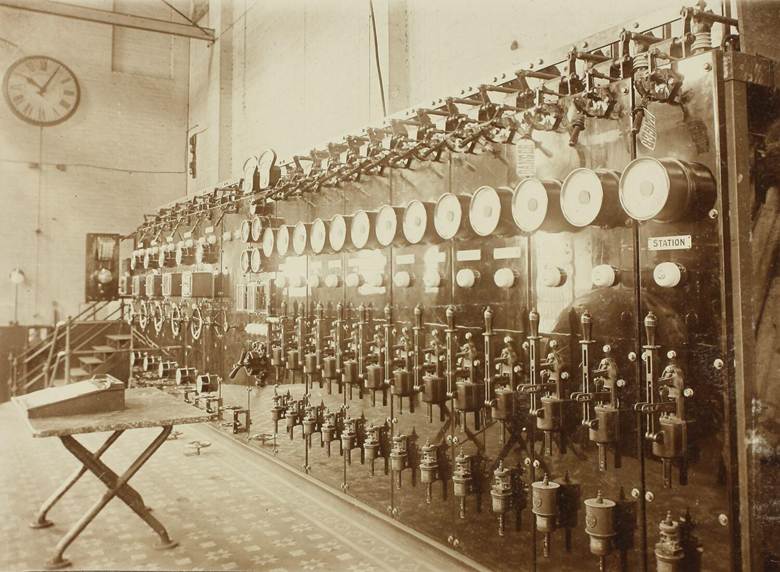
The story is important because electrical assembly became one of the bridges between invention and mass production. Inventors could design a generator, telephone, motor or lamp, but somebody had to turn those designs into repeatable products.
That somebody was often the assembler.
The Origins: Telegraphy Created the First Big Market
Electrical assembly did not suddenly appear with the light bulb. Its roots go back to the telegraph industry.
During the middle of the 19th century, telegraph systems created an enormous demand for practical electrical equipment. Telegraph operators needed instruments, batteries, switches, wire, connectors, relays, sounders and other components that could survive daily use.
The rapid expansion of telegraphy also created a new class of specialized manufacturers. Historical records compiled by the Telegraph and Telephone Age identified dozens of early American manufacturers and individuals involved in producing telegraph apparatus. One surviving photograph from the 1860s, for example, shows the Caton Telegraph Instrument Manufactory in Ottawa, Illinois. (Telegraph History)
The importance of the telegraph was more than communications. It established a manufacturing model:
Design → fabricate parts → assemble → test → ship → install → maintain.
That basic sequence remains recognizable in electrical manufacturing today.
Thomas Edison came through this world himself. The National Park Service notes that Edison worked as a telegrapher before becoming an inventor and established a small laboratory and manufacturing facility in Newark in 1871. He subsequently moved his operations to Menlo Park in 1876. (National Park Service)
What Early Electrical Assemblers Actually Made
The products were surprisingly diverse.
Early electrical manufacturing included:
- Telegraph instruments
- Switches and electrical contacts
- Relays
- Batteries
- Electric lamps
- Dynamos and generators
- Motors
- Switchboards
- Transformers
- Control equipment
- Telephone equipment
- Measuring instruments
- Wiring harnesses
- Electrical panels
- Railway electrical equipment
- Lighting systems
Many products were assembled almost entirely by hand.
A worker might receive a machined metal bracket, wooden mounting board, copper wire, screws, contacts and insulation. The job was to assemble the pieces according to a drawing or work instruction, make electrical connections, mechanically secure the components and test the finished unit.
There was no computerized work instruction on a screen.
The assembler relied on drawings, gauges, templates, samples and experience.
The Tools of the Trade
The early electrical shop looked more like a combination machine shop, laboratory and craftsman’s workshop than today’s automated factory.
Common tools included hand drills, files, pliers, screwdrivers, knives, punches, hammers, wire cutters, crimping tools, clamps and small bench vises.
Soldering was particularly important.
Electrical connections could be mechanically secured and then soldered to provide a reliable conductive joint. Workers also had to strip insulation without damaging copper conductors, form wires into precise shapes and route wiring so that it would not interfere with moving parts.
Coils presented another challenge.
Motors, generators, transformers and relays depended upon carefully wound wire. Workers had to control wire tension, spacing and insulation. Specialized winding machines eventually increased productivity, but early winding work could involve substantial manual labor.
Testing was equally important.
An assembly might be checked for continuity, resistance, insulation integrity, mechanical movement and proper electrical operation. A mistake could cause a short circuit, poor contact or complete failure.
The fundamental philosophy remains familiar to modern electrical assemblers: build it correctly, inspect it and test it before it leaves the factory.
Edison and the Rise of Electrical Manufacturing
Thomas Edison is often remembered primarily as an inventor, but his importance to electrical assembly was also industrial.
At Menlo Park, Edison created something unusual for the period: a research-and-development operation designed to systematically turn ideas into commercial products. The National Park Service describes the Menlo Park laboratory as the first facility of its kind and an important model for later industrial research laboratories. (National Park Service)
Edison’s practical incandescent lighting program required far more than developing a filament.
A commercially useful lighting system required lamps, sockets, conductors, switches, generators, meters, distribution equipment and power stations.
In September 1882, Edison’s Pearl Street Station in Manhattan began commercial operation, supplying customers in a roughly one-square-mile area. The electrical industry was moving from laboratory experimentation toward infrastructure. (National Park Service)
That transformation created a massive manufacturing opportunity.
Suddenly, electrical equipment had to be produced repeatedly and consistently.
The Factory Changes Everything
One of the best examples of the transformation is the Westinghouse organization in Pennsylvania.
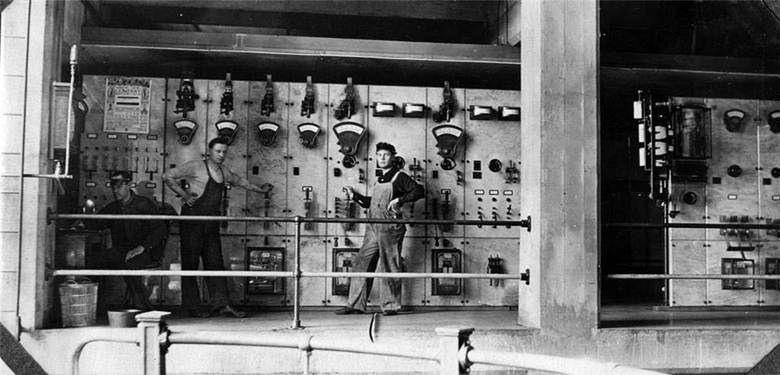
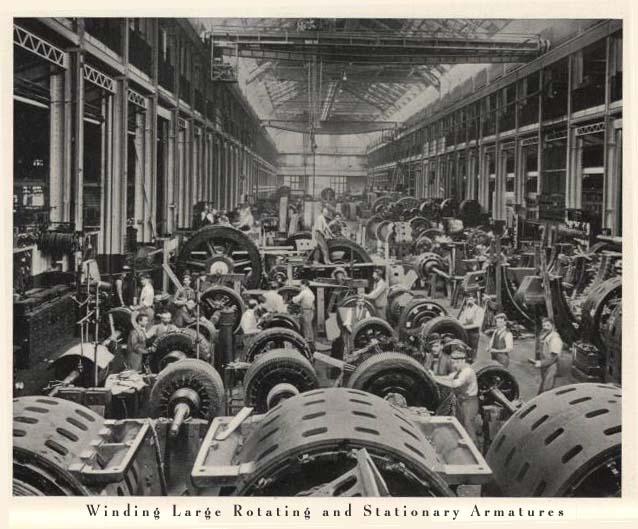
The Library of Congress documents how the Westinghouse Electric and Manufacturing Company grew from approximately 200 employees when organized in 1886 to about 9,000 workers at its main plant by 1904, with another 3,000 employed in branch factories. The East Pittsburgh facility covered more than two million square feet. (Library of Congress)
That scale required specialization.
Instead of one craftsman building an entire machine, workers increasingly performed particular operations.
One employee might prepare a component.
Another could wind a coil.
Another assembled contacts.
Another wired a panel.
Another tested the completed unit.
This specialization was the beginning of the modern production system.
Westinghouse was manufacturing equipment for the generation, transmission and application of alternating current electricity. Its factories therefore needed adroit machinists, electricians, engineers, assemblers, inspectors, toolmakers and maintenance workers working together. (Library of Congress)
General Electric and the Industrialization of Electricity
Another major milestone came in 1892.
The premier Investment Bank – J.P. Morgan helped organize the merger of Edison General Electric and Thomson-Houston Electric Company, creating General Electric. Charles A. Coffin of Thomson-Houston became GE’s first president, while Elihu Thomson’s electrical expertise became part of the new company’s technical foundation. (GE)
Thomson was an important figure in the development of electrical machinery, working with dynamos, arc lighting and alternating-current technology.
The new company represented something bigger than an industrial merger.
Electrical technology was becoming an industrial sector.
Factories could manufacture standardized equipment for utilities, factories, transportation systems and homes.
From Craftsmanship to the Assembly Line
By the early 20th century, electrical factories increasingly adopted standardized work.
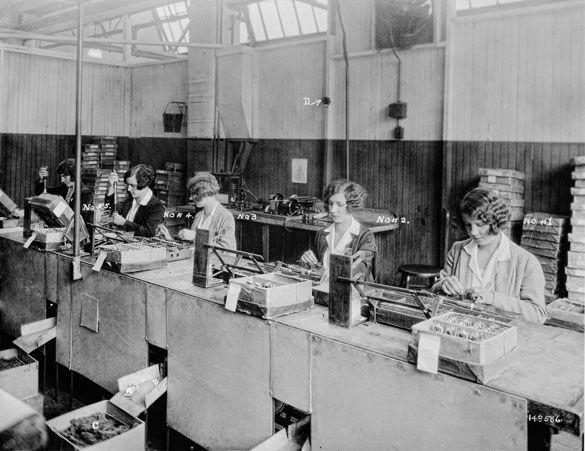
Western Electric’s Hawthorne Works near Chicago provides an excellent example. A 1928 photograph from the company’s presentation album shows a huge relay assembly and adjustment department containing rows of individual workstations. Workers assembled and adjusted electrical relays at dedicated benches.
This was a major change from the inventor’s workshop.
The factory floor was organized around production.
Components were delivered to workers.
Tools were positioned at workstations.
Parts were arranged in sequence.
Finished assemblies moved to inspection and testing.
The assembler became a specialized industrial occupation.
The Hawthorne Works would later become famous for workplace productivity studies, but its manufacturing history is equally significant. The facility illustrates how electrical products had become complicated enough to require thousands of carefully coordinated assembly operations.
Electrical Assembly During the Growth of Industry
Several industries helped cultivate electrical assembly.
Telecommunications
Telephone companies needed enormous quantities of switches, relays, wire assemblies and communications equipment.
Electric Utilities
Power generation and distribution required generators, transformers, switchgear, meters, control panels and other equipment.
Railroads
Electric streetcars, locomotives and signaling systems created demand for motors, controllers and electrical assemblies.
Manufacturing
Factories began using electrical motors to replace centralized mechanical power systems. Motors needed starters, switches, controls and wiring.
Consumer Products
Electric lighting and appliances eventually brought electrical assembly directly into the consumer economy.
Military and Aerospace
During the 20th century, military electronics, radar, communications and aircraft electrical systems created increasingly sophisticated assembly requirements.
The assembler’s role expanded with the technology.
Why Historical Electrical Assembly Still Matters
Walk into a modern manufacturing facility and many of the old principles are still there.
The wooden bench may have been replaced by an ergonomic workstation.
The paper drawing may have become a digital manufacturing instruction.
The hand drill may have been replaced by a controlled electric driver.
The soldering iron may be temperature-controlled.
The multimeter may automatically record test results.
Robots may perform repetitive operations.
But humans still assemble, inspect, troubleshoot and test complex electrical equipment.
Modern electrical and electronic engineering technicians, for example, assemble electrical and electronic systems and prototypes, build and calibrate testing equipment, replace defective circuitry and work from blueprints and engineering instructions. (Bureau of Labor Statistics)
Modern electromechanical technicians similarly read schematics, determine assembly sequences, inspect parts, use precision measuring equipment and work with mechanical and electrical systems. (Bureau of Labor Statistics)
In other words, the technology changed dramatically, but the basic manufacturing logic survived.
Electrical Assembly Jobs Today
The modern field extends far beyond traditional circuit boards.
Electrical and electromechanical assemblers can work on:
- Industrial control panels
- Electric motors and generators
- Power distribution equipment
- Automation systems
- Robotics
- Medical equipment
- Aerospace systems
- Defense equipment
- Semiconductor equipment
- HVAC controls
- Battery systems
- Electric vehicles
- Renewable-energy equipment
- Switchgear
- Wiring harnesses
- Instrumentation
- Factory machinery
The U.S. Bureau of Labor Statistics reported 259,810 electrical, electronics and electromechanical assemblers in its May 2025 occupational wage data, with a mean annual wage of approximately $47,800. The broader assembler and fabricator category contained about 1.8 million workers. (Bureau of Labor Statistics)
The field also connects directly to higher-level technical positions. Electrical and electronic engineering technologists and technicians had a May 2024 median annual wage of $77,180, according to the Bureau of Labor Statistics. The occupation includes assembling prototypes, testing equipment, repairing circuitry and helping engineers develop electrical systems. (Bureau of Labor Statistics)
Meanwhile, electro-mechanical and mechatronics technologists and technicians had a May 2024 median annual wage of $70,760. Their work increasingly involves robotics, automated machinery, computerized mechanical systems and industrial equipment. (Bureau of Labor Statistics)
That helps explain why electromechanical engineer’s salary discussions increasingly overlap with automation, robotics, controls and advanced manufacturing rather than traditional electrical wiring alone.
A Trade Built on Precision
The history of electrical assembly is ultimately a history of precision.
The first telegraph builders needed reliable contacts.
Lamp manufacturers needed consistent filaments and connections.
Motor manufacturers needed accurately positioned coils and components.
Switchboard builders needed reliable connections between hundreds of circuits.
Modern manufacturers need the same reliability from increasingly complicated systems.
The difference is scale and technology.
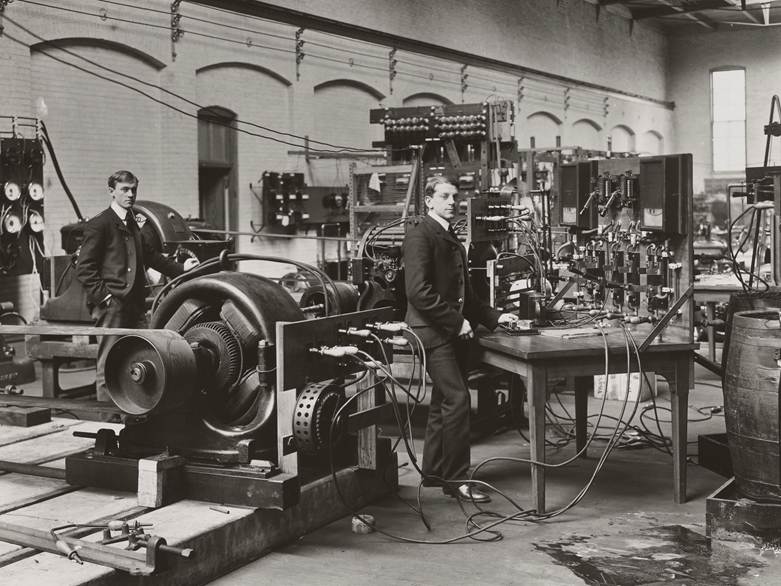
A 19th-century assembler might build a telegraph instrument with a screwdriver, file and soldering iron. A modern technician may assemble a robotic control cabinet while using digital drawings, torque-controlled drivers, automated test equipment and computerized quality records.
Yet both workers share the same mission: turn a collection of components into a functioning machine.
That is why the old photographs of electrical factories remain so fascinating. They show the moment when electricity stopped being merely a scientific curiosity and became an industrial product.
From Edison’s small workshops and lamp factories to Westinghouse’s enormous East Pittsburgh works and Western Electric’s vast relay departments, electrical assembly helped create the industrial infrastructure of the modern world.
And more than a century later, factories still need skilled people who understand wires, terminals, motors, controls, drawings, measurements and machines. As automation becomes more sophisticated, the assembler’s job may change again—but the basic craft of putting technology together correctly is unlikely to disappear.
For manufacturers trying to fill specialized production positions, the lesson from history is remarkably straightforward: complicated machines still require people who know how to build them.
That is why hiring experienced electrical assemblers remains an important consideration for manufacturers producing sophisticated electrical and electromechanical equipment.
And the broader industrial workforce is changing alongside it. From precision finishing to motor repair, automation and controls, specialized manufacturing skills continue to connect the factories of today with the workshops of the electrical pioneers of the 19th century.
Historical Photo Sources
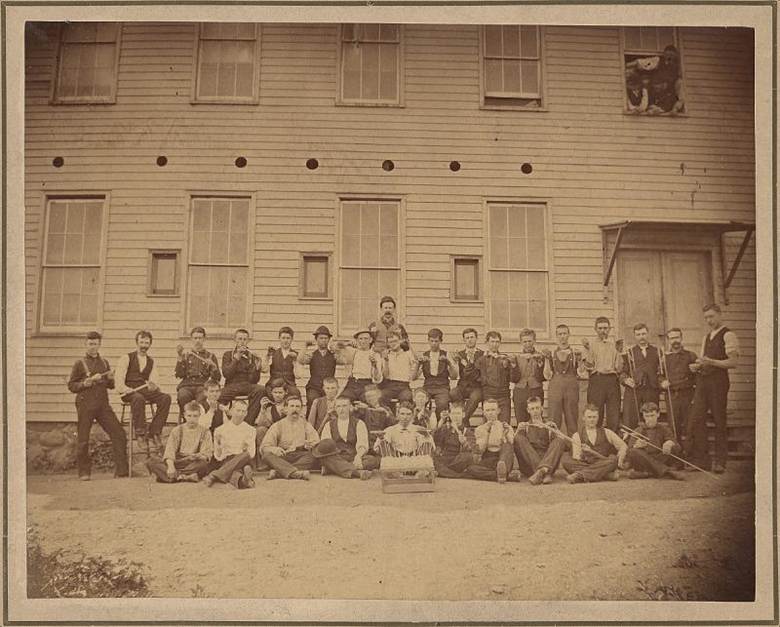
- Edison’s first lamp factory, Menlo Park, circa 1880–1881: Smithsonian National Museum of American History.
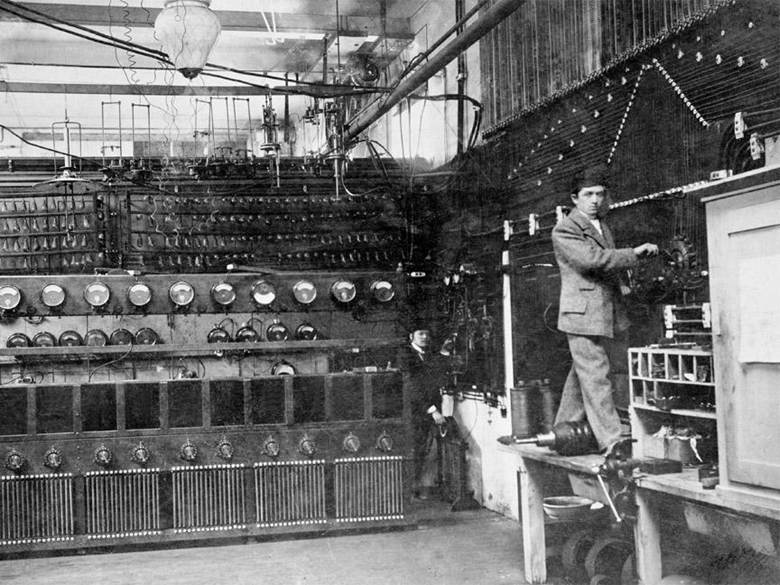
- Burnley Street Power Station switchboard, 1899: Museums Victoria.
- Western Electric relay assembly department, 1928: Historical Western Electric Hawthorne Works photograph.
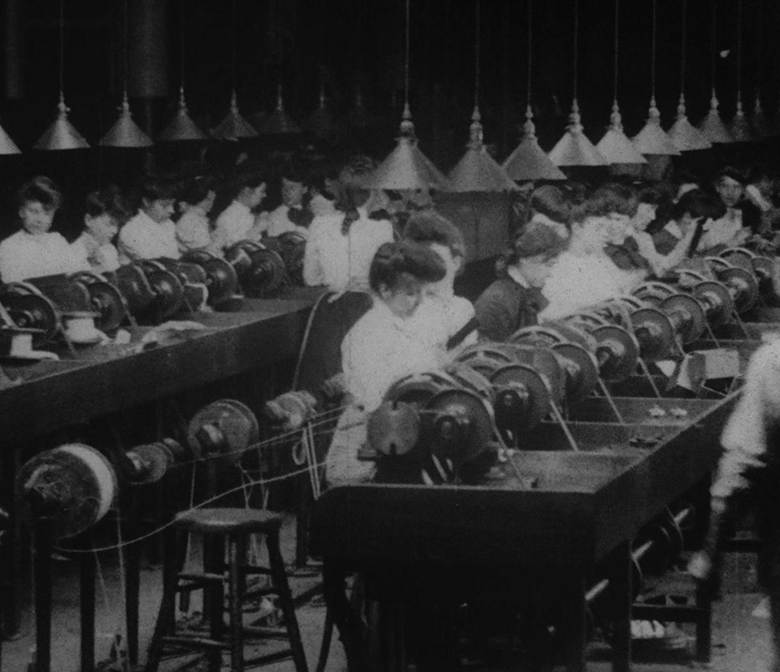
- Westinghouse factory history and 1904 manufacturing footage: Library of Congress. (Library of Congress)