From royal jewels and jeweled chambers to ships loaded with gold, these missing treasures have inspired historians, treasure hunters and adventurers for centuries
By City-Paper History Desk
History is filled with objects that seem almost too valuable to disappear.
Kings commissioned them. Emperors wore them. Governments guarded them. Ships carried them across oceans. Museums cataloged them. Then, sometimes in a matter of hours, they vanished.
Some were swallowed by the sea. Others disappeared during wars and revolutions. A few may have been deliberately hidden. In several cases, historians know exactly when a treasure was last documented but have no reliable record of what happened afterward.
The value of these objects can be difficult to calculate. A gold crown can be priced according to its weight and gemstones, but historical importance can make its real value virtually impossible to measure. An artifact connected to a royal dynasty, famous battle or ancient civilization may be worth far more than its raw materials.
Here are four of history’s most fascinating missing treasures.
The Amber Room: A Room Worth More Than Gold
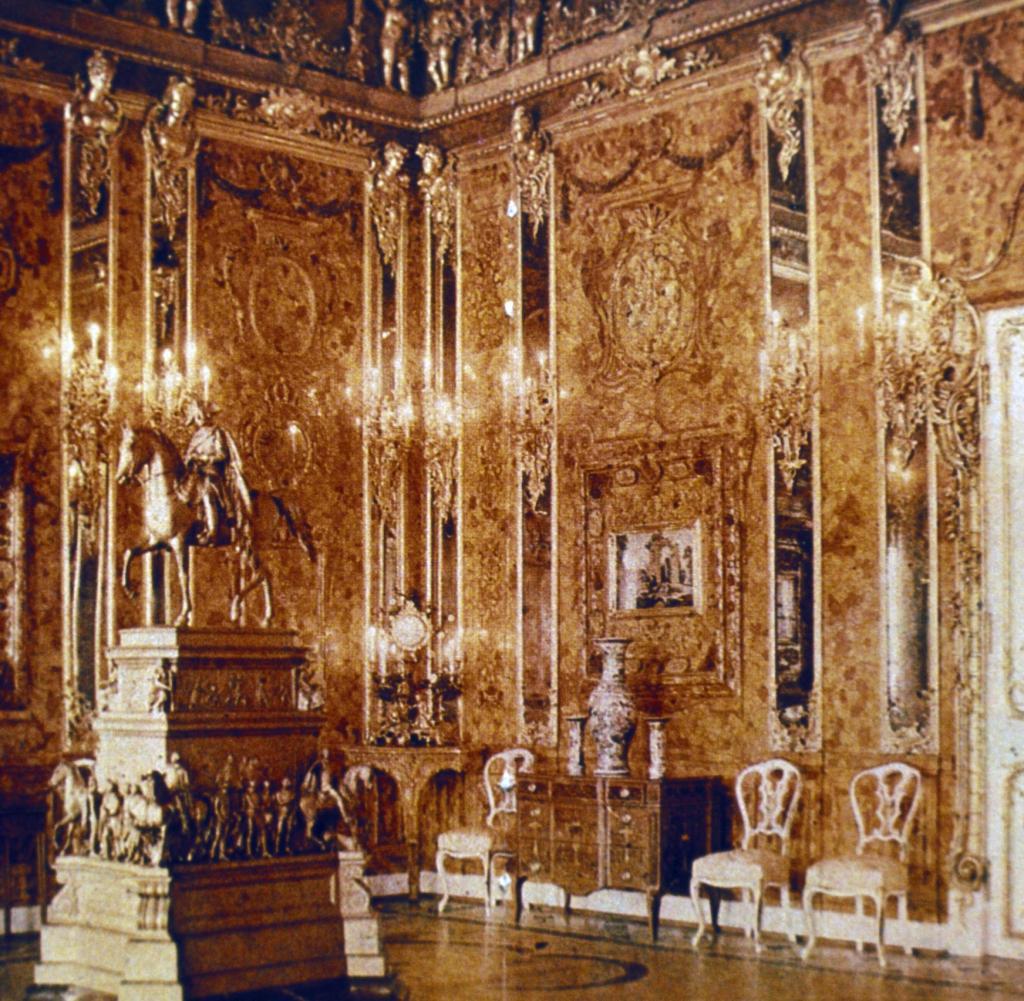
Few missing treasures are as famous as the Amber Room.
Unlike a conventional jewel, the Amber Room was essentially a giant piece of decorative art. Created in Prussia during the early 18th century, it consisted of elaborate amber panels combined with gold leaf, mirrors and decorative elements.
The room eventually became associated with the Russian imperial family. In 1716, Prussian King Frederick William I gave the panels to Peter the Great of Russia as part of a political exchange intended to strengthen relations between Prussia and Russia. The room was eventually installed at the Catherine Palace near St. Petersburg. (HISTORY)
Its purpose was primarily ceremonial and decorative. It was designed to demonstrate wealth, craftsmanship and political prestige.
Amber itself is fossilized tree resin rather than a conventional gemstone, but the material was extraordinarily valuable to European aristocrats. The Amber Room took decorative craftsmanship to another level.
When German forces invaded the Soviet Union in 1941, the room was dismantled and taken to Königsberg, where it was displayed in the city’s castle museum. As World War II turned against Germany, the trail became increasingly confusing.
The last confirmed history places the room in Königsberg during the final stages of the war. The city was heavily bombed in 1944, and the castle was subsequently destroyed. Historians have debated whether the Amber Room was destroyed in the bombing, damaged by fire, dismantled and moved again, or hidden somewhere before the city’s destruction. (HISTORY)
Its modern “value” is almost impossible to calculate. Estimates running into hundreds of millions of dollars have circulated, but a replacement price does not adequately describe its importance. It was a unique historical artwork, not simply a pile of amber and gold.
A spectacular reconstruction of the Amber Room was eventually completed at Catherine Palace in 2003.
The original, however, remains missing.
What Could Have Happened?
There are several possibilities:
- It was destroyed during the fighting and bombing of Königsberg.
- German officials dismantled and moved portions of it.
- Soviet forces or others recovered portions after the war.
- Some or all of it remains hidden in an undiscovered wartime storage location.
One fascinating recent theory has focused on possible Nazi-era underground locations in Poland, although such claims remain theories rather than proof of the original room’s location. (News.com.au)
The Flor de la Mar: A Ship Carrying a Fortune
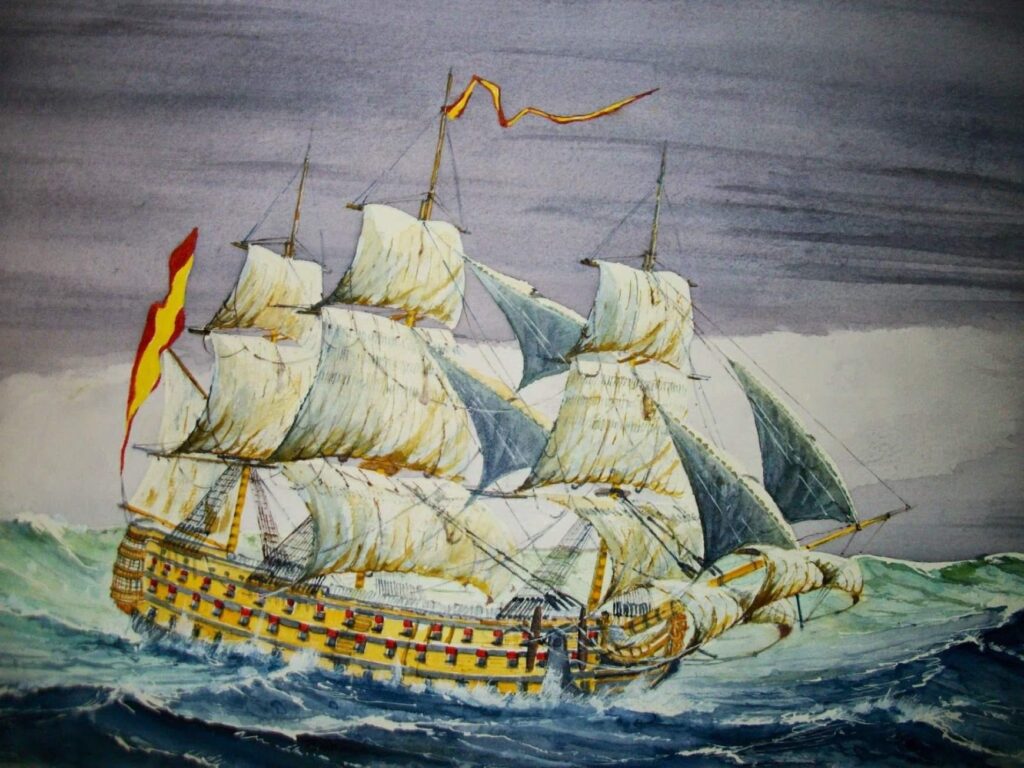
If the Amber Room represents a lost treasure of European royalty, the Flor de la Mar represents one of the great lost fortunes of maritime history.
The Portuguese carrack was launched around 1502 and spent years operating in the Indian Ocean. In 1511, Portuguese forces captured Malacca, one of the most important trading centers in Southeast Asia.
According to historical accounts, Portuguese commander Afonso de Albuquerque was returning from Malacca with an enormous cargo when the Flor de la Mar disappeared.
The ship sank during a storm in November 1511 off the coast of Sumatra. Historical sources identify the vessel as a roughly 400-ton carrack. (Wikipedia)
What was aboard?
That is where history and legend begin to mix.
Accounts describe an extraordinary cargo of valuables associated with the conquest of Malacca, potentially including gold, precious objects and other wealth intended for Portugal’s King Manuel I.
Modern treasure estimates vary enormously. Some claims place the cargo in the billions of dollars at today’s prices, but historians and maritime researchers caution that the exact contents of the ship have never been established with certainty.
That distinction is important.
A treasure legend can become larger every time it is repeated.
Last Seen
The ship’s final voyage is reasonably well documented. It was lost at sea during a storm.
The major mystery is its exact resting place.
The wreck has never been conclusively identified, and generations of treasure hunters have searched portions of the waters around Sumatra.
If the cargo remains underwater, it could represent one of the most valuable maritime archaeological discoveries ever made.
But finding the ship would be only the beginning.
Ownership and salvage rights would almost certainly create an enormous legal and historical dispute involving multiple countries and descendants of the original parties.
For now, the Flor de la Mar remains a classic example of a treasure that may be sitting somewhere on the ocean floor, hidden beneath centuries of sediment.
The Romanov Jewels: A Royal Fortune Scattered by Revolution
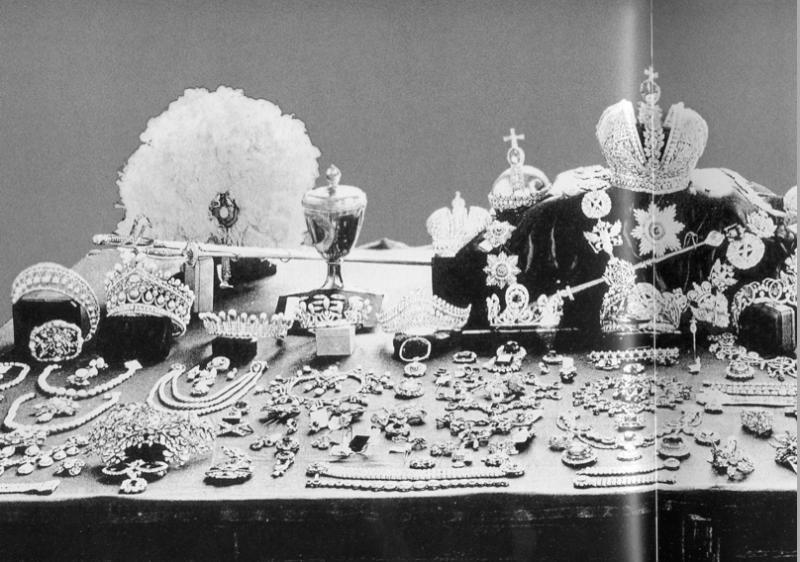
Few treasure stories are more dramatic than the fate of the Russian imperial jewels.
For more than three centuries, the Romanov dynasty accumulated crowns, necklaces, brooches, tiaras, diamonds, pearls and other magnificent pieces.
The collection was not simply jewelry.
These objects represented political authority.
A crown could symbolize the Russian state. A tiara could identify a particular member of the imperial family. A jeweled order could represent rank or military achievement.
After the 1917 Russian Revolution, the imperial collection was seized and inventoried.
A famous photograph taken by a Soviet commission in 1922 shows an extraordinary assortment of Romanov crown jewels. Some pieces survived and remain in Russian state collections, but others were sold, dismantled, transferred abroad or disappeared.
Among the surviving pieces is the Great Imperial Crown, created for Catherine the Great and decorated with thousands of diamonds, pearls and a large spinel. It remains in the Russian Diamond Fund.
But not everything survived intact.
Some women’s jewelry was reportedly broken apart so that individual diamonds and gemstones could be sold. Other pieces were acquired by wealthy buyers outside Russia.
That creates a fascinating historical problem.
If a necklace is dismantled, is the original treasure still “lost”?
In some cases, the answer is effectively yes. The stones may survive, but the historical object has disappeared.
What Happened to the Missing Pieces?
The possibilities include:
- Government sales after the Revolution
- Private sales to foreign collectors
- Jewelry dismantled for individual gemstones
- Items hidden by members of the imperial household
- Pieces lost during the Russian Civil War
- Treasures whose ownership records were never fully documented
Some Romanov pieces have surfaced decades later in private collections or royal collections.
Others remain unaccounted for.
The surviving photograph of the collection makes the mystery even more compelling because it provides historians with a visual record of what existed at one point.
Honjo Masamune: Japan’s Missing Legendary Sword
Not every lost treasure is made of gold.
The Honjo Masamune was a Japanese sword attributed to the legendary swordsmith Masamune, who worked during Japan’s Kamakura period.
The sword became associated with powerful Japanese families and eventually the Tokugawa shogunate. It was more than a weapon. It became a symbol of authority and political legitimacy.
In 1939, it was designated a Japanese National Treasure under the country’s former national-treasure system. (TOUKENZA)
Then came World War II.
Following Japan’s surrender, Allied occupation authorities ordered the collection of Japanese swords. The Tokugawa family surrendered swords, including the Honjo Masamune.
Historical records indicate that in late 1945 or early 1946, the sword was handed over at a police station to a man identifying himself as an American military sergeant.
The problem?
Researchers have never been able to conclusively establish what happened to the sword afterward.
The man’s recorded name has been disputed, and no definitive record has emerged proving where he took the blade.
That leaves several possibilities.
He may have legitimately taken possession of it and returned to the United States.
It may have been discarded, sold, hidden or inherited.
It could still exist in a private collection.
Or it may have been destroyed without anyone realizing the historical importance of what had disappeared.
The Honjo Masamune has had no confirmed sighting since 1946. (TOUKENZA)
Its monetary value is impossible to establish because it is not an ordinary collectible sword. If authenticated and recovered, its historical importance would likely dominate any calculation based simply on gold, steel or craftsmanship.
Why Do These Treasures Keep Disappearing?
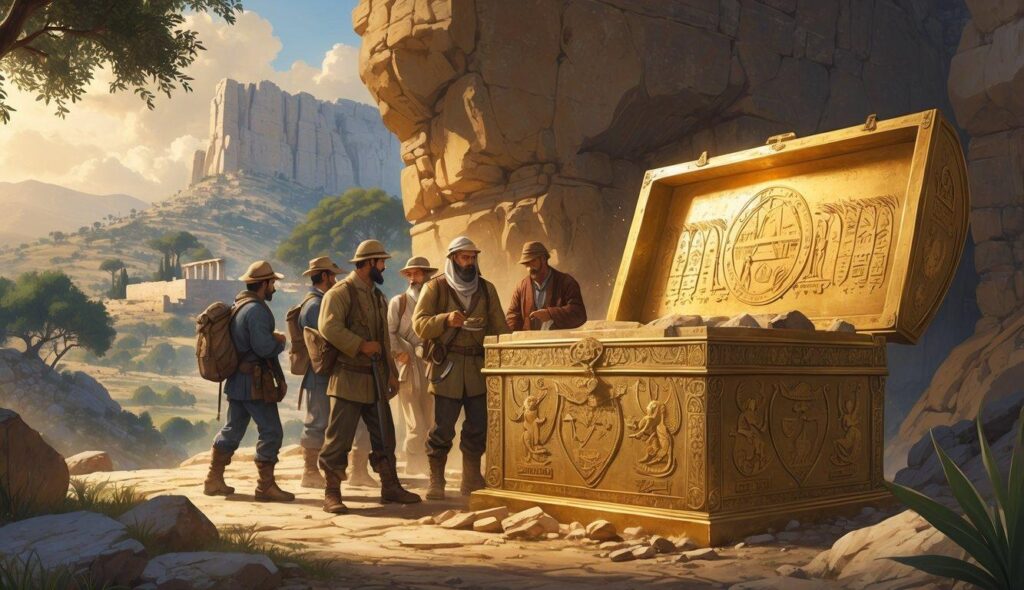
There is a common thread connecting many lost treasures.
War.
Wars destroy records, move populations, change governments and turn valuable objects into portable wealth.
Revolution is another major factor.
When governments collapse, official collections can suddenly become private property—or targets for looting.
Transportation creates another danger.
The Flor de la Mar was lost because a ship carrying valuable cargo encountered the ocean.
And then there is the simplest explanation:
People hide things.
Throughout history, wealthy families have concealed valuables during invasions, political revolutions and economic crises. Some owners returned for their possessions. Others died before revealing the location.
That leaves historians with clues but no final answer.
What Would Happen If One Were Found Today?
Finding one of these treasures would immediately create questions about ownership.
A person discovering an ancient artifact does not automatically become its legal owner. Cultural-property laws, maritime law, museum ownership, government claims and international agreements can all become relevant.
For shipwrecks, the situation can be particularly complicated.
A wreck can involve the country where it sank, the country that owned the ship, the descendants of the original owners and modern salvage companies.
For royal jewelry, provenance becomes critical.
A spectacular diamond without documentation might be valuable, but a documented imperial jewel could be worth vastly more.
That is why historians and legitimate collectors care so much about provenance.
The story behind the object can be as important as the object itself.
The Modern Treasure Hunt
Technology has changed the search dramatically.
Today’s researchers can use:
- Side-scan sonar
- Magnetometers
- Ground-penetrating radar
- Satellite imagery
- Historical maps
- Digital archives
- Underwater drones
- DNA and material analysis
- Three-dimensional scanning
- Computerized archaeological databases
A treasure that could have remained invisible to explorers 100 years ago might now produce a detectable signature.
But technology cannot solve everything.
A sonar image can reveal something beneath the seabed, but researchers still have to determine whether it is a wreck, a geological formation or debris.
A radar anomaly can indicate a buried structure without proving that treasure is inside.
And an old document can contain a clue without necessarily being accurate.
That is why serious archaeology is much slower than the treasure-hunting adventures portrayed in movies.
Could You Actually Become Part of the Search?
The world of historical preservation employs far more people than archaeologists alone.
Museums, auction houses, universities, restoration companies, historical societies, archives and conservation laboratories all require skilled workers.
Jobs can include conservators, museum technicians, researchers, archivists, historians, photographers, jewelry specialists, metalworkers, restoration technicians, security professionals and database specialists.
For someone considering a career change, tips to finding a job in the historical and museum world include developing a specialized skill rather than relying solely on a general résumé. Photography, database management, conservation, metalworking, research, foreign languages and digital imaging can all provide useful entry points.
The same principle applies to jewelry.
A person who can identify, restore, polish or document historical objects possesses a specialized skill that can be useful to museums, private collectors and restoration businesses.
And when historians discuss expensive jewelry collections belonging to royal families, they are really describing entire networks of craftspeople—goldsmiths, gem cutters, polishers, engravers, setters and restorers—whose work made these treasures possible in the first place.
The Greatest Mystery May Be the Next Discovery
The Amber Room may be destroyed.
The Flor de la Mar may be buried beneath the sea.
A Romanov jewel may be sitting unnoticed inside a private collection.
And the Honjo Masamune could theoretically still exist somewhere, separated from the historical record for nearly eight decades.
That is what makes lost treasures so compelling.
The story is unfinished.
A forgotten trunk in an attic, a newly opened archive, an underwater sonar survey or a previously unidentified jewel could potentially change the historical record.
For now, these treasures remain suspended between history and mystery—valuable not simply because of gold, diamonds, amber or precious stones, but because they carry stories that have survived long after the people who created and owned them disappeared.
And that may be the most valuable thing of all.