By City-Paper News Desk
Long before today’s American food scene featured farm-to-table restaurants, heritage grains and locally sourced menus, Indigenous peoples across North America had developed sophisticated food systems based on agriculture, hunting, fishing, gathering and careful seasonal management.
There was never one single “Native American cuisine.” Hundreds of Indigenous nations developed food traditions suited to their particular environments—from salmon along the Pacific Northwest coast to wild rice in the Great Lakes, corn and beans in the Northeast and bison across the Plains.
The Smithsonian’s National Museum of the American Indian emphasizes that Indigenous food traditions are deeply connected to land, community and cultural knowledge. Many foods now considered fundamental to American cuisine—including corn, beans, squash, wild rice, cranberries and numerous other crops—have Indigenous origins. (National Museum of the American Indian)
Here are five traditional foods and dishes that offer a glimpse into that enormous culinary history.
1. Three Sisters Stew — Corn, Beans and Squash
Region: Eastern Woodlands, Northeast, Midwest and Southwest
Associated with: Numerous Indigenous nations, including Haudenosaunee, Pueblo and other agricultural communities
Few Native food traditions are as recognizable as the Three Sisters: corn, beans and squash.
Rather than being a single recipe, the Three Sisters is an agricultural and culinary system. The crops were traditionally grown together because each helped the others. Corn provided a climbing structure for beans, beans helped replenish nitrogen in the soil, and squash spread along the ground, helping shade the soil and retain moisture. (National Park Service)
The Haudenosaunee traditionally cultivated the three crops together and regarded them as important gifts. The Smithsonian notes that eating corn, beans and squash together supplied many important nutrients. (National Museum of the American Indian)
A modern preparation
A simple Three Sisters stew can be made with:
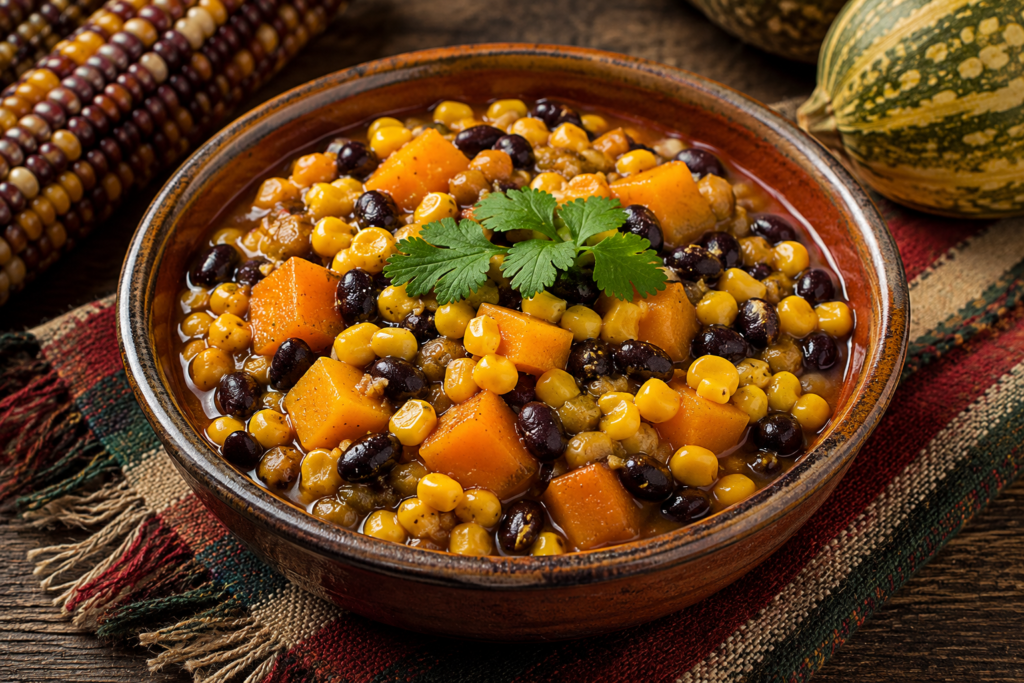
- Corn
- Winter squash
- Beans
- Onion
- Vegetable or meat stock
- Herbs
- A small amount of salt
Cook the squash until tender, add cooked beans and corn, and simmer everything together until the flavors combine.
For a heartier meal, modern cooks sometimes add bison, venison or another protein, although recipes vary substantially among Native communities.
Nutrition
The combination is particularly interesting nutritionally. Corn provides carbohydrates; beans provide substantial plant protein and fiber; squash contributes fiber, carotenoids and other micronutrients. The National Park Service describes the three crops as nutritionally complementary. (National Park Service)
Serving idea: Try it with roasted pumpkin or squash seeds and fresh herbs.
2. Wild Rice — The Great Lakes Staple
Region: Great Lakes and Upper Midwest
Associated with: Ojibwe and other Indigenous peoples
Wild rice, known as manoomin in Ojibwe, isn’t simply another grain.
For Ojibwe communities, it has nutritional, cultural and spiritual importance. The Smithsonian’s National Museum of the American Indian describes wild rice as a food staple and an important part of Ojibwe oral traditions. (National Museum of the American Indian)
Wild rice grows naturally in shallow lakes and waterways, particularly across parts of Minnesota, Wisconsin and neighboring regions.
Traditional harvesting involves working from canoes and carefully gathering the mature grains without destroying the plants.
A simple dish
Cook wild rice in water or stock until the grains split and become tender. It can then be combined with:
- Mushrooms
- Corn
- Squash
- Wild onions
- Berries
- Nuts or seeds
A wild-rice salad makes a particularly good cold-weather or picnic dish.
Nutrition
Wild rice is a useful source of complex carbohydrates, fiber and plant protein. It also contains minerals such as magnesium and phosphorus.
One preparation tip: don’t treat wild rice exactly like white rice. Cooking times can be considerably longer, and the amount of liquid required varies according to the variety.
Serving idea: Combine cooked wild rice with roasted squash, cranberries and toasted nuts for a colorful side dish.
3. Bison With Corn and Squash
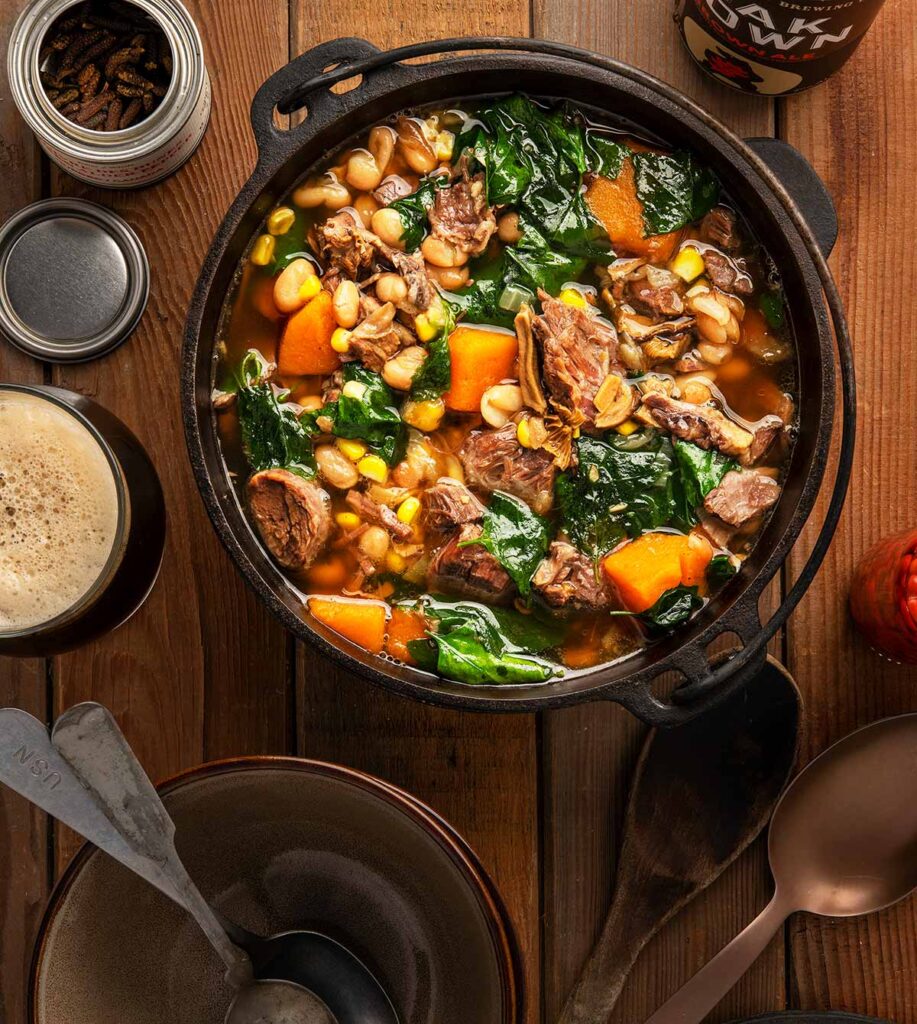
Region: Great Plains
Associated with: Numerous Plains nations
Bison played a central role in the foodways of many Plains peoples. Meat could be eaten fresh or preserved for later use, while other parts of the animal were used for tools, clothing and numerous other purposes.
The National Park Service documents continuing traditions of drying meat among the Mandan, Hidatsa and Arikara, including bison and other meats. (National Park Service)
A simple modern meal inspired by Plains foodways might pair roasted or grilled bison with corn and squash.
Preparation tips
Bison is generally leaner than many conventional cuts of beef. That means it can become dry if aggressively overcooked.
A practical approach is to:
- Season the meat simply.
- Use moderate-to-high heat to sear it.
- Avoid cooking it far beyond the desired doneness.
- Allow the meat to rest before slicing.
Roasted squash provides sweetness that works particularly well with bison’s richer, slightly earthy flavor.
Nutrition

Bison is a protein-rich meat and can be relatively lean, depending on the cut. Squash adds fiber and micronutrients, while corn contributes carbohydrates.
Serving idea: Add a small serving of berries or berry sauce for a sweet-tart contrast.
4. Cornmeal Mush or Corn Soup
Region: Widespread across North America
Associated with: Numerous Indigenous nations
Corn became one of the most important crops in Indigenous North America. It was prepared in many forms, including soups, breads, porridges and other dishes.
At Knife River Indian Villages National Historic Site in North Dakota, the National Park Service describes corn, squash and beans as major garden crops of the Mandan, Hidatsa and Arikara. Corn was also dried for later use in soups. (National Park Service)
A simple corn soup can be built around dried or fresh corn, broth, beans, squash and herbs.
An important historical cooking technique
One fascinating Indigenous innovation was nixtamalization.
Corn was treated with an alkaline substance such as wood ash or lime. The process changed the nutritional availability of certain nutrients and made the corn suitable for foods such as masa and hominy. The National Park Service notes that nixtamalization increased the nutritional value of corn and helped make niacin available to the body. (National Park Service)
This is a great reminder that Indigenous food preparation wasn’t simply about gathering whatever happened to be available.
It involved sophisticated knowledge of chemistry, agriculture and nutrition.
Nutrition
Corn supplies carbohydrates, while adding beans can significantly increase protein and fiber. Vegetables such as squash, peppers and onions increase the micronutrient content.
Serving idea: Serve a hearty corn-and-bean soup with roasted squash or a small piece of corn-based bread.
5. Fry Bread — A Complicated and Important Food
Region: Modern Native food traditions across the United States
Fry bread deserves special attention because its history is very different from foods such as wild rice, corn and squash.
It is not an ancient pre-contact food.
Fry bread developed among Native communities after displacement and government policies disrupted traditional food systems. The ingredients and cooking methods were shaped by the limited commodities made available to Native families.
Today, fry bread has become an important part of contemporary Native American food culture, although attitudes toward it can vary because of its complicated history.
The National Park Service notes that traditional meals among the Mandan, Hidatsa and Arikara can include fry bread, and that Indian tacos made with fry bread are popular at powwows, fundraisers and community events. (National Park Service)
How it is served
Fry bread can be eaten with:
- Beans
- Ground meat
- Lettuce and tomatoes
- Salsa
- Cheese
- Chiles
- Honey
- Berries
One popular contemporary preparation is the Indian taco, although recipes and terminology differ among communities.
The Smithsonian’s National Museum of the American Indian currently features Native-inspired fry bread tacos and other dishes at its Mitsitam Café in Washington, D.C. (National Museum of the American Indian)
Nutrition
Fry bread is calorie-dense because it is fried and is generally higher in fat than boiled or baked grain dishes. Adding beans, vegetables and lean protein can create a more nutritionally balanced meal.
Why These Foods Matter Today

The fascinating part of Native American cuisine isn’t simply the ingredients.
It is the food knowledge behind them.
Indigenous farmers developed systems that worked with local climates. Hunters and fishers understood seasonal cycles. Gatherers knew which plants were edible and when they should be harvested. Food was dried, stored and preserved for periods when fresh supplies weren’t available.
The Smithsonian notes that Indigenous food systems were heavily disrupted following European settlement, including through displacement and government-issued commodity foods that differed substantially from traditional diets. Contemporary Native communities have increasingly worked toward food sovereignty and restoration of traditional foodways. (National Museum of the American Indian)
That movement is visible today in restaurants, community gardens, tribal food programs, cookbooks and museums.
The National Museum of the American Indian’s cookbook collection, for example, includes Foods of the Americas: Native Recipes and Traditions, featuring Indigenous ingredients and traditional and contemporary recipes. (National Museum of the American Indian)
A Food Tradition Built Around the Land
Perhaps the biggest lesson from these five foods is that Native American cooking cannot be separated from geography.
Wild rice belongs to wetland country.
Bison belongs to the history of the Great Plains.
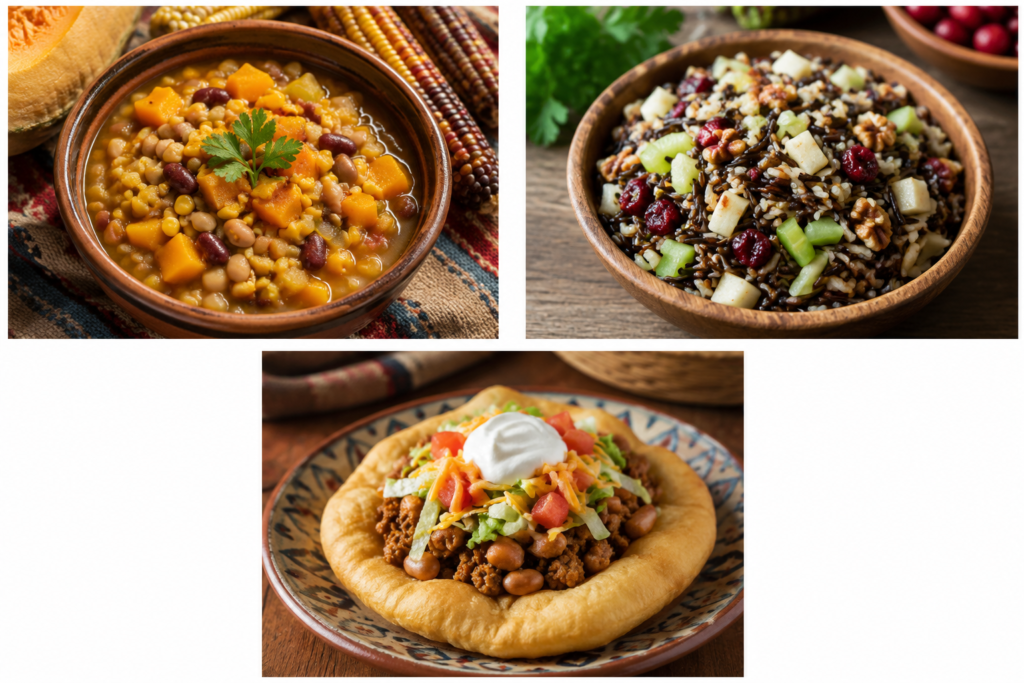
Corn, beans and squash thrived in carefully designed agricultural systems.
Fish became central to communities along rivers and coastlines.
And preserved foods allowed families to survive seasonal changes.
Even the ingredients themselves tell a story about thousands of years of agricultural experimentation and environmental knowledge.
For anyone wanting to explore these foods at home, the best approach is to learn about the specific nation and tradition behind a dish, rather than treating Native American cuisine as one uniform category.
The food is diverse.
The histories are diverse.
And the recipes continue to evolve as Native cooks and communities preserve traditional knowledge while creating new dishes for modern tables.
Food safety note: Nutrition values vary substantially by recipe, ingredients and portion size. Wild game and gathered foods require appropriate handling and identification. This article provides historical and culinary information rather than medical or dietary advice.