Texas, New Mexico, Arkansas & Louisiana Adventures, Local Tips and How to Keep Your RV Rolling
By City-Paper News Desk
The American Southwest and South-Central states are tailor-made for RV travelers. Big skies, wide-open roads, historic towns, rivers, lakes, mountains, deserts and some of the country’s best regional food make Texas, New Mexico, Arkansas and Louisiana excellent destinations for a road trip.
The beauty of RV travel is that the campground can be part of the vacation. Instead of simply driving to a hotel and staying in one location, RV travelers can wake up beside a river, spend the afternoon exploring a historic town and then move on to a mountain lake or a bayou.
For travelers planning a multi-state trip, here are some fun destinations, what to expect, what locals enjoy doing and some practical ways to keep the RV moving safely.
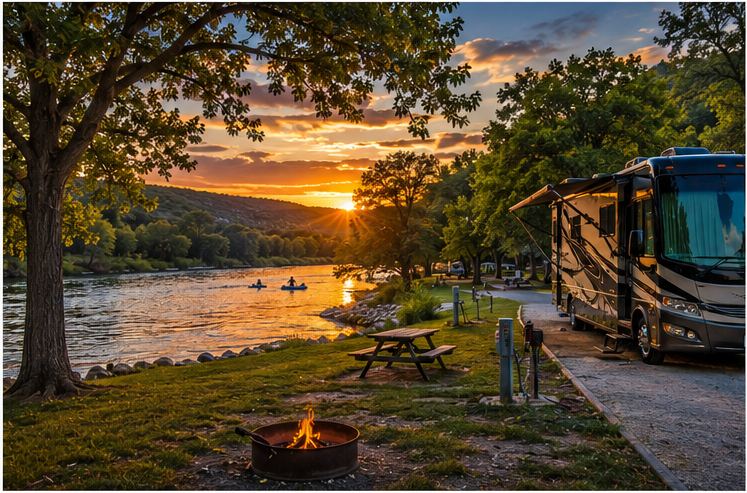
TEXAS: BIG SPACES, BIG ADVENTURES
1. Guadalupe River RV Resort — New Braunfels, Texas
The New Braunfels area is one of the most popular recreational destinations in Texas, particularly for people who enjoy water activities.
RV travelers can find campgrounds and resorts around the Guadalupe River, giving visitors access to tubing, swimming, fishing and kayaking.
New Braunfels itself provides plenty to explore, including the historic Gruene district, restaurants, live music and shops.
What to expect: Depending on the park, travelers can find full hookups, swimming pools, Wi-Fi, laundry facilities, picnic areas and recreational activities.
Things to see: Gruene Historic District, Natural Bridge Caverns, local restaurants and the Guadalupe River.
What locals do: One of the classic local activities is floating the river during warm weather. Visitors can also listen to live music in Gruene, explore local barbecue restaurants or simply spend an afternoon relaxing beside the water.
2. South Llano River State Park — Junction, Texas
For travelers who prefer a quieter experience, South Llano River State Park near Junction is worth considering.
The park provides access to the South Llano River and is surrounded by Texas Hill Country scenery.
What to expect: Camping, hiking, bird-watching, fishing, paddling and opportunities for stargazing.
Things to see: Junction and the surrounding Hill Country provide scenic drives, small-town restaurants and plenty of opportunities for photography.
What locals do: Fishing, kayaking, hiking and enjoying the relatively dark nighttime skies are popular activities.
Texas RV travelers should pay attention to the size of their rig. Some Hill Country roads can become narrow or winding, and large RVs should always check campground access and road conditions before setting out.
NEW MEXICO: LAND OF ENCHANTMENT
New Mexico offers an entirely different RV experience.
Instead of humid forests and rivers, travelers encounter high desert landscapes, mountains, adobe architecture, historic communities and spectacular sunsets.
3. Santa Fe Area RV Camping — Santa Fe, New Mexico
Santa Fe is one of the most interesting stops on a Southwestern RV itinerary.
The city combines Native American, Hispanic and Spanish colonial influences with an enormous arts community.
What to expect: RV parks in the region can offer full hookups, laundry, Wi-Fi and easy access to Santa Fe attractions.
Things to see: Santa Fe Plaza, Canyon Road art galleries, the Georgia O’Keeffe Museum and historic neighborhoods.
What locals do: Visitors can explore art galleries, browse local markets, enjoy New Mexican cuisine and take scenic drives into the surrounding mountains.
One local food tip: New Mexico is famous for its chile. When ordering dishes, visitors may be asked whether they want red or green chile. Trying both is part of the fun.
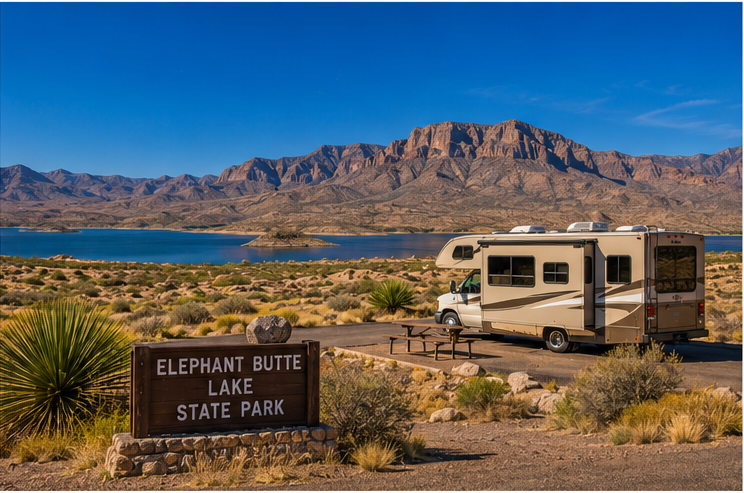
4. Elephant Butte Lake — New Mexico
Elephant Butte Lake is an excellent stop for RV travelers who enjoy boating and water recreation.
The reservoir provides a dramatic contrast to the surrounding desert landscape.
What to expect: Camping areas, boating, fishing, swimming and opportunities for relaxing near the water.
Things to see: Elephant Butte Lake State Park and nearby communities.
What locals do: Boating, kayaking, fishing, paddleboarding and sunset photography are popular.
Because desert temperatures can become extremely hot, RV travelers should keep plenty of drinking water available and make sure their vehicle’s cooling system and tires are in good condition.
NEW MEXICO RV TRAVEL TIPS
One of the biggest mistakes new RV travelers make is assuming that every road is suitable for a large motorhome.
Before leaving a campground:
- Check road grades.
- Look for low-clearance warnings.
- Check wind conditions.
- Keep an eye on fuel levels.
- Carry extra drinking water.
- Check tire pressure every morning.
- Be prepared for sudden weather changes.
High desert weather can change quickly, and summer thunderstorms can create flash-flood hazards.
ARKANSAS: MOUNTAINS, LAKES AND SMALL-TOWN FUN
Arkansas may not always be the first state people associate with Southwest RV travel, but it can be a fantastic addition to a road trip.
The state offers the Ozarks, lakes, forests, hiking trails and historic communities.
5. Lake Catherine State Park — Hot Springs, Arkansas
Lake Catherine provides a combination of forest, water and mountain scenery.
The area is also close to Hot Springs, making it easy to combine outdoor recreation with a visit to a historic city.
What to expect: Depending on the campground, visitors can find RV sites, water and electrical hookups, hiking trails and access to the lake.
Things to see: Hot Springs National Park, Bathhouse Row and the surrounding Ouachita Mountains.
What locals do: Fishing, hiking, boating and relaxing around the lake are popular.
A visit to Hot Springs can also turn into a food adventure, with Southern-style restaurants and small local diners providing plenty of options.
6. Petit Jean State Park — Arkansas
Petit Jean is another excellent stop for RV travelers who enjoy scenery.
The mountain landscape offers overlooks, hiking trails and waterfalls.
What to expect: RV camping, hiking, cabins, picnic areas and outdoor recreation.
Things to see: Petit Jean Mountain, Cedar Falls and scenic overlooks.
What locals do: Hiking, photography, fishing and watching the sunrise are popular activities.
The winding mountain roads require extra attention from RV drivers. Take corners slowly and allow additional stopping distance.
LOUISIANA: BAYOUS, FOOD AND MUSIC
Louisiana changes the atmosphere again.
Here, RV travelers trade mountains and desert landscapes for bayous, moss-covered trees, seafood, Cajun cooking and some of the most distinctive music in America.
7. Cajun Country — Breaux Bridge, Louisiana
Breaux Bridge is an excellent place to experience Cajun culture.
The area is known for Cajun food, music and access to nearby waterways.
What to expect: RV parks in the region range from basic camping to facilities with hookups and recreational amenities.
Things to see: Lake Martin, nearby nature areas and Lafayette.
What locals do: Eat crawfish and Cajun dishes, listen to zydeco music, visit local markets and take swamp tours.
A good Louisiana road trip should probably include at least one meal featuring crawfish, gumbo, jambalaya or étouffée.
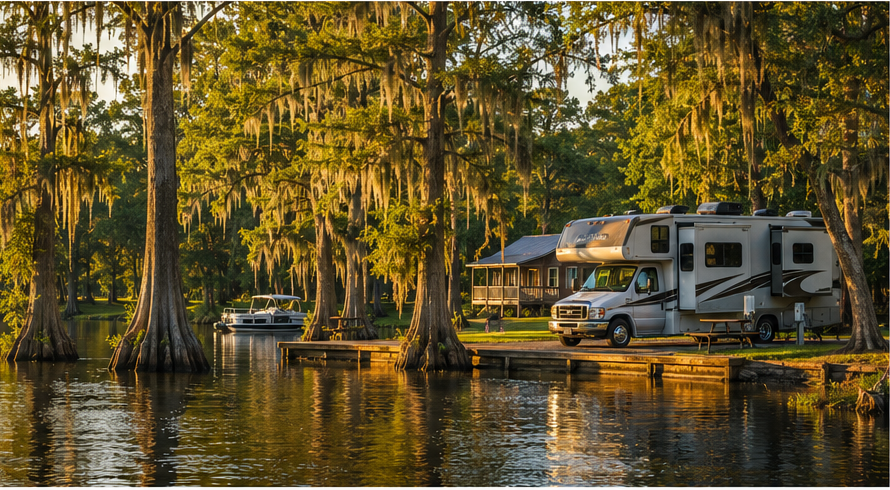
8. Fontainebleau State Park — Mandeville, Louisiana
Located on the north shore of Lake Pontchartrain, Fontainebleau State Park offers a peaceful contrast to New Orleans.
What to expect: RV camping, lake views, walking trails, fishing and outdoor recreation.
Things to see: Lake Pontchartrain, Mandeville and New Orleans, which is close enough for a day trip.
What locals do: Fishing, walking along the lake, exploring local restaurants and taking day trips into New Orleans.
A visitor can park the RV at the campground and use another vehicle to explore the city rather than trying to maneuver a large motorhome through busy downtown streets.
KEEP YOUR RV MOVING: MAINTENANCE MATTERS
The difference between a great RV vacation and an expensive roadside problem can sometimes be a simple maintenance check.
Before every major departure, inspect the tires.
Look for uneven wear, cracks and obvious damage. Check tire pressure when the tires are cold and follow the manufacturer’s recommended specifications.
Check the Generator
The generator is one of the most important pieces of equipment in an RV.
It can provide electricity for air conditioning, refrigeration, appliances and other equipment when shore power isn’t available.
Keep the generator maintained according to its manufacturer’s schedule.
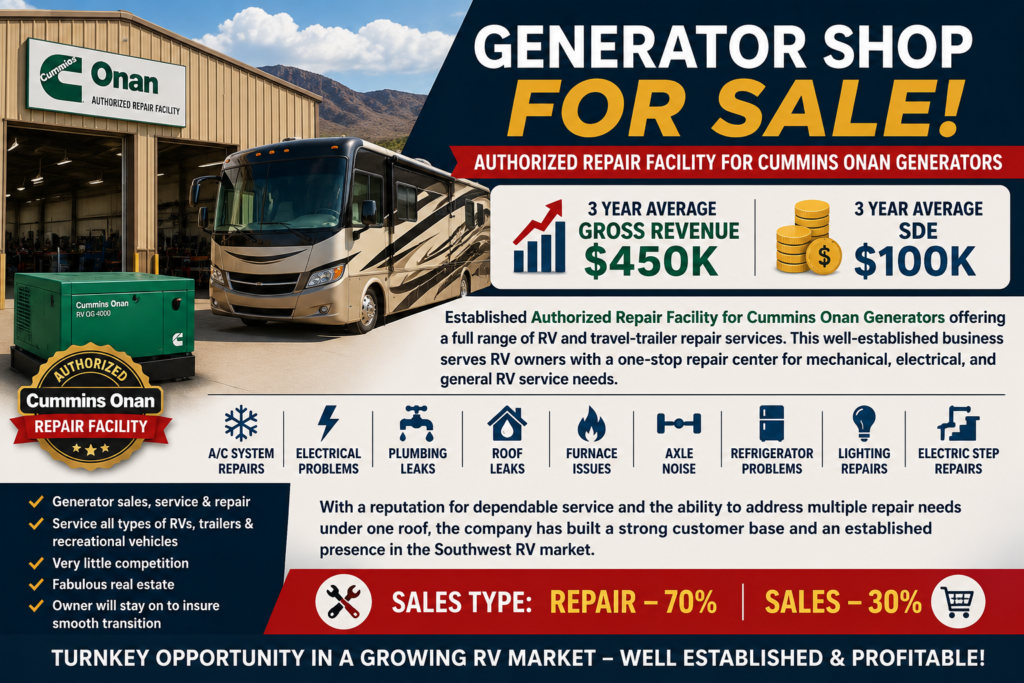
For owners of RVs equipped with Onan/Cummins generator systems, proper service can include oil changes, filter replacement, battery checks, cooling-system inspections and troubleshooting starting or electrical problems.
For someone researching the RV service industry, an Onan generator repair shop for sale could represent an interesting specialized business opportunity because RV owners need service both at home and while traveling.
Inspect the Brakes
RV weight means braking systems deserve serious attention.
Before a long trip, inspect the brake system and make sure trailer brakes and brake controllers are operating correctly.
If something doesn’t feel right—such as pulling, vibration, unusual noises or longer stopping distances—have the vehicle inspected before continuing.
Check the Cooling System
Long Southwestern drives can put substantial stress on engines.
Check coolant levels, hoses, belts and the radiator.
A cooling problem in the middle of a desert highway is considerably less convenient than discovering the problem in your driveway.
Don’t Forget the Water System
RV travelers should inspect:
- Fresh-water hoses
- Water filters
- Sewer hoses
- Tank valves
- Water pumps
- Pressure regulators
Carry spare hoses and basic repair supplies.
A small leak can become a major problem if it goes unnoticed.
PLAN THE ROUTE—BUT DON’T OVERPLAN IT
One of the best things about RV travel is flexibility.
Instead of scheduling every hour, consider identifying several destinations and leaving room for spontaneous stops.
A good route might look something like:
Texas Hill Country → New Mexico → Arkansas → Louisiana
Of course, the actual route depends on the traveler’s starting point and preferred direction.
Before leaving each campground, check weather, road conditions, fuel availability and campground restrictions.
Large RVs need more fuel, more space and more stopping distance than ordinary cars.
Also remember that some campgrounds have length restrictions.
A 40-foot motorhome pulling a vehicle cannot necessarily fit into every site.
THE FUN OF RV TRAVEL IS THE STOPS BETWEEN THE STOPS
One of the greatest advantages of traveling by RV is that the destination isn’t always the only attraction.
A small-town barbecue restaurant can become a memorable meal.
A roadside antique store can produce an unexpected treasure.
A local festival can turn an ordinary overnight stop into the highlight of the trip.
A quiet fishing hole can be more enjoyable than a crowded tourist attraction.
The Southwest and neighboring Southern states offer an enormous variety of experiences.
Texas provides rivers, barbecue and Hill Country scenery.
New Mexico brings desert landscapes, Native American and Hispanic history, art and mountain views.
Arkansas delivers forests, lakes and the Ozarks.
Louisiana brings bayous, seafood, Cajun culture and music.
Together, they create an RV itinerary with almost endless possibilities.
A ROAD TRIP WITH ROOM TO ROAM
RV travel isn’t simply about getting from one campground to another.
It’s about waking up somewhere different, meeting local people, trying regional food and discovering places that might never appear on a conventional vacation itinerary.
For travelers who want to explore these states, the key is preparation.
Maintain the RV.
Keep the tires properly inflated.
Monitor the generator.
Know the size and weight of your rig.
Plan fuel stops.
Check campground requirements.
And give yourself enough time to actually enjoy each stop.
If you want a break from driving, spending a night or two at a cheap hotel stay in one of the region’s historic towns can also be a useful change of pace. Park the RV, explore on foot and enjoy a restaurant or attraction without worrying about finding a large parking space.
The Southwest road is waiting—and the best part may be the unexpected stop just around the next bend.
Disclaimer: RV park amenities, hookups, operating seasons, road conditions and campground rules can change. Travelers should confirm current availability, vehicle-length restrictions, weather conditions and park regulations before departure. Generator, electrical, braking and mechanical work should be performed according to manufacturer specifications or by qualified technicians.