By Gracus Bloom for City Paper
Indian Lake Road Stone Arch Bridge (1891)
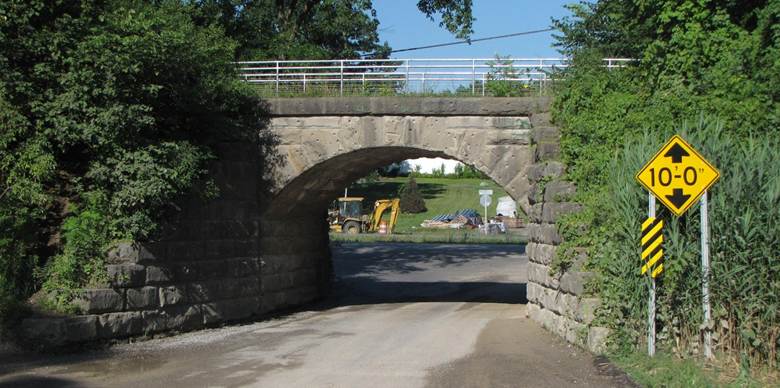
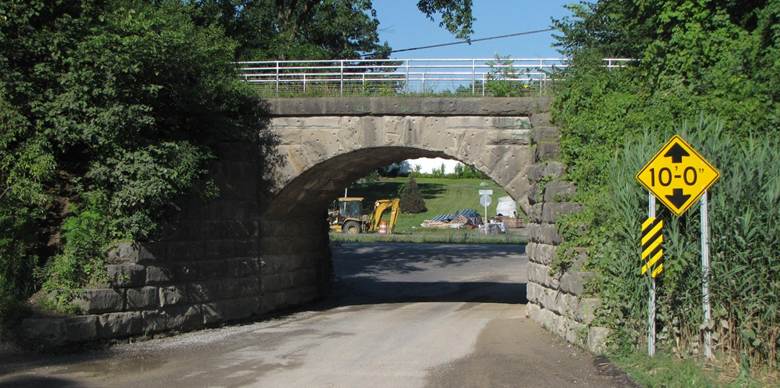
In the quiet outskirts of Orion Township stands one of Michigan’s most evocative relics of late 19th-century infrastructure: the Indian Lake Road Stone Arch Bridge, its cornerstone dated 1891. Built during the expansion of the Detroit & Bay City Railroad, the bridge reflects a rare flirtation with Gothic-inspired masonry in a state better known for timber and steel crossings.
Constructed from yellowish-brown sandstone, the bridge features a semicircular arch composed of carefully cut voussoirs—wedge-shaped stones that lock together around a central keystone. The masonry technique, while practical, also echoes Gothic architectural sensibilities: symmetry, permanence, and a reverence for stone as both structure and ornament. (Wikipedia)
Though no definitive builder is recorded, historians link its construction style to other Michigan Central Railroad projects of the same era. The stone itself was likely quarried locally or regionally to reduce transport costs, a key factor in an era when logistics often dictated design.
Why it was built:
The bridge carried rail traffic over a developing road network, eliminating dangerous grade crossings and ensuring uninterrupted movement of goods—primarily timber, agricultural products, and early industrial freight like electric motors to power factories and plants, mill equipment, factory machinery. Railroads were the arteries of Michigan’s economy, and stone bridges like this one were built to last generations.
The Old Stone Bridge (1871–1872, Bean Creek)
Predating many of Michigan’s surviving stone spans, the Old Stone Bridge over Bean Creek—constructed between 1871 and 1872—is among the state’s earliest examples of Gothic-influenced stone engineering.
Built by the Lake Shore and Michigan Southern Railway, this bridge used Berea sandstone quarried in Ohio, a material prized for its durability, polished finish and uniform grain. (Lost In Michigan) The decision to import stone rather than rely on Michigan’s limited local sources underscores both the ambition and the economic importance of the line.
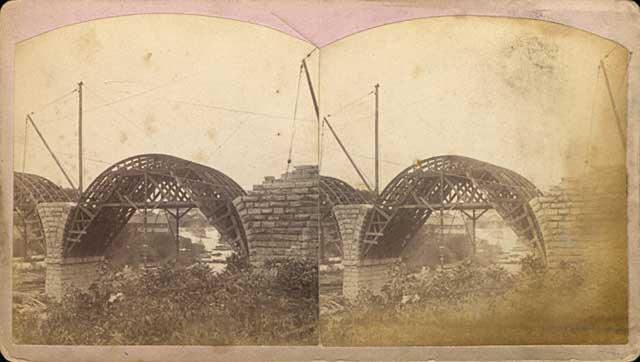
The structure spans approximately 60 feet, with a classic arch profile that reflects European masonry traditions brought to America by immigrant craftsmen. Its construction relied on centering techniques, where wooden frameworks temporarily supported the arch until the keystone was placed—an ancient method dating back to Roman times.
Why it was built:
This bridge was essential for transporting raw materials—particularly agricultural goods and early industrial freight—across southern Michigan. At a time when railroads were rapidly expanding, stone bridges represented long-term investments, designed to withstand both heavy loads and harsh Midwestern winters.
Marshall Avenue Stone Arch Bridge (1899)
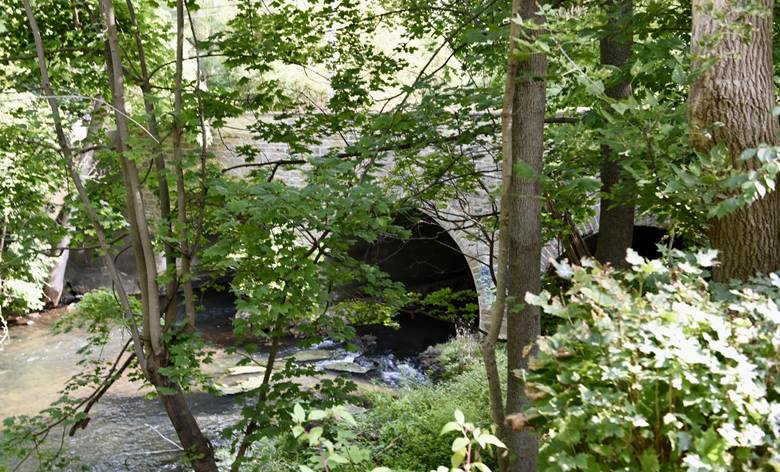

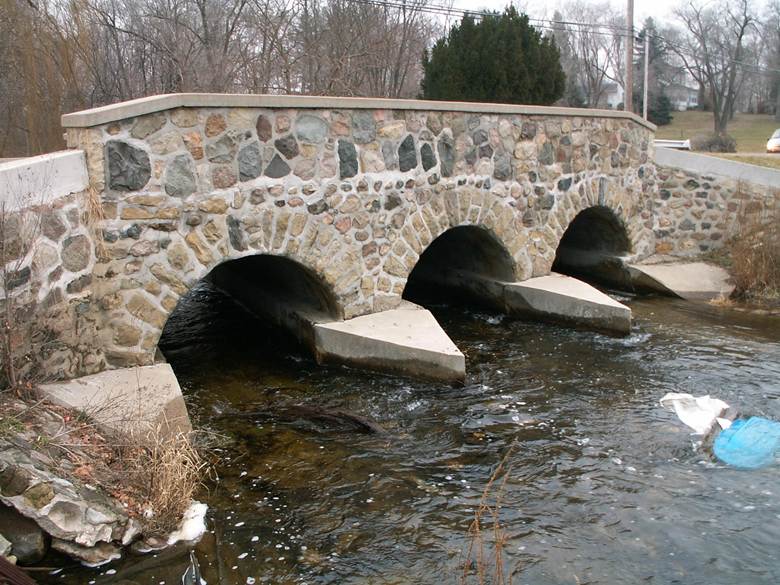
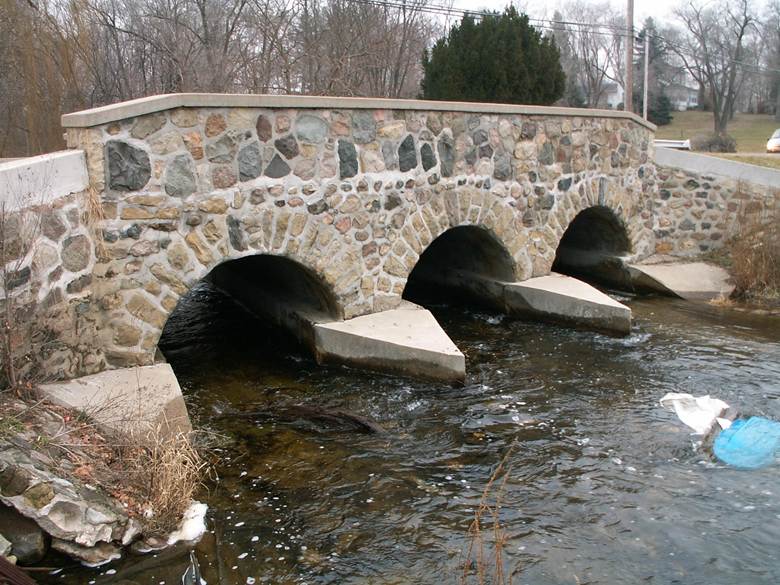
By the close of the 19th century, Michigan’s stone bridge construction reached a quiet pinnacle with the Marshall Avenue Bridge, built circa 1899 in the city of Marshall. This structure is notable not only for its Gothic-inspired solidity but also for being the longest known stone highway bridge in Michigan. (Wikipedia)
Constructed using locally sourced sandstone, the bridge features three broad masonry arches, each defined by carefully aligned stone courses and pronounced archivolts. Unlike earlier railroad bridges, this structure was designed for vehicular and pedestrian traffic, signaling a shift toward modern infrastructure.
While the exact construction firm is not definitively recorded, the bridge’s craftsmanship suggests experienced regional masons familiar with both European and American techniques. The use of multi-span arches demonstrates an evolution in engineering—balancing load distribution with aesthetic appeal.
Why it was built:
Marshall was a growing commercial hub in the late 1800s, and the bridge was constructed to improve transportation across Rice Creek. It allowed for smoother movement of goods, carriages, and eventually automobiles, linking neighborhoods and supporting economic expansion.
Ramsay Keystone Bridge (1891, Upper Peninsula)
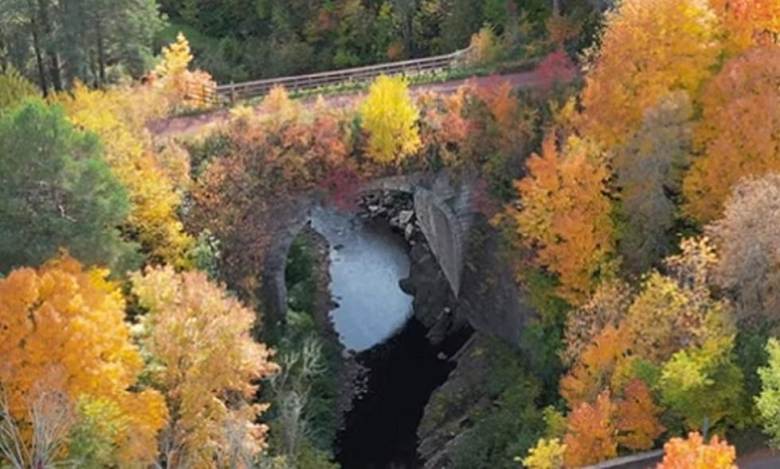
In Michigan’s rugged Upper Peninsula, the Ramsay Keystone Bridge, completed in 1891, stands as a monument to the mining boom that defined the region. Built by the Chicago & Northwestern Railroad, the bridge spans the Black River with a commanding stone arch designed to carry heavy ore trains. (99.1 WFMK)
Unlike southern Michigan bridges, this structure was built for extreme industrial loads, requiring thicker stone blocks and reinforced arch geometry. The masonry likely utilized locally quarried stone, chosen for its compressive strength and availability.
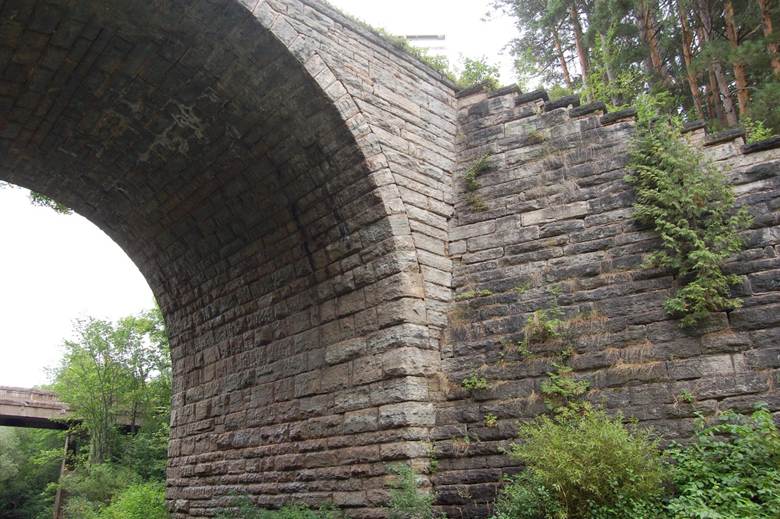
The bridge’s defining feature is its keystone arch, a hallmark of Gothic and Roman engineering alike. Each stone was hand-cut and placed, relying entirely on compression forces—no steel reinforcement, just gravity and craftsmanship.
Why it was built:
The Upper Peninsula’s iron ore industry demanded reliable transport routes. This bridge enabled the continuous movement of ore from mines to processing centers and ports, making it a critical link in the industrial supply chain.
Stone, Scarcity, and Gothic Influence
Stone arch bridges are rare in Michigan, largely due to the state’s limited natural stone resources suitable for large-scale construction. (Wikipedia) This scarcity makes each surviving example even more significant.
What ties these bridges together is not just their material, but their Gothic lineage—expressed through arches, symmetry, and permanence. While not overtly decorative like European cathedrals, these structures embody the same principles: strength through geometry, beauty through proportion, and endurance through craftsmanship.
Why They Still Matter
Today, many of these bridges no longer carry trains or heavy traffic. Some serve as pedestrian paths; others stand quietly, half-forgotten. Yet they remain powerful reminders of an era when infrastructure was built not just to function—but to last.
They are, in a sense, Michigan’s stone cathedrals of industry.
And they’re still standing.