By Gracus Bloom | City-Paper Travel News
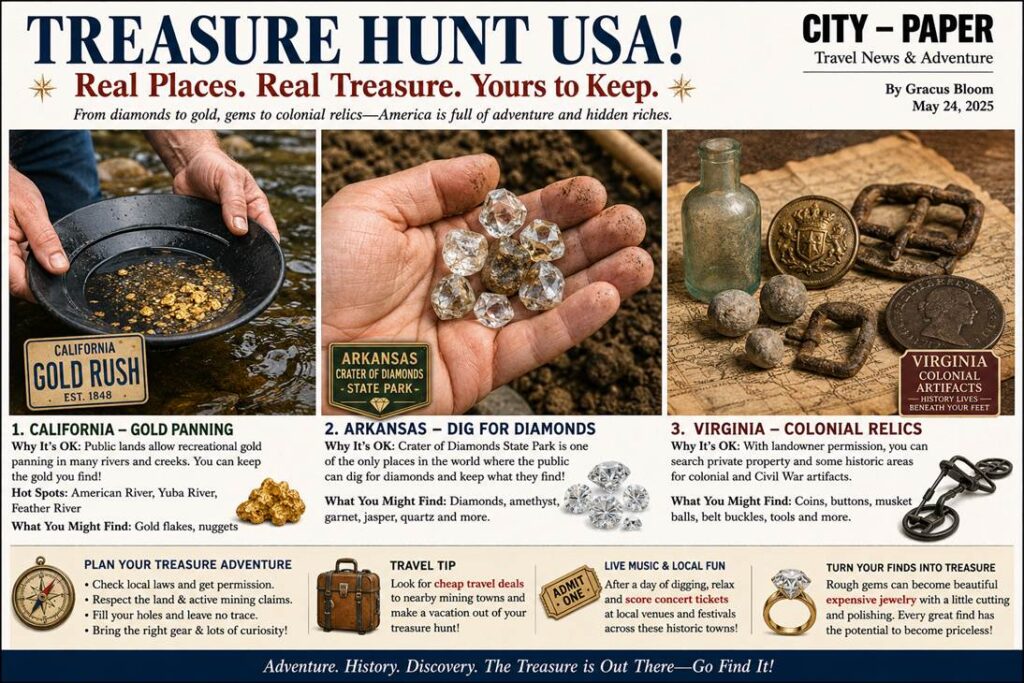
Few vacations combine history, adventure, and the possibility of striking it rich quite like a treasure-hunting trip. Across the United States, visitors can legally pan for gold, sift for diamonds, search for gemstones, dig for fossils, and even discover colonial-era relics on designated properties. While the odds of uncovering a fortune are slim, thousands of hobbyists head home every year with sparkling souvenirs—and occasionally a life-changing find.
Whether your dream is filling a vial with gold flakes or uncovering a gemstone worthy of becoming expensive jewelry, America’s treasure trails offer memorable adventures for travelers of every age.
Arkansas: Dig Your Own Diamonds
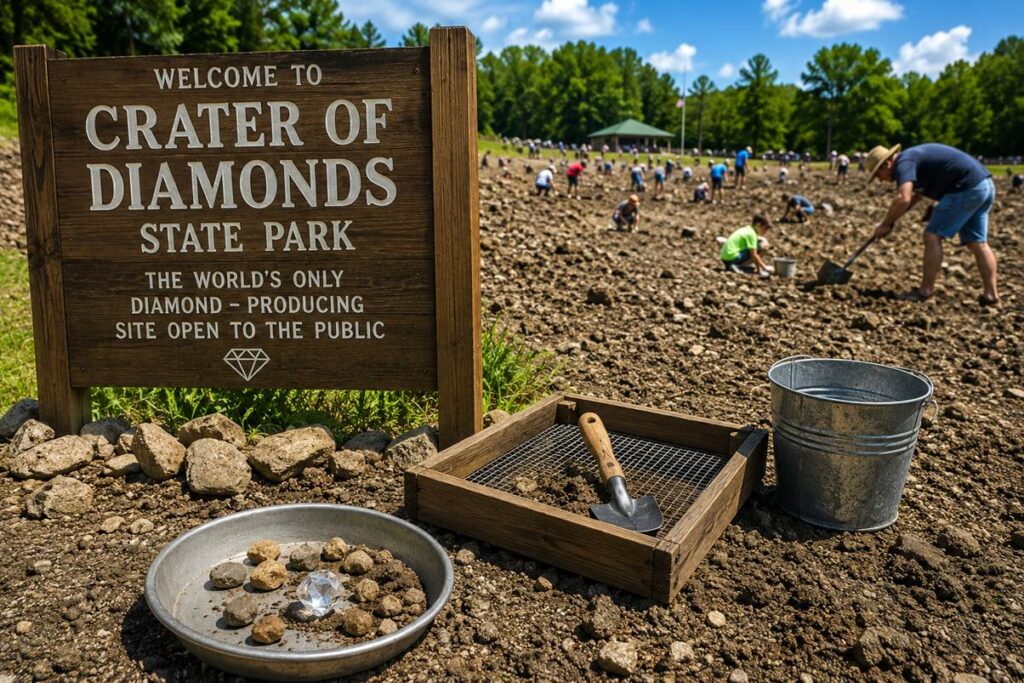
No destination is more famous than Crater of Diamonds State Park in Murfreesboro, Arkansas. Unlike most parks around the world, visitors may keep anything they discover.
The 37-acre volcanic field is one of the few public diamond-producing sites on Earth. Over the decades, visitors have found diamonds weighing several carats, including white, brown, and yellow varieties.
Besides diamonds, treasure hunters also uncover garnets, jasper, quartz, and amethyst.
Park staff identify and register noteworthy finds, making the experience even more exciting. Every year, thousands of hopeful visitors rent digging equipment and spend hours combing freshly plowed soil.
The reason collecting is permitted is simple: Arkansas established the area as a state park with a “finders keepers” policy to encourage tourism and preserve public access.
California: The Golden Legacy Lives On
California’s Gold Rush transformed American history beginning in 1848, and recreational prospecting remains popular today.
Public lands administered by the Bureau of Land Management and portions of National Forests permit recreational gold panning, provided visitors follow local regulations and avoid active mining claims.
Popular destinations include:
- American River
- Yuba River
- Feather River
- Auburn Recreation Area
Many outfitters rent pans, sluice boxes, and metal detectors while offering guided prospecting tours.
While most visitors recover only tiny flakes, occasional nuggets weighing several ounces continue to be discovered.
Many old mining towns have transformed into museums, hotels, restaurants, and outdoor recreation centers, making northern California one of America’s best treasure vacations.
Georgia: America’s First Gold Rush
Most Americans associate gold with California, but Georgia experienced the nation’s first major gold rush in 1829.
Today, visitors can pan for gold at several attractions including:
- Consolidated Gold Mine
- Crisson Gold Mine
Both destinations provide equipment, instruction, and gemstone mining activities.
Gold-bearing quartz still exists throughout the region, and recreational prospecting remains legal on private commercial mining properties.
Families especially enjoy the educational demonstrations explaining how nineteenth-century miners separated gold from river gravel.
North Carolina: Emerald Country
North Carolina is home to one of America’s richest gemstone regions.
Emerald Hollow Mine allows visitors to search for:
- Emeralds
- Hiddenite
- Sapphire
- Garnet
- Topaz
- Aquamarine
The site gained fame because Hiddenite, an unusual green gemstone, was first identified nearby during the 1870s.
Guests may dig, creek-sluice, or search exposed soil, keeping everything they discover.
Professional jewelers frequently purchase exceptional stones recovered from the mine.
Nevada: Silver State Adventures
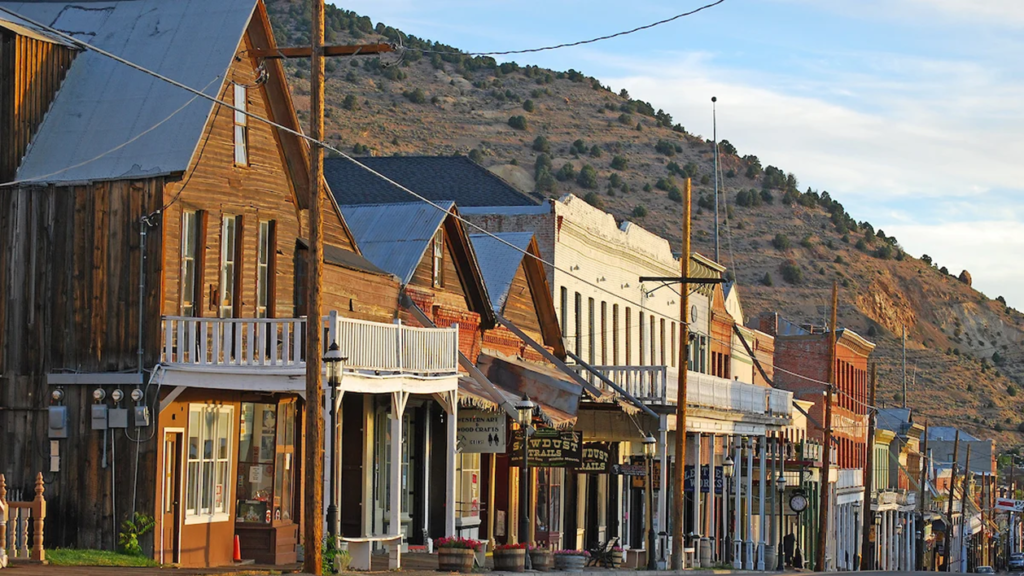
Nevada proudly carries the nickname “The Silver State.”
Although commercial silver mining dominates today, several historic mining districts offer educational tours and recreational rock collecting opportunities.
Old mining camps throughout Virginia City showcase America’s silver boom during the Comstock Lode era.
Nearby public lands also permit recreational mineral collecting where regulations allow.
Visitors often leave with attractive quartz, calcite, turquoise, and other mineral specimens.
Colorado: Rocky Mountain Gold
Colorado’s mountain streams continue producing placer gold over 160 years after the great mining boom.
Commercial prospecting parks throughout the Rockies let visitors pan legally while learning historic mining techniques.
Historic towns including Fairplay, Breckenridge, and Idaho Springs celebrate their mining heritage through museums, restored equipment, and guided excursions.
During spring runoff, fresh gravel often exposes additional gold-bearing deposits.
Montana: Sapphire Heaven
Montana produces some of North America’s finest sapphires.
Gem Mountain near Philipsburg allows visitors to wash sapphire-bearing gravel purchased from the mine.
Thousands of blue, green, teal, and parti-colored sapphires are recovered annually.
Some visitors choose to have their stones professionally cut into jewelry, while others proudly display their natural treasures.
Maine: Coastal Gemstones
Maine is well known among rockhounds for producing tourmaline, quartz, garnets, and amethyst.
Several fee-dig mines permit recreational collecting.
Western Maine’s pegmatite deposits continue producing gem-quality tourmaline crystals prized by collectors worldwide.
The scenic mountain setting makes gemstone hunting an ideal addition to any New England road trip.
Virginia: Colonial Relics
Not every treasure sparkles.
Virginia offers countless opportunities for history enthusiasts interested in colonial artifacts.
Private properties occasionally host organized metal-detecting events where participants search former homesites, battlefields outside protected federal land, and old farm fields with landowner permission.
Finds may include:
- Colonial buttons
- Musket balls
- Coins
- Belt buckles
- Horse tack
- Civil War relics
Federal law protects archaeological sites on public lands, so obtaining permission and understanding regulations remains essential.
Florida: Beaches Full of History
Florida’s Treasure Coast earned its nickname after Spanish treasure fleets wrecked offshore during hurricanes in the early 1700s.
Certain beaches permit recreational metal detecting, and storms sometimes expose historic coins and artifacts.
Treasure-hunting clubs monitor beach conditions after major weather events when shifting sands reveal buried objects.
While significant discoveries are rare, Spanish coins continue appearing from time to time.
Idaho: Opals and Garnets
Idaho surprises many visitors with colorful gemstones.
Spencer Opal Mine allows guests to search for brilliant precious opals displaying vivid flashes of color.
Farther north, Emerald Creek offers seasonal permits for collecting beautiful star garnets—Idaho’s official state gemstone.
These unique minerals are highly sought after by collectors.
Alabama: Shark Teeth and Fossils
Treasure isn’t always precious metal.
Southern Alabama’s riverbanks produce fossilized shark teeth, shells, and prehistoric marine life dating back millions of years.
Collectors often discover remarkably preserved specimens after heavy rains expose new sediment.
These ancient relics provide a different kind of priceless souvenir.

Know Before You Dig
Although treasure hunting is exciting, regulations vary widely.
Always remember:
- Obtain permission before entering private property.
- Respect active mining claims.
- Follow state and federal regulations.
- Never remove artifacts from protected archaeological sites.
- Fill excavation holes and leave natural areas clean.
- Check seasonal rules before traveling.
Most commercial treasure parks provide tools, safety instruction, and educational exhibits, making them ideal for beginners.
More Than Gold
Many travelers discover that the real reward isn’t striking it rich.
Exploring mountain streams, historic mining camps, desert ghost towns, and scenic forests creates lasting memories. Local museums often display spectacular discoveries while nearby shops feature handcrafted souvenirs, minerals, and polished gemstones. If your adventure uncovers rough stones, a good industrial polisher can transform many collectible rocks into beautiful display pieces.
Treasure hunting also supports small-town tourism across rural America. Restaurants, outfitters, museums, and family-owned lodges all benefit from visitors eager to experience a bit of frontier history.
If you’re planning your next vacation, consider one built around America’s hidden riches. With a little research, the proper permits, and perhaps some cheap travel deals, your next road trip could end with a pocket full of gold flakes, a sparkling sapphire, or a diamond waiting to become a cherished family heirloom.
After all, sometimes the greatest treasure isn’t what you find—it’s the story you bring home.