DC opened September with four days in a row of 90 or higher, for the first time since 2015.* We’re also now around average for 90-degree days during the whole month as temperature normals currently decline through the low and mid-80s.
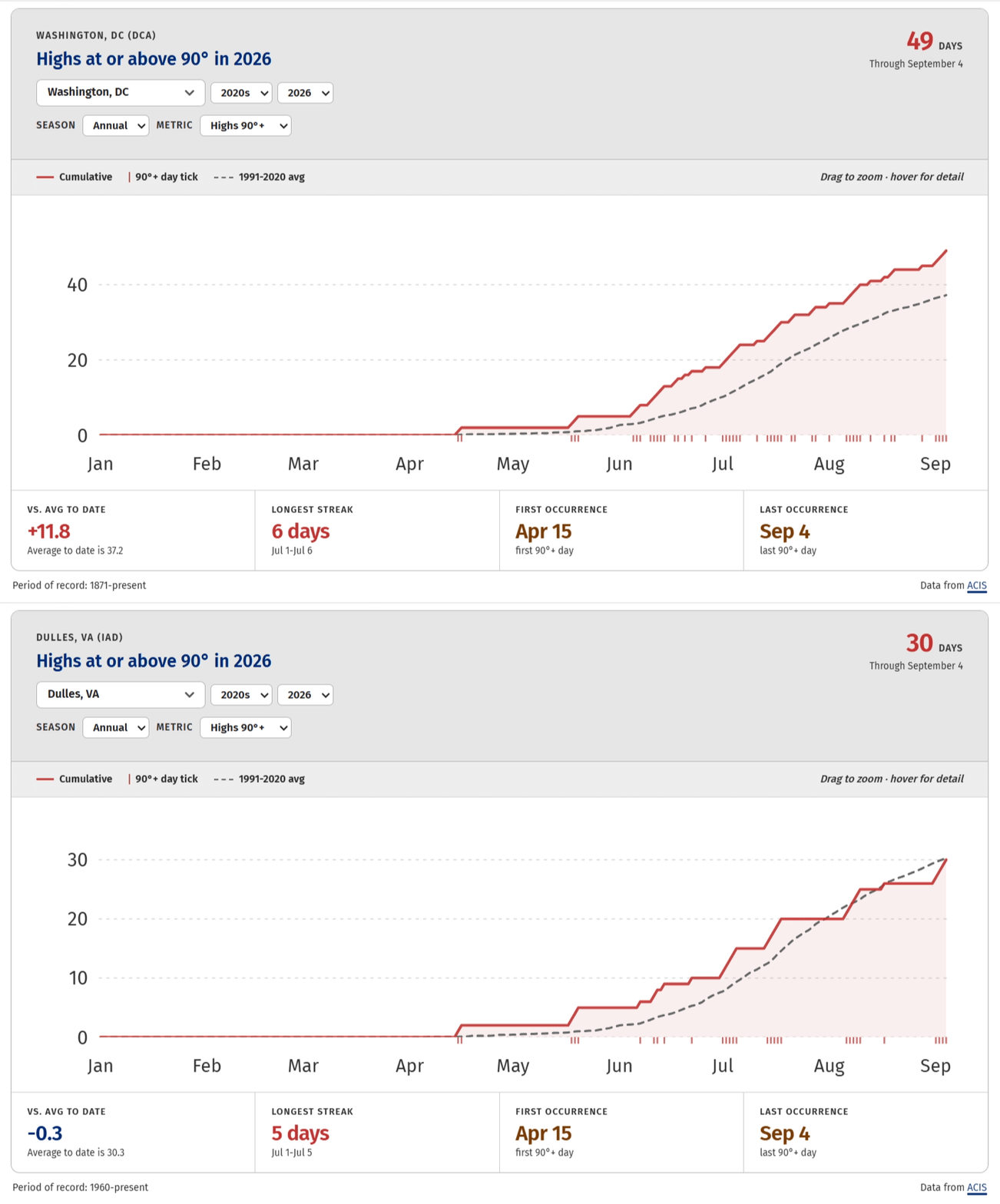
Now at 49 days at or above 90, DC continues to cruise well past the annual average of around 40 such days. With an average final 90 on Sept. 12, time is probably short.
But are we done? Seemingly not yet, but perhaps soon.
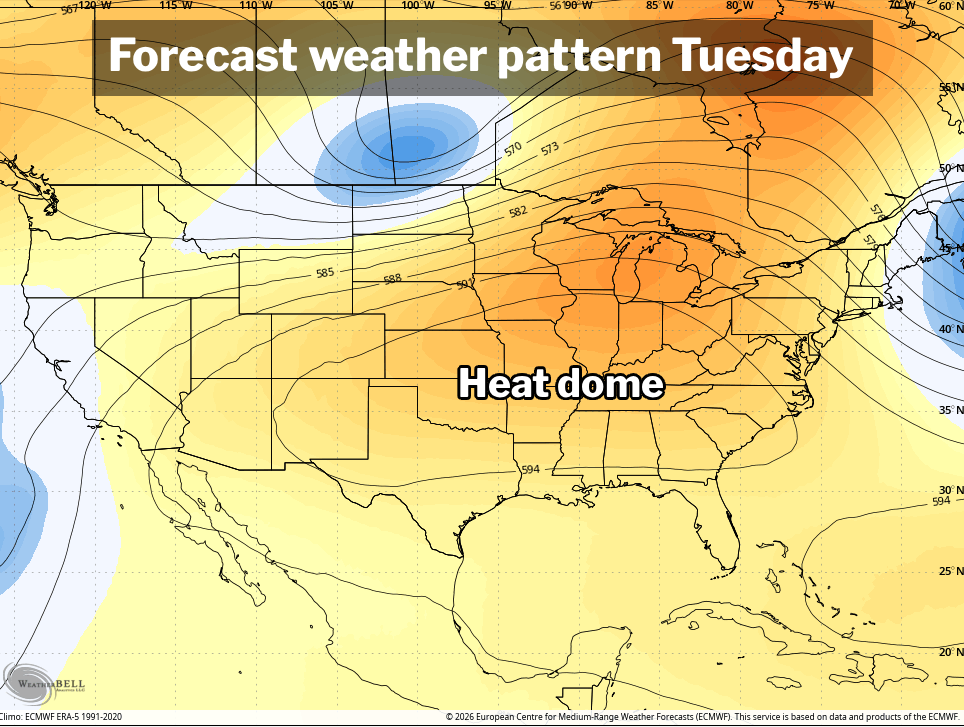
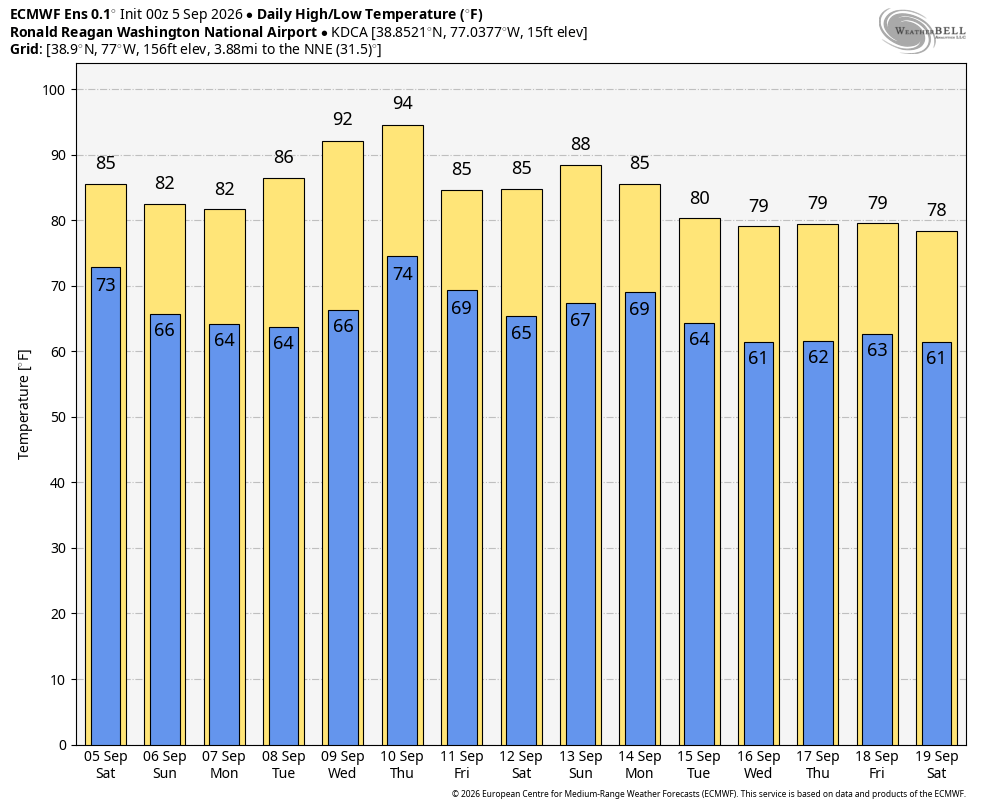
After a cooler holiday weekend — especially Sunday and Monday — a resurgence of above-average temperatures is expected as a heat dome of high pressure that is now shifting back west flexes eastward again. As it does so, highs should approach or surpass 90 by Wednesday into Thursday before the next cold front arrives.
While it looks warm to seasonable thereafter, signals for higher heat generally wane. The European system average below suggests there may be a slight bump in temperatures next weekend, which could mean we flirt with 90 in the usual hotspots like downtown DC. Beyond that, more typical September weather seems favored.
Since 2000, 15 years (~60%) have featured no 90s past the second week of September.
Once at 50 days of 90 or higher, DC moves into the top 20 years for that count. We’re already at the most since 2019’s 62 days. The record is 67 days in 2010 and 1980.
It is worth noting that while DC is 12 days above normal for 90 or higher to date, other locations across the area are not as far above the usual.
Dulles is at 30 days of 90 or higher, which is about average to date. Baltimore’s (BWI’s) 33 days is also pretty close to the typical. Damascus, Md., is at 14 days, again slightly above the usual through now. Although DC is not entirely alone, with downtown Baltimore at 45 days, it certainly seems there’s a heavy weight toward city centers on the most persistent heat this summer.
…
*Interestingly enough, 2015 was also a developing strong El Niño. The last 90-degree day that year was Sept. 9, when it reached 94. It was followed by a blizzard in January.
Published Date : 2026-09-05 13:06:00
Source : www.capitalweather.com