By City-Paper News Desk
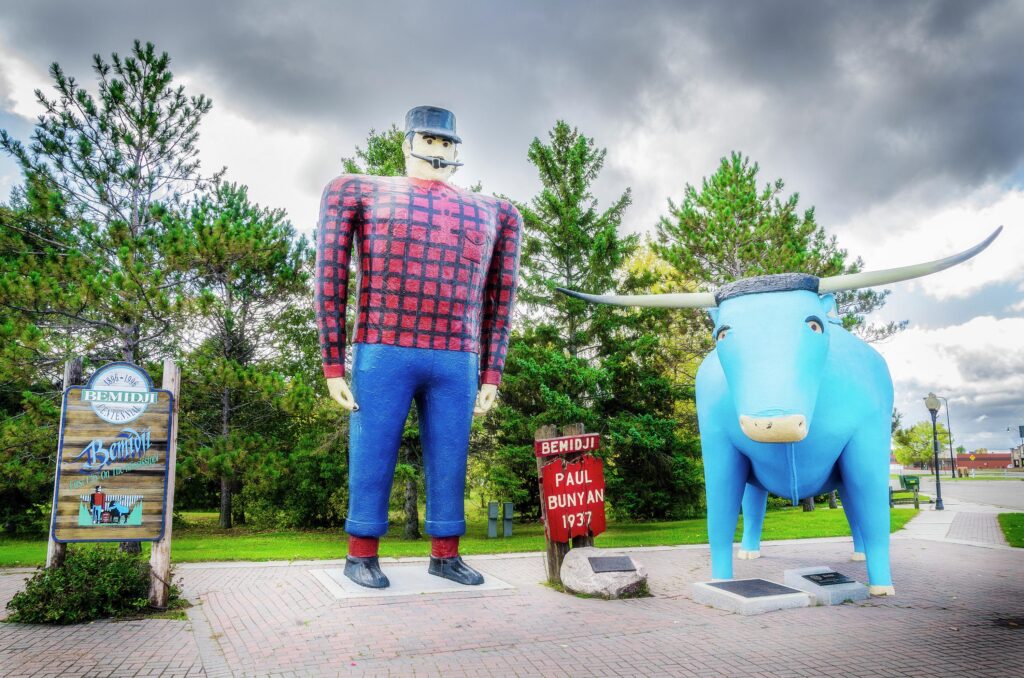
America has produced plenty of real-life heroes, but some of the country’s most entertaining characters never existed quite the way the stories claim.
They were giants, superhuman workers, impossible cowboys, lumberjacks who could reshape the landscape and characters who could apparently accomplish more before breakfast than most people could accomplish in a lifetime.
These are America’s tall tales.
The Library of Congress describes the tall tale tradition as a style built around humor, exaggeration and storytelling that is often delivered as though the unbelievable events really happened. The tradition grew through oral storytelling, work camps, frontier communities and regional folklore. (Research Guides)
Some characters became so famous that towns built statues of them. Museums began collecting their stories. Roads and festivals adopted their names. In a few places, you can still stand beside a giant lumberjack or visit the actual landscape associated with a legendary steel-driving man.
Here are four of the biggest names in American tall-tale history.
Paul Bunyan: Minnesota’s Giant Lumberjack
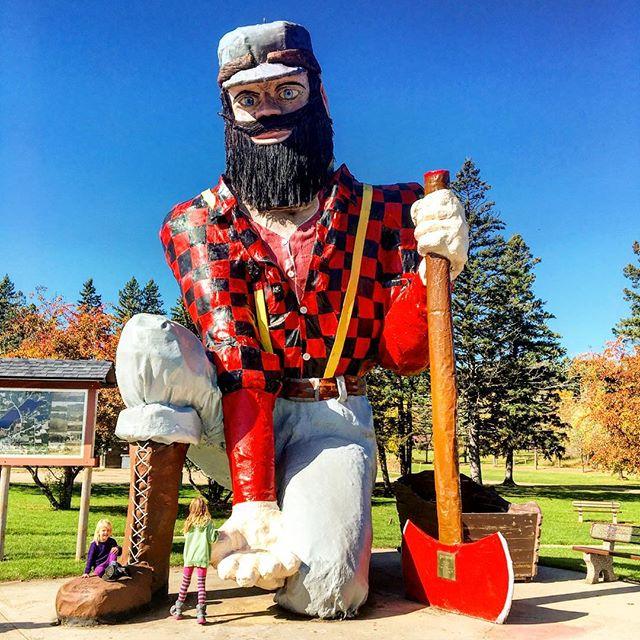
If American folklore had a heavyweight champion, Paul Bunyan would have a pretty good claim to the title.
Bunyan is generally associated with the logging country of the Upper Midwest, particularly Minnesota, although versions of his stories spread across the American lumbering regions.
The stories describe Bunyan as an enormous lumberjack capable of performing impossible feats. His companion is Babe the Blue Ox, another oversized character whose footprints supposedly helped create Minnesota’s famous lakes.
The exact origin of Paul Bunyan is complicated. Unlike a traditional fairy tale with a single identifiable author, Bunyan stories developed through oral storytelling and lumber-camp culture. The Library of Congress has recordings of Paul Bunyan stories collected in Michigan and Wisconsin in the 1930s. (Research Guides)
The character eventually became a powerful advertising figure. The Red River Lumber Company used Paul Bunyan and Babe in advertising beginning in 1914, helping move the lumberjack from campfire stories into mainstream American popular culture. (National Geographic)
Where Can You See Him?
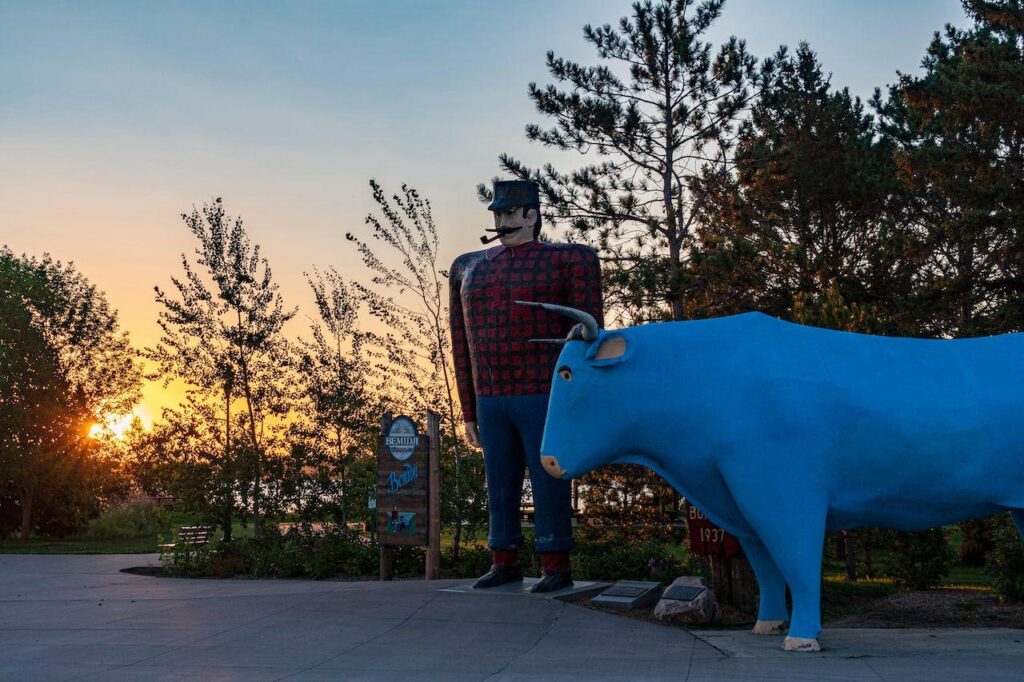
One of the most famous Paul Bunyan monuments is in Bemidji, Minnesota.
The Paul Bunyan and Babe statues have stood beside Lake Bemidji since 1937 and have become symbols of the area’s logging heritage. (Bemidji Area Chamber of Commerce)
Another stop is Akeley, Minnesota, where visitors can see a large Paul Bunyan statue and the Akeley Paul Bunyan Historical Museum, which contains photographs and artifacts connected with local history and the area’s former lumber industry. (Akeley MN)
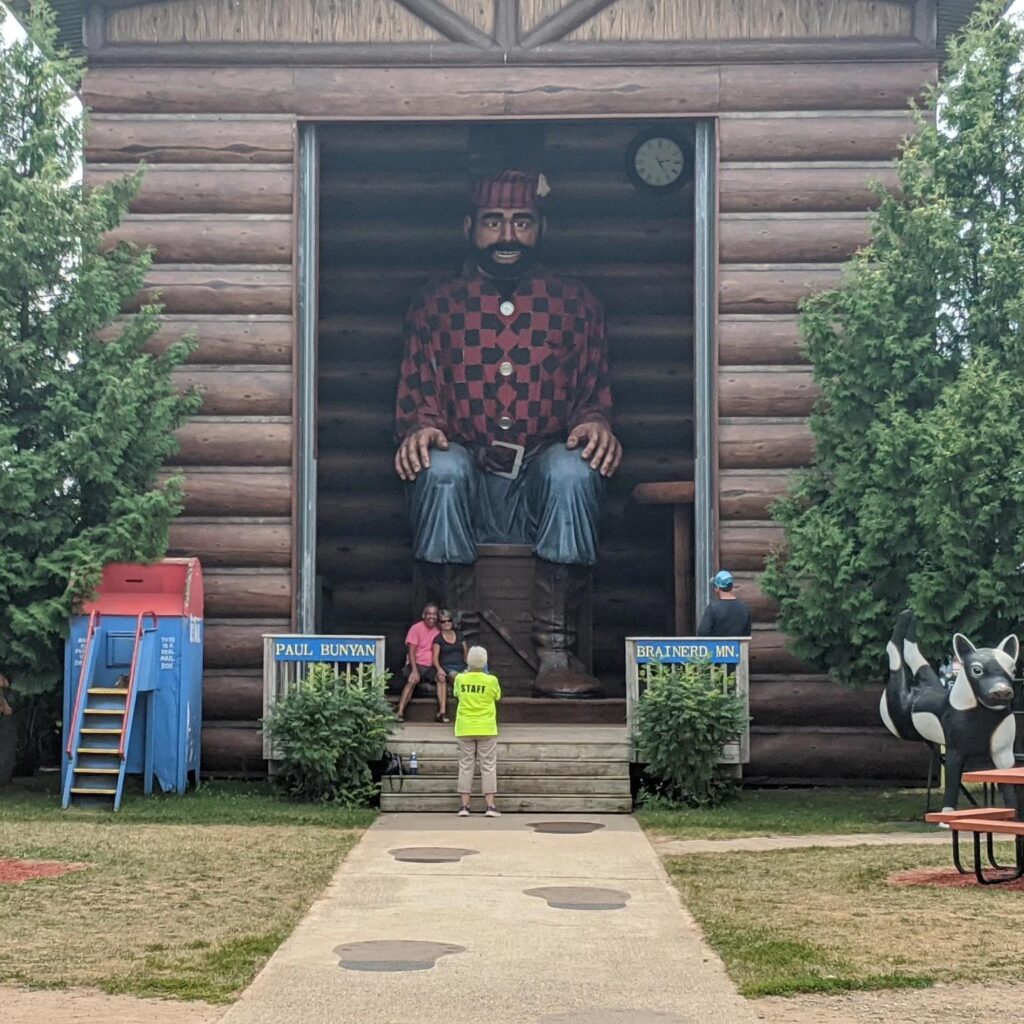
Visitors can also find Paul Bunyan at Paul Bunyan Land near Brainerd, Minnesota, which combines the legendary lumberjack with a pioneer village, campground and family attractions. (Paul Bunyan Land)
Museum and research links:
Akeley Paul Bunyan Historical Museum
Paul Bunyan Land
Library of Congress Paul Bunyan collection
John Henry: The Man Who Took on a Machine
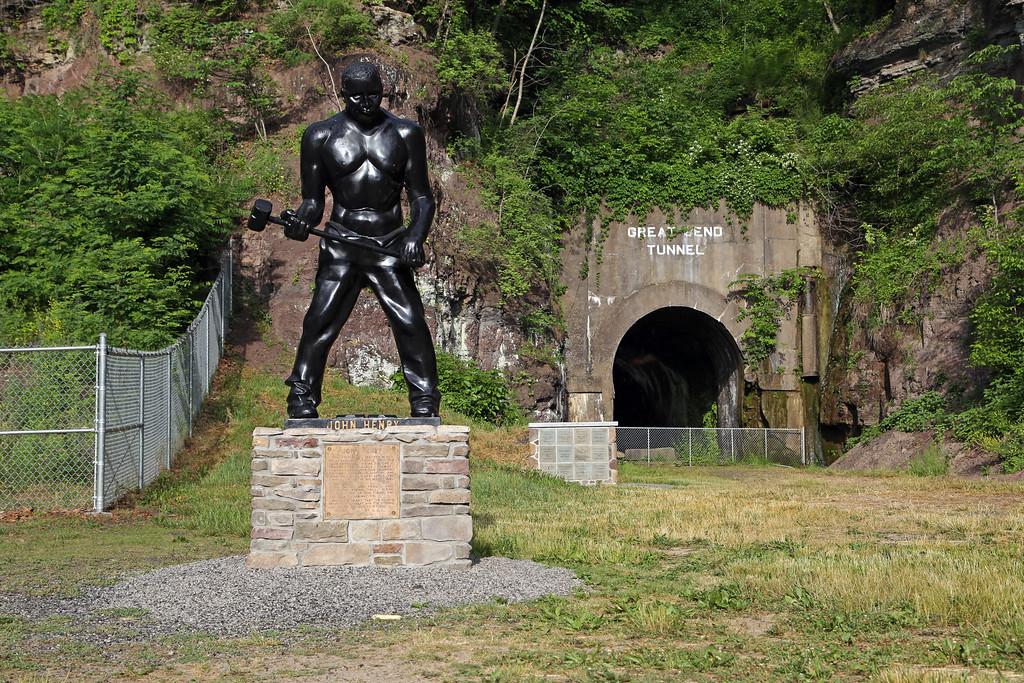
If Paul Bunyan represents the exaggerated power of the American lumberjack, John Henry represents the working man’s battle against technology.
The story is associated with Talcott, West Virginia, and the construction of the Chesapeake & Ohio Railway’s Great Bend Tunnel during the early 1870s.
According to the legend, John Henry was an exceptionally strong steel driver. When a steam-powered drilling machine arrived at the construction site, the story says Henry challenged the machine to a contest.
The result became one of America’s most famous stories about man versus machine.
The National Park Service explains that hundreds of workers—many of them African American—worked on the Great Bend Tunnel. They performed extremely dangerous manual labor using tools including hammers, drills, shovels and black powder. More than 800 workers helped cut the 6,450-foot tunnel through Big Bend Mountain. (National Park Service)
The legendary contest says Henry beat the steam drill but died afterward from exhaustion.
Historians are more cautious about the details.
The National Park Service notes that the story is a legend and that workers at the tunnel faced numerous hazards, including rock falls, explosions and respiratory disease. (National Park Service)
That distinction makes John Henry particularly fascinating. Unlike purely fictional characters, the story grew around a real historical workplace and the real people who performed extraordinarily difficult labor.
John Henry Park
Today, visitors can go to John Henry Historical Park in Talcott.
A statue of John Henry stands near the Great Bend Tunnel, and the park includes interpretive information and walking areas. (National Park Service)
There is also a John Henry Museum & Gift Shop, located in a former 1905 general store. The museum contains photographs, books, videos and other material relating to the legend and local history. (John Henry Historical Park)
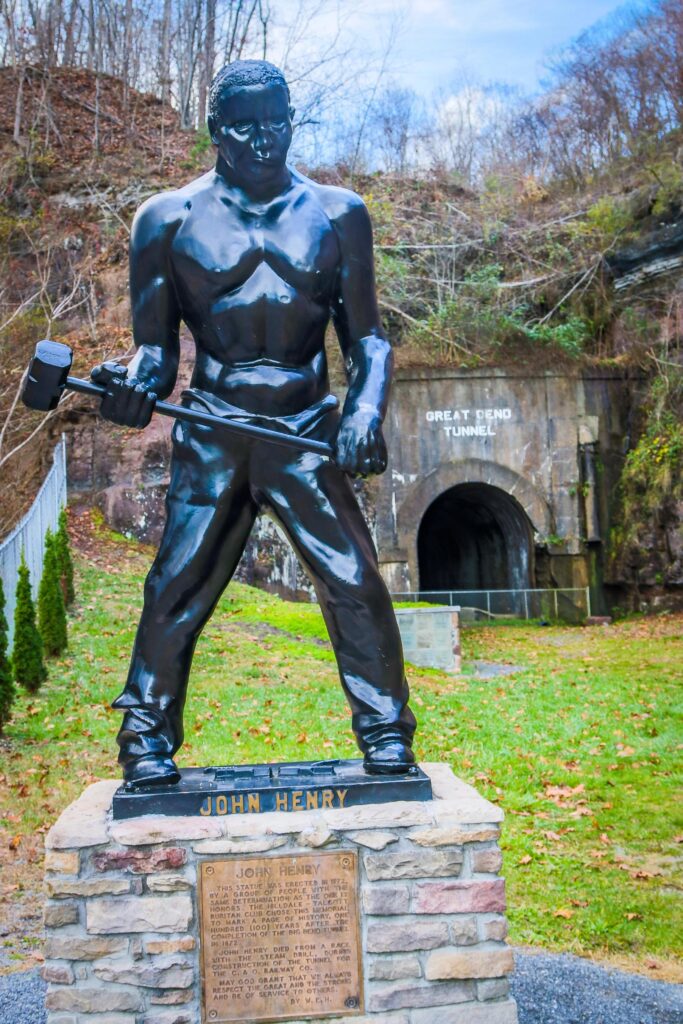
Museum and historical links:
National Park Service — John Henry
John Henry Historical Park
John Henry Museum
Pecos Bill: The Cowboy Who Apparently Needed More Supervision
Then there is Pecos Bill, the cowboy who took exaggeration to an entirely different level.
The stories place Pecos Bill in the Southwestern United States, especially Texas and the broader Southwest.
According to the Texas State Historical Association, Pecos Bill grew out of the imagination of Southwestern range hands telling stories to pass the time and trying to outdo one another. (Texas State Historical Association)
Bill’s adventures include riding extraordinary animals, performing impossible feats and surviving situations that would probably cause an insurance company to immediately cancel the policy.
But there is an important historical twist.
Unlike Paul Bunyan and John Henry, Pecos Bill’s literary history is much easier to trace. The character appeared in written stories in the early 20th century, and Texas historians note that the character became part of the American “fakelore” tradition rather than simply being an ancient cowboy legend handed down unchanged for generations. (Wikipedia)
The Texas State Historical Association remains one of the best research resources for understanding how the character developed.
Pecos Bill also became part of America’s broader folk-hero culture. In 1996, the U.S. Postal Service issued a Folk Heroes stamp series featuring Pecos Bill alongside Paul Bunyan, John Henry and Mighty Casey. (National Postal Museum)
There isn’t a single famous Pecos Bill monument comparable to Bemidji’s Paul Bunyan or Talcott’s John Henry statue. Instead, his legacy is preserved through Texas folklore collections, museums, historical societies and written accounts.
Texas State Historical Association — Pecos Bill
Mighty Casey: Baseball’s Greatest Almost-Hero
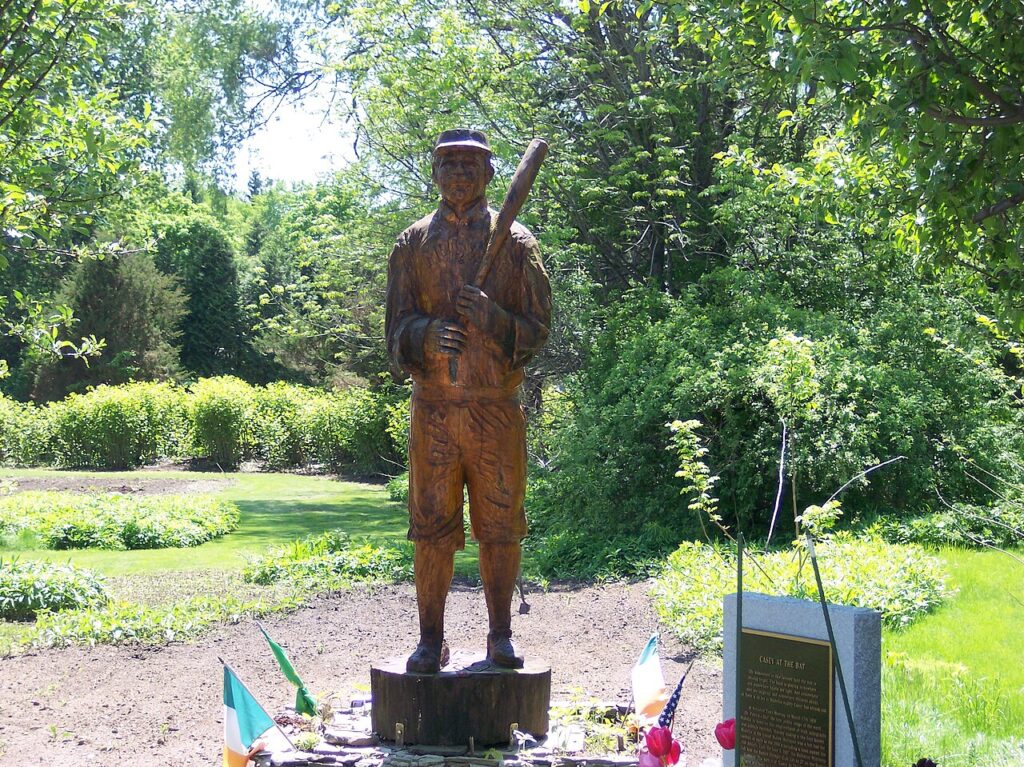
Another classic American folk character is Mighty Casey, the fictional baseball player from Ernest Lawrence Thayer’s famous poem “Casey at the Bat.”
Unlike Paul Bunyan, Casey doesn’t need to be 50 feet tall.
His problem is confidence.
Casey walks to the plate with his team apparently depending on him. Two strikes are called, and Casey remains confident that he can finish the job.
Then comes the famous ending.
Let’s just say the ballpark does not erupt in celebration.
Casey became a permanent part of American baseball folklore and was included with Paul Bunyan, John Henry and Pecos Bill on the 1996 U.S. Postal Service Folk Heroes stamps. (National Postal Museum)
The story also demonstrates something important about tall tales: they don’t always require a character to possess supernatural strength.
Sometimes exaggeration comes from personality.
Casey’s ego is the superpower.

Why Americans Still Love Tall Tales
The appeal of these stories goes beyond children.
Tall tales were created around real American experiences: logging, railroad construction, ranching, farming, mining, transportation and sports.
They transformed difficult work into entertainment.
A logger might have spent weeks cutting trees in cold weather. The storyteller turned that experience into a giant lumberjack who could push forests around.
Railroad construction was dangerous and exhausting. The John Henry story transformed the struggle between workers and emerging machinery into a legendary contest.
Cowboys faced long days on the range. Pecos Bill turned the cowboy into a superhero.
Baseball fans experienced the pressure of a crucial at-bat. Casey turned it into a story about confidence, expectation and spectacular failure.
The Library of Congress continues to preserve recordings and collections of these traditions, including Paul Bunyan stories collected by folklorist Alan Lomax. (Research Guides)
A Road Trip Through American Folklore
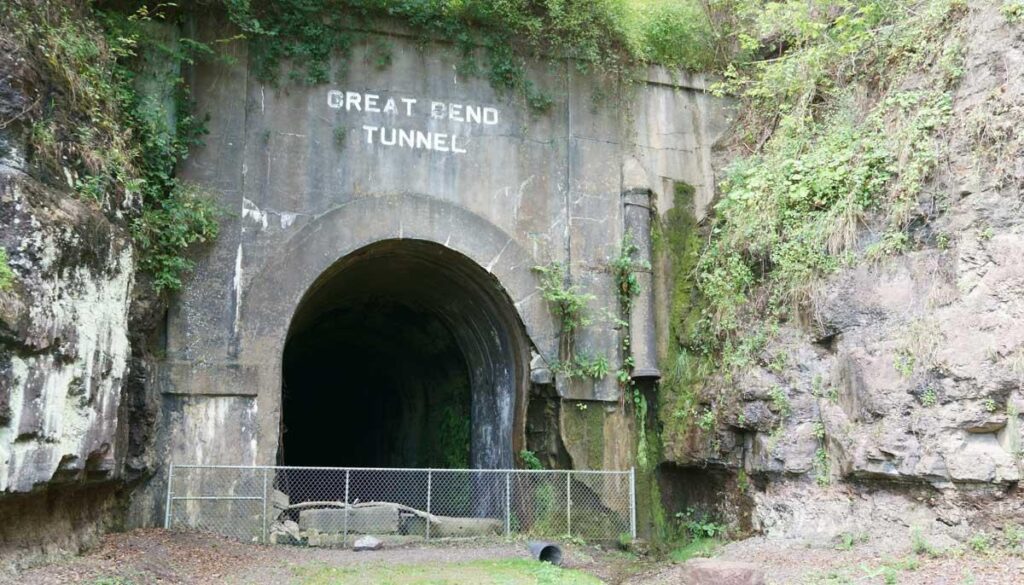
For travelers, these legends offer something unusual: the opportunity to visit places where folklore and physical history overlap.
A Minnesota trip can include Bemidji, Akeley and Brainerd for Paul Bunyan attractions.
A West Virginia trip can take visitors to Talcott and the Great Bend Tunnel to explore the John Henry story.
Texas visitors can explore the broader history of the Southwest that produced Pecos Bill.
And baseball fans can search for the many communities that have embraced the legend of Casey at the Bat.
For travelers trying to book a cheap hotel, these smaller-town folklore destinations can also provide an alternative to expensive major tourist attractions. A trip built around historic sites, museums and roadside monuments can be inexpensive while still producing memorable photographs.
Tall Tales Were Built Around Working America
Perhaps the funniest part of these stories is that many grew from ordinary people doing extraordinarily difficult jobs.
Logging camps needed workers.
Railroads needed tunnel crews.
Ranches needed cowboys.
Factories and workshops needed skilled tradespeople.
That history remains relevant today. Modern industry still depends on people who understand machinery, tools, metal, fabrication and mechanical systems. Someone researching manual machinist jobs is working in a field that would look very different from the hand tools of John Henry’s era—but the underlying idea is familiar: skilled people using specialized equipment to accomplish difficult physical work.
The Tall Tale Lives On
America’s tall tales were never really about whether Paul Bunyan could actually carry a forest or whether Pecos Bill could lasso a storm.
They were about storytelling.
They were about making difficult work funny.
They were about regional pride.
And they were about creating characters big enough to represent communities that often didn’t receive much attention in traditional history books.
Today, giant statues, museums, historic parks, archives and roadside attractions keep those stories alive.
The next time you see a gigantic lumberjack statue, remember: you’re not just looking at a funny roadside attraction.
You’re looking at a piece of American storytelling history.
And if the statue claims that Paul Bunyan dug half of Minnesota’s lakes himself, well…
That’s probably exactly the kind of story he would have wanted you to believe.
Disclaimer: Tall tales are folklore, not conventional historical biographies. Some characters may have connections to real people, places or occupations, but specific events and feats are often exaggerated or disputed. Visitors should verify museum hours, monument access and local conditions before traveling.