
Tennessee is known for its rolling hills, winding rivers, and rich transportation history. While modern interstate bridges move millions of vehicles every year, several historic spans remain engineering treasures that have connected communities for generations. Built during different eras of American expansion, these bridges showcase remarkable craftsmanship while continuing to attract photographers, historians, anglers, and travelers.
Whether you’re planning a scenic road trip or searching for cheap travel deals, these four Tennessee bridges deserve a place on your itinerary.
Walnut Street Bridge
Chattanooga, Tennessee

Completed in 1891, the Walnut Street Bridge stretches more than 2,300 feet across the Tennessee River and was once among the longest pedestrian bridges in the world after its restoration. Originally constructed for horse-drawn wagons and early automobiles, the bridge nearly faced demolition before citizens rallied to preserve it.
Original construction cost: Approximately $275,000 (1891 dollars)
Estimated replacement cost today: Roughly $85–100 million
The bridge was built primarily from riveted structural steel manufactured in Pennsylvania’s steel mills, while much of the stone used in its piers was quarried from eastern Tennessee limestone deposits.
Builder: King Iron Bridge & Manufacturing Company of Cleveland, Ohio.
Today the bridge serves pedestrians and cyclists while offering panoramic views of downtown Chattanooga and Lookout Mountain.
Fish found below:
Largemouth bass, striped bass, catfish, crappie, sauger, bluegill, and freshwater drum make the Tennessee River a favorite destination for anglers.
Gay Street Bridge
Knoxville, Tennessee
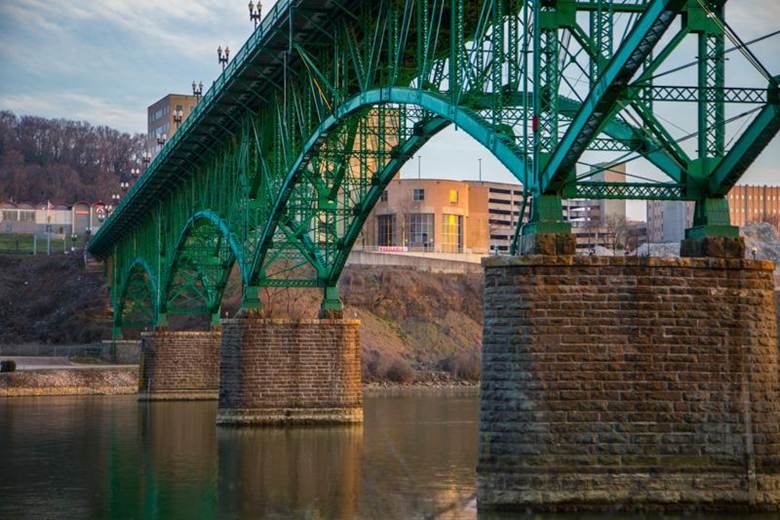
Completed in 1898, the Gay Street Bridge has become one of Knoxville’s defining landmarks. Replacing an earlier bridge destroyed by flooding, it connected downtown with South Knoxville and helped fuel the city’s commercial growth during the early twentieth century.
Original construction cost: Approximately $130,000
Estimated reconstruction cost today: About $70 million
The elegant steel truss bridge utilizes structural steel fabricated in Pennsylvania, with granite and limestone foundations sourced from regional Tennessee quarries.
Builder: Youngstown Bridge Company of Ohio.
Its graceful arches and decorative lighting continue making it one of Knoxville’s most photographed locations, particularly at sunset when reflections shimmer across the Tennessee River.
Fish species:
Smallmouth bass, largemouth bass, white bass, channel catfish, blue catfish, crappie, carp, and several species of sunfish inhabit these waters.
Henley Street Bridge
Knoxville, Tennessee

Officially opening in 1931, the Henley Street Bridge represented a new generation of reinforced concrete arch construction. Designed to handle increasing automobile traffic, it quickly became a vital transportation corridor crossing the Tennessee River.
Original cost: Approximately $1.1 million
Estimated cost to duplicate today: Around $140–170 million
Unlike earlier steel truss designs, the Henley Street Bridge features reinforced concrete with structural steel reinforcement. Cement originated from southeastern suppliers, while aggregates and limestone came from nearby Tennessee quarries.
Builder: McGeorge Construction Company, working under the Tennessee Department of Highways.
Its broad arches remain an impressive example of Depression-era engineering.
Fish below the bridge:
Spotted bass, crappie, freshwater drum, striped bass, sauger, bluegill, and catfish are commonly caught in this section of the river.
Shelby Street Bridge
Nashville, Tennessee
Completed in 1909, the Shelby Street Bridge spans the Cumberland River and has become one of Nashville’s iconic historic structures. Once carrying heavy automobile traffic, it now welcomes pedestrians and cyclists while providing spectacular views of the downtown skyline.

Original construction cost: Approximately $475,000
Estimated replacement value today: Nearly $120 million
The bridge consists primarily of structural steel fabricated by Midwestern steel manufacturers, while locally quarried Tennessee limestone forms much of the substructure supporting the elegant span.
Builder: American Bridge Company, one of the nation’s premier bridge builders during the early twentieth century.
Today it serves as a gathering place for festivals, photographers, runners, and visitors exploring Music City.
Fish inhabiting the Cumberland River:
Hybrid striped bass, largemouth bass, sauger, crappie, paddlefish, blue catfish, channel catfish, and carp are among the species anglers pursue.
Engineering That Endures
These bridges represent more than transportation—they tell the story of America’s industrial rise. During the late nineteenth and early twentieth centuries, steel from Pennsylvania and the Midwest fueled an unprecedented bridge-building boom, while Tennessee’s abundant limestone provided durable foundations that have withstood more than a century of floods, storms, and daily traffic.
Many of the skilled craftsmen who assembled these structures worked hundreds of feet above rushing rivers using little more than rivets, steam-powered cranes, and remarkable courage. Their workmanship continues to impress modern engineers.
Historic bridges also provide lessons for today’s infrastructure projects. Modern computer modeling, advanced steel alloys, and improved concrete technology would certainly enhance new construction, yet the durability of these vintage spans demonstrates the exceptional quality achieved by early bridge builders.
Visitors exploring Tennessee often discover that these landmarks are more than engineering achievements. They have become gathering places for festivals, concerts, walking trails, and scenic overlooks, connecting communities just as effectively today as when they first opened.
Whether you’re fascinated by history, architecture, photography, or simply enjoy a peaceful afternoon by the river, Tennessee’s vintage bridges offer a memorable glimpse into the craftsmanship of another era. And if you happen to meet someone asking where to find a good industrial painter for a restoration project—or notice signs advertising machine shops hiring during your travels—you’ll be reminded that preserving these engineering landmarks still depends on the skilled trades that helped build them in the first place.