After decades of efforts to reduce pollution, the DC region has finally met federal air quality standards for ozone.
The Metropolitan Washington Council of Governments announced Thursday that the region is now in compliance with the 2015 federal ozone standard and has applied to the Environmental Protection Agency for formal recognition.
If the EPA approves, the region will officially be recognized as meeting federal ozone standards under the Clean Air Act, rather than falling short of them.
Ground-level ozone is a harmful air pollutant that forms when emissions from vehicles, power plants and other sources react in sunlight, especially on hot, sunny days. Breathing ozone can irritate the lungs, cause coughing and shortness of breath, worsen asthma and other respiratory conditions, and increase the risk of respiratory illness.
The Council of Governments determined that the region met the ozone standard based on data from 14 air quality monitors.
Read more: Air quality in DC: What you need to know about pollution, risks and trends
One of the clearest signs of progress is the dramatic decline in days with unhealthy air quality, designated code orange, red or purple. From 1997 to 2007, the region averaged dozens of such days annually. In recent years, that number has dropped into the single digits.
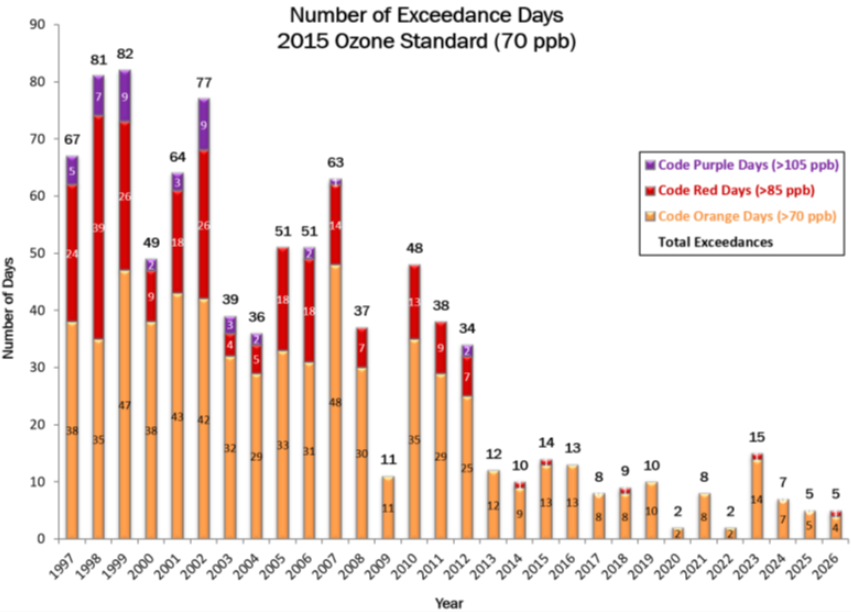
So far in 2026, the region has recorded just five days with unhealthy ozone levels. (One of those days was primarily due to the effects of smoke pollution, brought into the area by Canadian fires.)
With the ozone standard now met, the DC region is in compliance with all federal air quality standards, according to the Council of Governments.
“By investing in clean energy and strong emissions standards, local and state leaders have turned long-term environmental goals into everyday health protections,” said Dave Snyder, chair of the Metropolitan Washington Air Quality Committee and a Falls Church City Council member, in a news release.
The Council of Governments has also approved a plan, submitted to the EPA, demonstrating that the ozone improvements resulted from pollution reductions and outlining how the region will maintain cleaner air through 2038. The plan includes strict limits on vehicle emissions and backup pollution controls if ozone levels rise again.
Published Date : 2026-10-23 15:15:00
Source : www.capitalweather.com