Technology & Manufacturing News | Special report for City-Paper.com
The big story: Explore the history of machine assembly, factory tools, assembly-line innovations, modern robotics, machine assembler salary trends, job openings and the future of U.S. manufacturing.
1. Before the assembly line: the age of the master mechanic
Imagine stepping into a machine shop in the early 1800s. There are no digital work instructions, barcode scanners or robotic arms. Instead, the shop is filled with iron tools, wooden workbenches, hand-operated drills, files, hammers, vises and lathes powered by waterwheels or steam engines.
Building a machine was a craft. A skilled mechanic might fit shafts, gears, bearings, levers and fasteners by hand, adjusting components until they worked together. Parts often needed individual fitting because dimensions varied from one component to another.
The Industrial Revolution changed the scale of the problem. Steam engines powered factories and transportation. Machine tools made it increasingly practical to cut, bore, turn and shape metal with repeatable dimensions. Interchangeable components became more achievable as manufacturers improved measurement, gauges, fixtures and production methods.
That change mattered enormously. If a replacement gear or bolt could fit without being individually remade, a factory could produce more machines, repair them faster and build more consistent products.
Machine assembly grew from the meeting of three disciplines: mechanical engineering, precision manufacturing and organized labor. The assembler was no longer simply a craftsperson putting together a one-off device. Increasingly, that worker became part of a coordinated system that turned many separately manufactured components into one functioning machine.
2. The tools and machines that made modern assembly possible
Machine assembly could not become a large-scale industry until manufacturers developed the tools to produce reliable parts and move them efficiently.
- Lathes rotate a workpiece so cutting tools can produce shafts, cylinders, threads and other round features.
- Milling machines remove material with rotating cutters, shaping flat surfaces, slots, gears and complex profiles.
- Drill presses, reamers and tapping tools create and finish holes for bolts, pins and threaded fasteners.
- Grinders and finishing equipment improve surface quality and dimensional accuracy.
- Jigs, fixtures and assembly stands hold parts in the correct position so workers can repeat the same operation.
- Calipers, micrometers, dial indicators and gauges help workers check dimensions, clearances and alignment.
- Hoists, cranes, conveyors and powered lifts move heavy parts and reduce the need for workers to handle them manually.
- Torque wrenches and calibrated power tools help fasteners achieve the specified clamping force.
- Electrical test instruments verify motors, wiring, switches, sensors and control circuits.
The scientific principles behind assembly are equally important. Mechanical engineers calculate loads, gear ratios, bearing clearances and torque. Materials scientists investigate fatigue, hardness, corrosion and wear. Electrical engineers examine current, voltage, insulation and control signals. Quality engineers use statistical methods to determine whether parts remain within acceptable tolerances.
In other words, a machine can look perfectly assembled and still fail if a shaft is misaligned, a bearing is installed incorrectly, a fastener is under-torqued or a wire is connected to the wrong terminal.
That is why precision measurement and functional testing remain central to machine assembly—even in factories with extensive automation.
3. The factory revolution: when assembly became a system
The assembly line is often associated with Henry Ford, but Ford did not invent every element of it. Manufacturers had already experimented with divided labor, interchangeable components and products moving through successive workstations. Ford and his engineers combined these ideas into a highly influential automobile-production system.
At Ford’s Highland Park plant in Michigan, assembly methods developed rapidly in the early 1910s. The Model T contained thousands of components, and its production depended on parts being made to consistent dimensions. In 1913, workers assembled magnetos and flywheels at successive stations; the company later introduced more sophisticated moving lines. The Henry Ford museum documents how specialized machinery, interchangeable parts and coordinated material movement helped transform production.
The Henry Ford
Historic Photo 1 — Workers assembling components at Ford’s Highland Park plant in 1913. This is an archival photograph, not generated artwork.
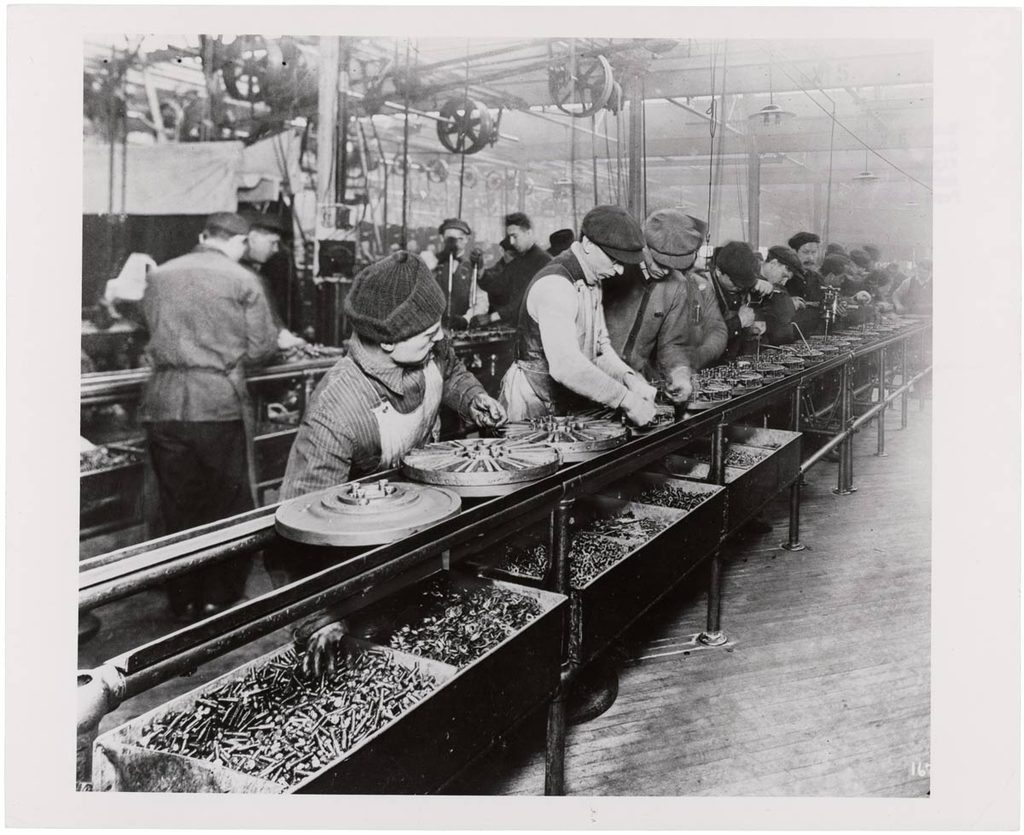
Source: U.S. National Archives, “Workers on the first moving assembly line put together magnetos and flywheels for 1913 Ford autos.”
National Archives
The productivity gains could be remarkable. The Henry Ford reports that the time required to assemble a Model T fell from approximately 12.5 man-hours using earlier stationary methods to about 1.5 man-hours with the refined process. That is an illustration of the power of redesigning the entire workflow—not merely asking individual workers to move faster.
The Henry Ford
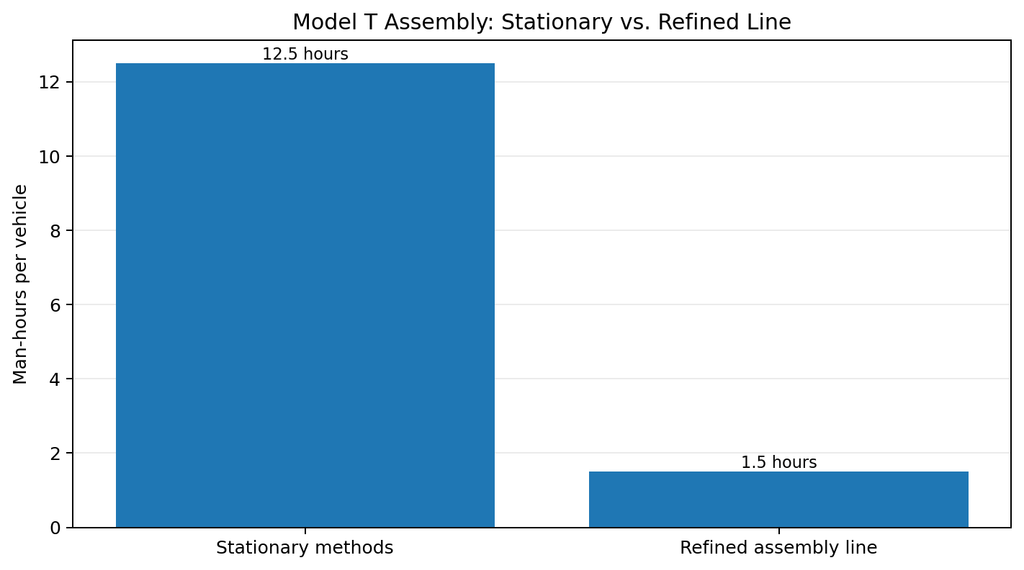
Chart 1 — Estimated Model T assembly labor time
The change had a catch. Repetition and speed made mass production more efficient, but some jobs became monotonous. Workers had less control over the pace of their work, and the line could leave little room for individual judgment. The Smithsonian’s account of mass production describes both the lower cost of manufactured goods and the concerns about repetitive work and management control.
National Museum of American History
4. The historic factories that shaped machine assembly
The factory floor became a laboratory for industrial organization. Several types of manufacturing operations helped establish methods that remain familiar today.
Automobile plants refined the use of moving lines, standardized parts, fixtures, material handling and timed workstations. Machine-tool builders developed the precision equipment that other factories depended on. Textile mills showed how powered machinery and specialized tasks could coordinate large workforces. Electrical-equipment plants needed workers to wind coils, install contacts, wire motors and test electrical assemblies. Farm-equipment and industrial-machinery manufacturers combined heavy castings, shafts, bearings, gears, hydraulics and power systems into machines expected to withstand years of demanding service.
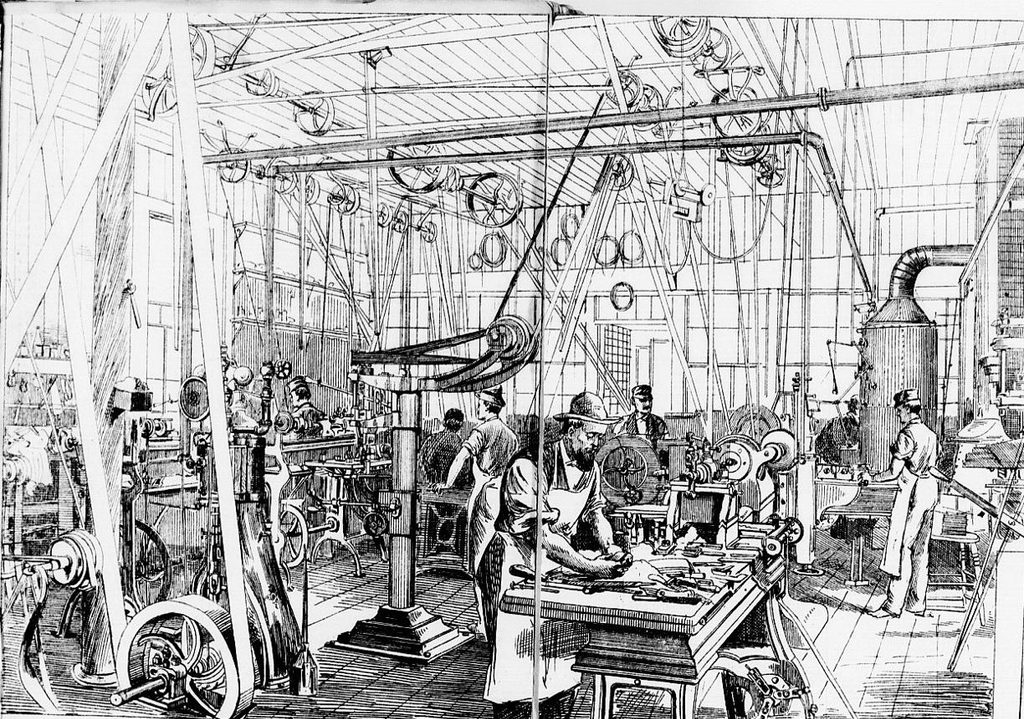
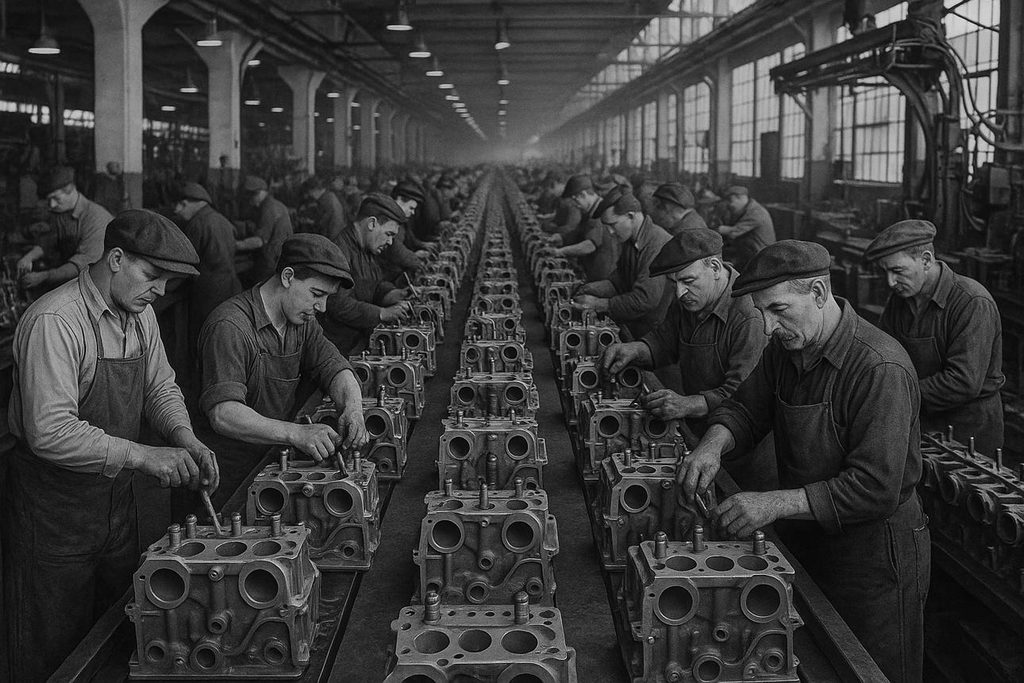
In the early twentieth century, many factories relied on overhead belts and pulleys to distribute power from a central engine. Electrification gradually allowed individual machines or groups of machines to be positioned according to production needs rather than the path of a long mechanical drive shaft. The Henry Ford’s history of Highland Park describes how electric motors and specialized machine tools helped make its production system more flexible and effective.
The Henry Ford
Historic Photo 2 — Early machine-shop production, illustrating the belt-driven equipment and specialized workstations common in industrial manufacturing.
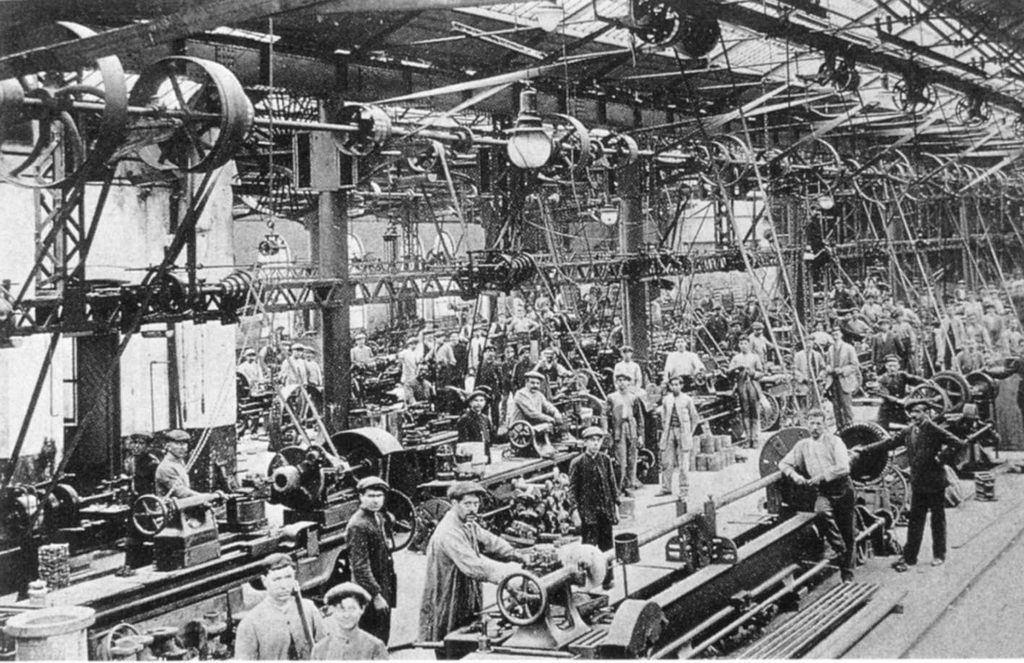
The same principles spread far beyond automobiles. A pump manufacturer might machine a casing, fit an impeller, install bearings and seals, align a shaft, connect a motor and test the completed unit. An agricultural-equipment plant might assemble transmissions, hydraulic cylinders and engine systems. An electric motor shop might rewind a stator, replace bearings, machine a worn shaft and rebuild the motor for service.
These are different products, but the underlying sequence is similar: manufacture parts, prepare surfaces, position components, fasten or join them, verify alignment, test function and document the result.
5. World wars, government policy and the politics of production
Machine assembly has never been shaped by technology alone. Government contracts, labor policy, trade rules, infrastructure investment and national security have repeatedly influenced what factories build and how quickly they build it.
During World War I, industrial capacity became critical to supplying transportation, equipment and munitions. World War II expanded the role of factories even further. Automotive and other manufacturers adapted their plants to support military production, while women entered large numbers of industrial jobs previously dominated by men. Government procurement encouraged factories to standardize parts, increase throughput and meet strict delivery schedules.
Historic Photo 3 — Women working in a wartime electrical-equipment assembly operation during World War II.
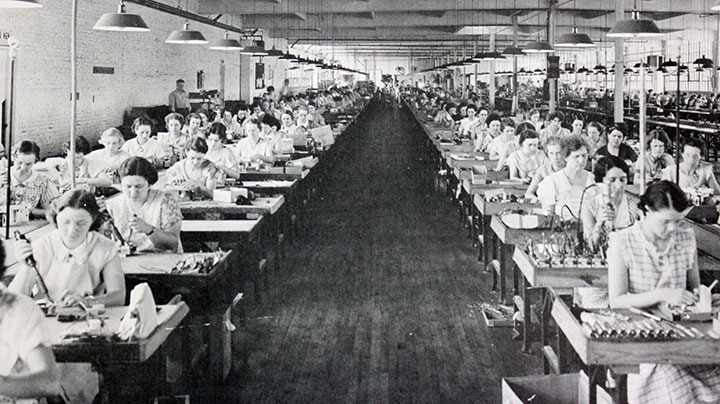
Source: U.S. Auto Industry During World War II, Delco Radio history. Verify the image’s original rights and attribution before commercial republication.
After the war, industrial policy and consumer demand helped expand production of automobiles, household appliances, construction machinery, electrical equipment and industrial systems. Government-funded research, highways, defense spending and technical education also influenced the growth of manufacturing regions.
Labor politics mattered just as much. Workers organized unions to seek better wages, shorter hours, safer workplaces and a voice in production decisions. Employers pursued productivity improvements and predictable output. The resulting negotiations helped shape the relationship between wages, benefits, automation and the organization of work.
Today, policy debates continue around tariffs, imported components, domestic manufacturing capacity, workforce training, energy costs and supply-chain resilience. Tariffs can make some imported components more expensive and encourage domestic sourcing, but they can also raise input costs for U.S. manufacturers that rely on imported machinery, metals or electronics. The effect depends on the product, supply chain and policy design.
Programs such as the federal Manufacturing Extension Partnership, administered by the National Institute of Standards and Technology, help small and medium-sized manufacturers improve operations, adopt technology and strengthen workforce capabilities. In September 2026, NIST announced more than $30 million in awards for 12 centers to support adoption of advanced manufacturing technologies, including AI, robotics, automation and additive manufacturing.
NIST
The political challenge is to make modernization practical for smaller factories, not only giant corporations. A manufacturer may want a robotic assembly cell but lack the engineering staff, capital or time to install it. Technical assistance, apprenticeships and industry partnerships can help bridge that gap.
6. The workers behind the machine
Machine assembly is not one job. It is a family of occupations that combine manual skill, technical knowledge and quality control.
- Mechanical assemblers fit frames, shafts, gears, bearings, housings and fasteners.
- Engine and other machine assemblers build or rebuild engines, turbines and industrial machinery.
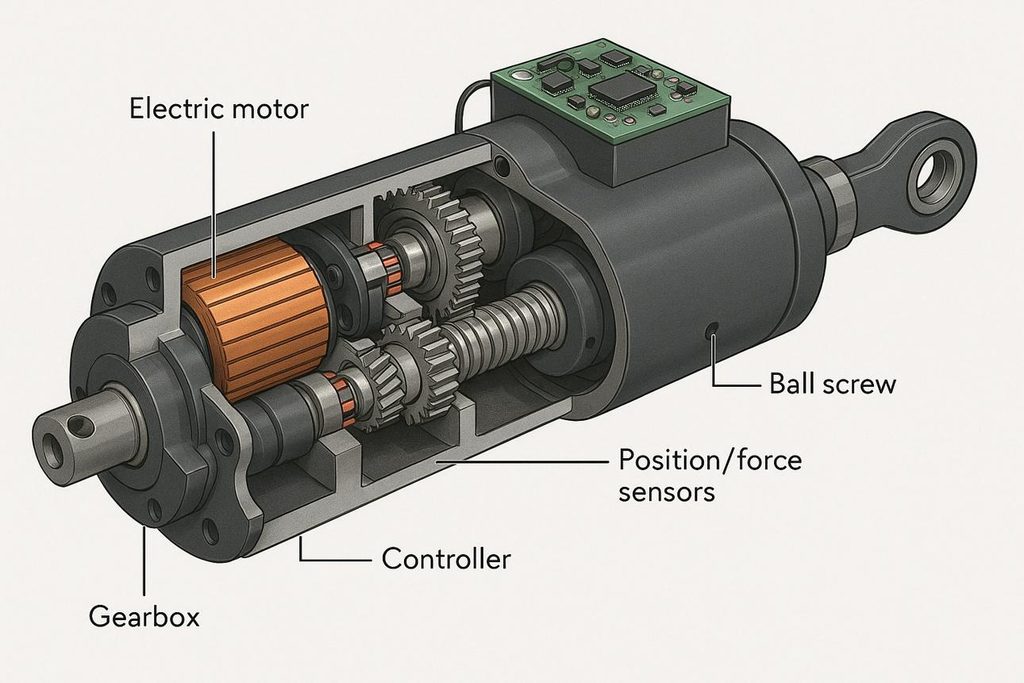
- Electromechanical assemblers combine mechanical components with motors, sensors, actuators, wiring and control systems.
- Electrical assemblers install wiring, terminals, switches and electrical components, then test circuits and connections.
- Machinists and toolmakers produce or modify parts that must meet exact dimensions.
- Industrial polishers and finishers remove burrs, improve surface finish, prepare components for coating or help achieve the surface quality needed for fit and function.
- Quality inspectors and test technicians measure dimensions, verify tolerances and confirm that finished equipment operates according to specification.
- Maintenance technicians and engineers keep production equipment running and investigate recurring failures.
O*NET’s occupational descriptions for machine assemblers and electromechanical assemblers include interpreting blueprints, positioning and aligning parts, checking clearances, connecting wiring, measuring components and testing completed equipment.
Engine and Other Machine Assemblers
Illustration 2 — A modern electromechanical assembly, showing the relationship between mechanical parts, electrical connections and precision measurement. Illustrative artwork, not a technical drawing to scale.
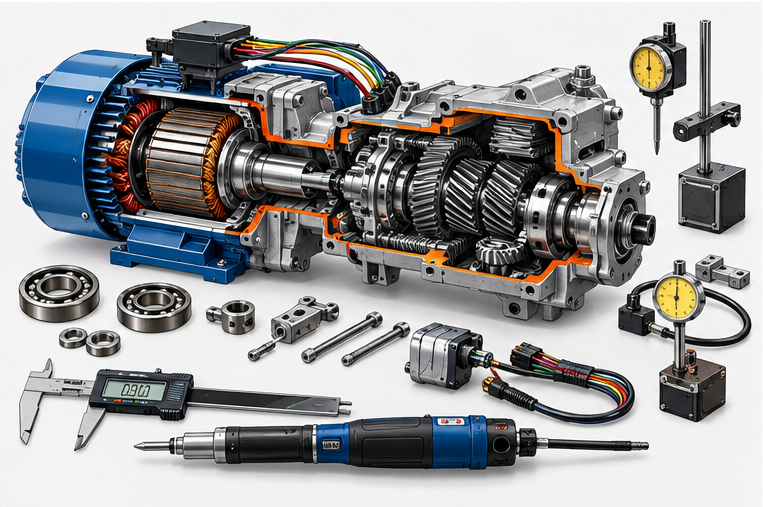
The strongest assemblers understand why a step matters, not just how to perform it. They know when a bearing feels wrong, when a shaft is out of alignment, when a fastener needs a specified torque and when a measurement should be repeated. That practical judgment is difficult to replace with a checklist alone.
Safety is equally fundamental. Machine guarding, proper lifting procedures, eye protection, electrical isolation and lockout/tagout procedures help protect workers from moving parts and unexpected energy release. OSHA’s machine-guarding guidance explains the hazards associated with rotating parts, nip points and points of operation.
Occupational Safety and Health Administration
7. Chart 2: What does a machine assembler earn?
The phrase machine assembler salary can refer to different jobs, and pay varies with industry, experience, location, shift, complexity and responsibility. Federal statistics provide a useful starting point, but they should not be treated as a promise of what any specific employer will pay.
According to the U.S. Bureau of Labor Statistics, the median annual wage in May 2025 was $53,710 for engine and other machine assemblers, compared with $45,450 for assemblers and fabricators overall. Electrical, electronic and electromechanical assemblers (excluding certain specialized categories) had a median of $45,850. The median for all occupations was $50,980.
Bureau of Labor Statistics
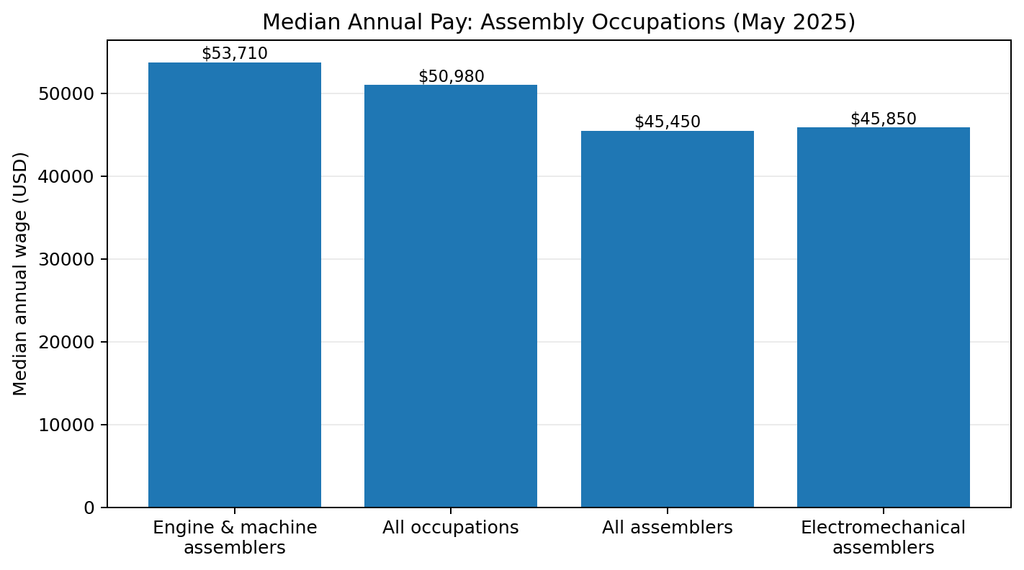
These figures are national medians, not starting salaries or local pay estimates. Workers with experience reading complex blueprints, aligning rotating machinery, troubleshooting electrical controls, testing equipment or supervising production may qualify for higher-paid roles. A job involving large engines or precision machinery can require different skills from one involving repetitive assembly of small consumer products.
For job seekers, useful search terms include “engine assembler,” “mechanical assembler,” “electromechanical assembler,” “industrial machinery assembler,” “assembly technician” and “machine builder.” Comparing the duties is just as important as comparing titles.
8. Chart 3: The machine assembler career outlook
The machine assembler career outlook is mixed. Automation can reduce the number of workers needed for some repetitive tasks, while more sophisticated machinery creates demand for people who can install components correctly, troubleshoot problems, test systems and work alongside automated equipment.
The BLS projects overall employment of assemblers and fabricators to grow 1% from 2025 to 2035, slower than the 3% projected for all occupations. It nevertheless projects approximately 177,500 openings per year on average across the broad assembler-and-fabricator occupational group, largely because workers transfer to other jobs or leave the labor force. These are annual openings, not 177,500 newly created jobs each year.
Bureau of Labor Statistics
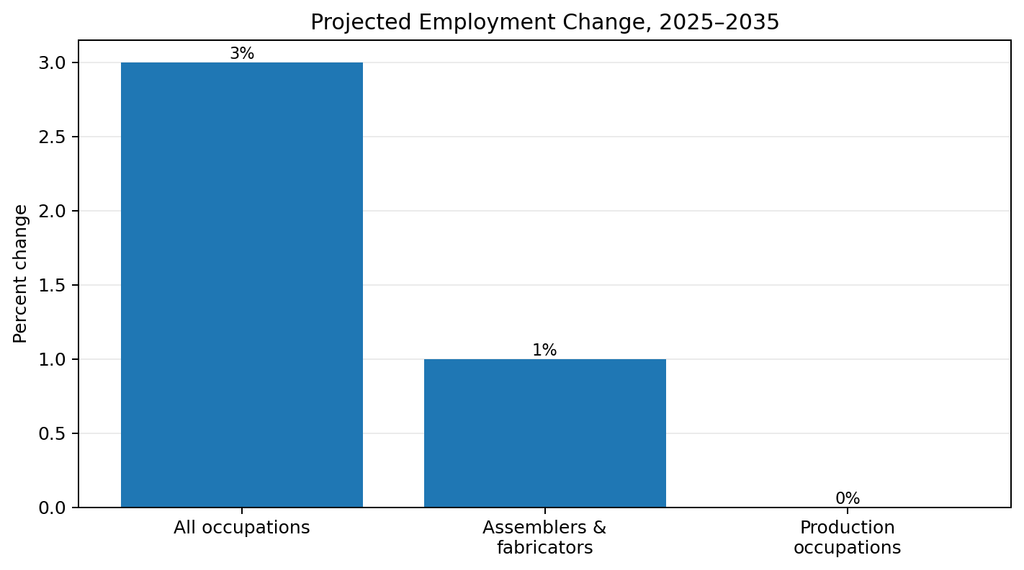
Chart 3 — Projected employment change, 2025–2035
The broad category includes many kinds of assembly work, so its projection does not tell the entire story for every specialization. BLS notes that electrical, electronic and electromechanical assemblers are employed in manufacturing areas such as electric vehicles, energy storage batteries and semiconductors, where demand can differ from the broader trend.
Bureau of Labor Statistics
9. Chart 4: Where are the manufacturing openings?
BLS Career Outlook data for 2024–2034 identified substantial annual openings in several manufacturing occupations. Its selected-occupation figures include approximately 156,300 annual openings for miscellaneous assemblers and fabricators, 29,600 for electrical, electronic and electromechanical assemblers, and 29,500 for machinists. These figures come from that earlier projection period and should not be confused with the newer 2025–2035 outlook above.
Bureau of Labor Statistics
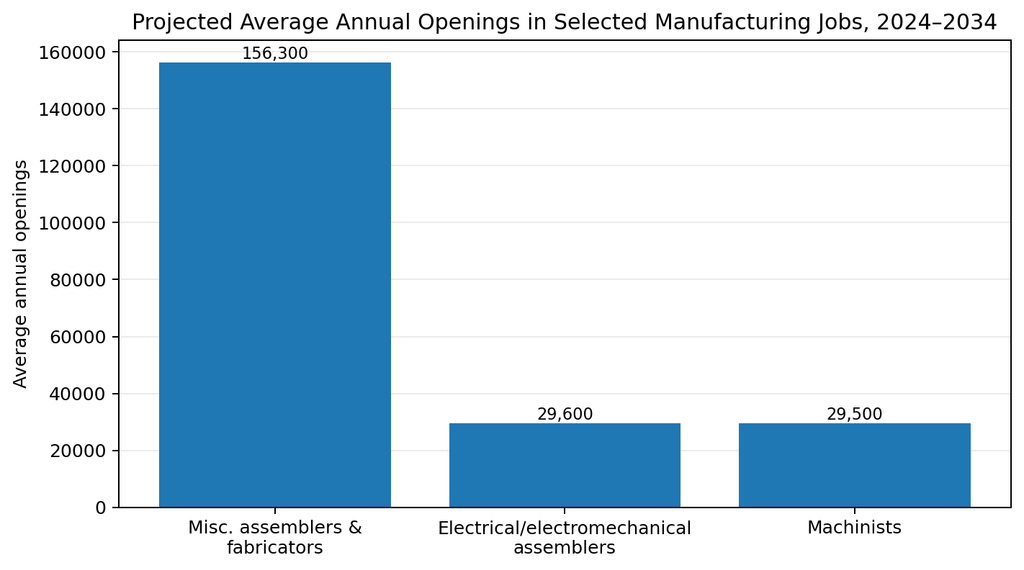
Chart 4 — Projected average annual openings in selected manufacturing jobs, 2024–2034
Data note: The chart compares broad occupational categories. “Miscellaneous assemblers and fabricators” is much larger than the more specialized electrical/electromechanical assembler category; it does not mean that every type of assembly job has the same outlook.
For people seeking machine assembler job openings, the best approach is to search by the machinery involved and the technical tasks required. Employers building pumps, generators, packaging machinery, agricultural equipment, machine tools, industrial drives or electrical control panels may use different titles for jobs that share similar assembly skills.

10. From human hands to collaborative robots
Modern factories increasingly use robots, machine vision, digital work instructions, automated fastening systems and sensors to support assembly. Robots excel at repeatable movements and consistent cycle times. Cameras and sensors can identify part orientation, verify presence and flag certain defects. Digital systems can record torque values, serial numbers and test results for traceability.
But automation is not a magic wand. A poorly designed assembly sequence can be automated into a faster, more expensive failure. Components must still be designed for assembly, parts must arrive in usable condition, fixtures must be accurate, and the entire process must be validated.
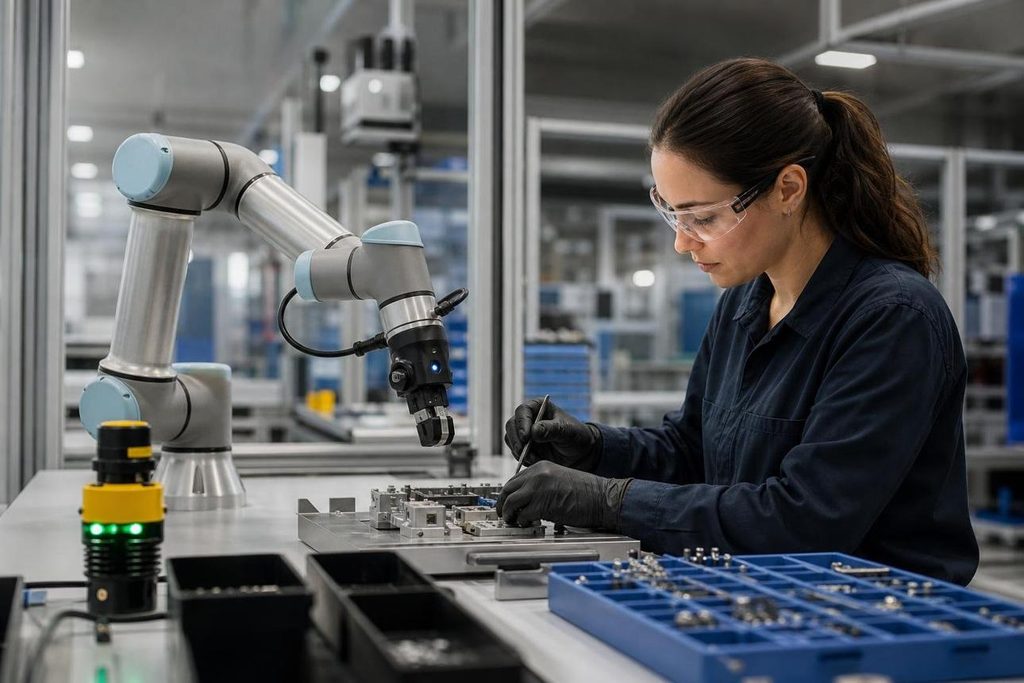
Human workers remain important for setup, exception handling, quality decisions, maintenance, process improvement and work that varies from one product to another. In some facilities, a collaborative robot handles a repetitive fastening task while an assembler positions components, checks alignment and confirms the final result.
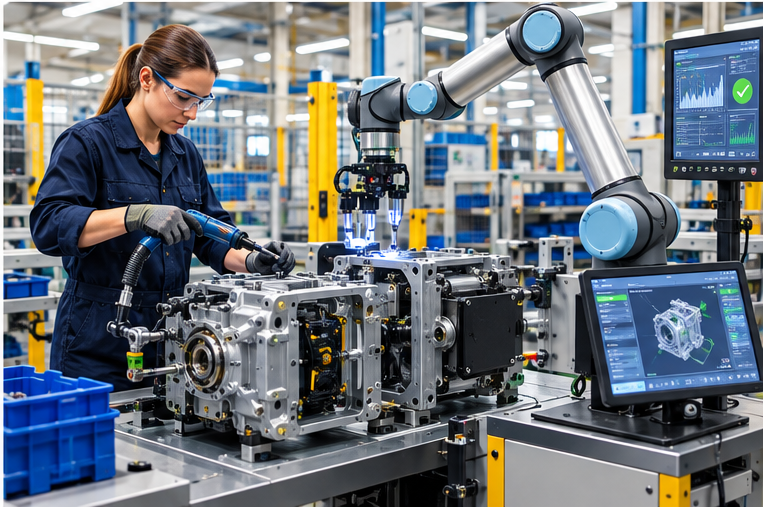
The transition changes the skills employers value. Blueprint reading, precision measurement, mechanical fundamentals and safe work habits remain essential, while familiarity with digital instructions, programmable equipment, sensors and automated testing can make a worker more versatile. The NIST Manufacturing Extension Partnership offers resources to help small and medium-sized manufacturers assess and adopt modern production technologies.
NIST
11. How to prepare for the next generation of assembly jobs
A person entering the field does not necessarily need a four-year engineering degree to get started. Many assembly occupations require a high school diploma or equivalent and on-the-job training, although advanced work may require technical education and substantial experience.
Bureau of Labor Statistics
A practical development path could include:
- Learn to read mechanical drawings, work instructions and parts lists.
- Practice safe use of hand tools, power tools, torque tools and measuring instruments.
- Study bearings, gears, shafts, couplings, fasteners, lubrication and alignment.
- Add electrical basics: wiring diagrams, motors, sensors, switches and continuity testing.
- Learn quality documentation, inspection procedures and troubleshooting.
- Seek exposure to CNC machining, programmable logic controllers, robotics or automated test equipment.
Employers can also benefit by creating progression routes from entry-level assembly into testing, quality, maintenance, field service, production supervision and manufacturing engineering support.
12. The small-shop opportunity: assembly expertise as a business
Not all machine assembly takes place in enormous plants. Smaller industrial businesses assemble, repair, rebuild or customize machines for customers who need specialized expertise. They may handle pumps, electric motors, gearboxes, generators, industrial drives, machine tools or production equipment that cannot simply be replaced off the shelf.
That creates an interesting intersection between skilled trades and ownership. A seasoned assembler, machinist, service technician or shop manager may eventually consider acquiring an established company rather than starting from scratch. An electromechanical business for sale might combine assembly, repair, testing, machining and field service for industrial customers.
Before purchasing such a business, buyers should examine the quality of its customer base, the condition and calibration of its equipment, the reliability of its suppliers, the owner’s role in daily operations, employee retention, safety practices, and the share of revenue tied to a few major customers. They should also understand whether the business depends on proprietary authorizations, technical certifications or manufacturer relationships that need to be retained after a sale.
For existing owners, documenting assembly procedures, inspection standards, customer history and training methods can make a business less dependent on one individual—and help preserve the practical knowledge that gives a specialized shop its value.
The bottom line: assembly is evolving, not disappearing
Machine assembly has traveled from hand-fitted parts and belt-driven shops to moving production lines and sensor-rich smart factories. Along the way, it has been shaped by engineering breakthroughs, factory management, labor movements, wartime demand, public investment and international trade.
The future will not be determined by robots alone. It will depend on whether manufacturers can combine reliable equipment, well-designed processes, safe workplaces and workers who understand both the physical machine and the data surrounding it.
For job seekers, that means building transferable mechanical and technical skills. For manufacturers, it means modernizing carefully and investing in people alongside equipment. And for industrial business owners, it means recognizing that experience, customer trust and hard-won technical knowledge remain valuable assets—even as the factory floor becomes more digital.
The machine may be assembled by a line, a cell or a robot-assisted team. But behind every dependable machine is still a system of engineering, measurement, judgment and human expertise.
Sources and further reading
- U.S. Bureau of Labor Statistics — Assemblers and Fabricators: Pay and Outlook
Bureau of Labor Statistics
Engine and Other Machine Assemblers
Electromechanical Equipment Assemblers
- The Henry Ford — Henry Ford: Assembly Line
The Henry Ford
- Smithsonian National Museum of American History — Mass Production
National Museum of American History
NIST
- OSHA — Machine Guarding
Occupational Safety and Health Administration