By City-Paper News Desk
Before perfume became a department-store aisle filled with designer names, celebrity fragrances and elaborate advertising campaigns, scent was a much smaller and more specialized business. In Europe, particularly France, Germany and Italy, early perfumers built their reputations by combining flowers, herbs, spices, citrus oils and alcohol into products that could be worn on the body, used as toiletries or given as luxury gifts.
Then chemistry, glassmaking, advertising and mass production changed everything.
By the late 19th and early 20th centuries, companies such as Farina, Guerlain, Houbigant and Coty were helping create the modern fragrance industry.
Farina: Where Eau de Cologne Became a Category
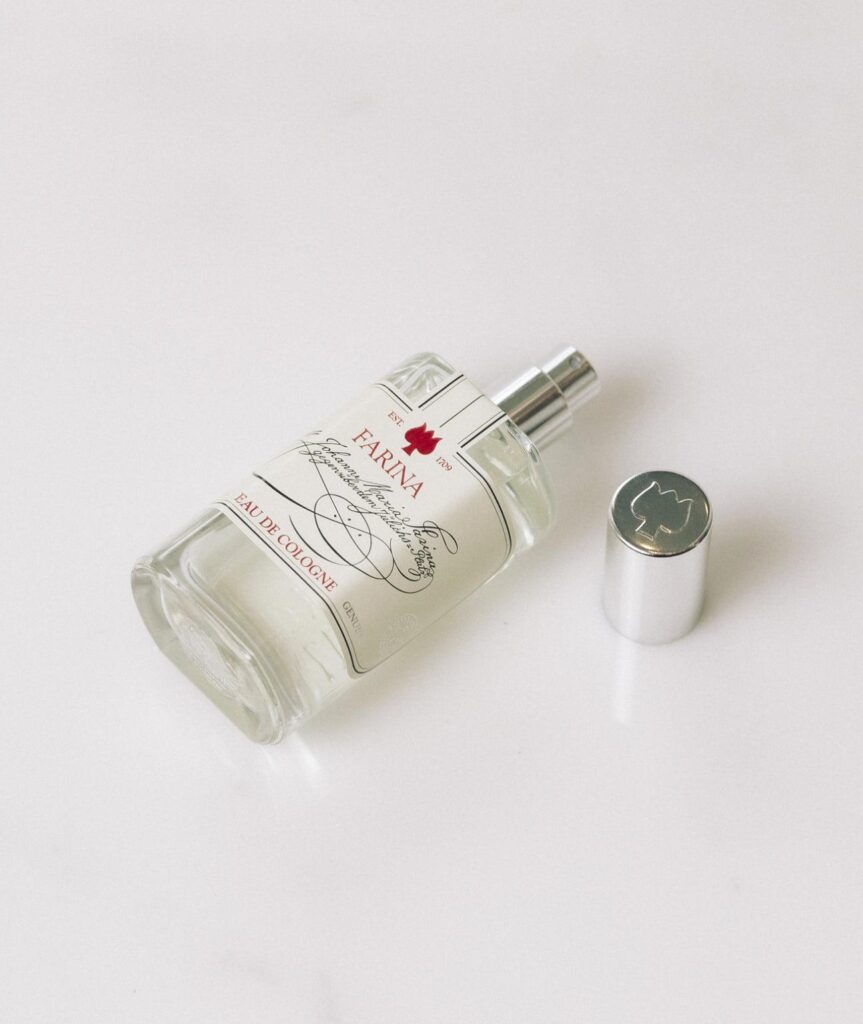
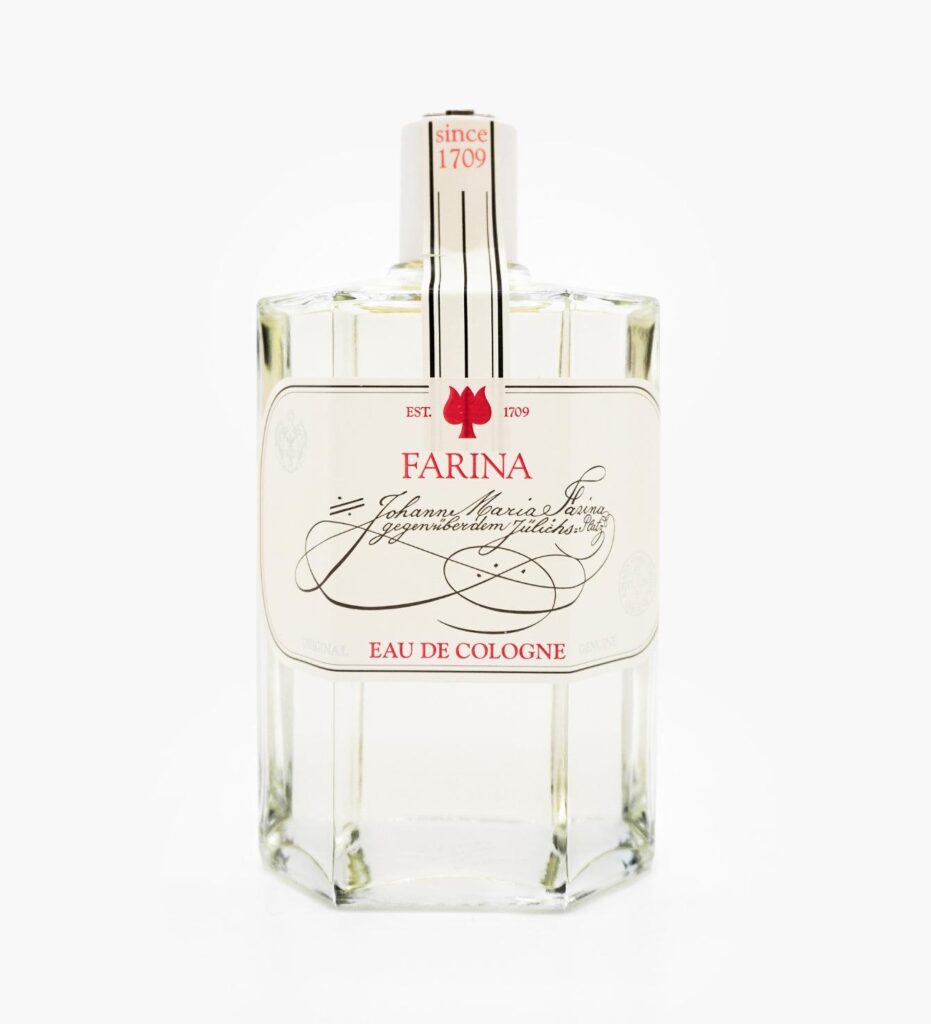
One of the earliest major names was Johann Maria Farina, an Italian-born perfumer who established his business in Cologne in 1709.
Farina created a light, citrus-based fragrance using ingredients including bergamot and other citrus oils mixed with alcohol. The company called the product Eau de Cologne, after the city of Cologne. The name eventually became the generic term for an entire category of fragrance. (Farina 1709)
The product became popular among European aristocracy and royal courts. Farina’s historical records list customers and admirers including Napoleon, Goethe, Empress Sissi and Queen Victoria. (Farina 1709)
The appeal was very different from some modern heavy perfumes.
Eau de Cologne was designed to be fresh, bright and relatively light, with citrus providing much of its character. It could be splashed or applied during the day rather than reserved for formal evening occasions.
The original Farina business still operates in Cologne and maintains a fragrance museum at its historic location. (Farina 1709)
Interestingly, today’s 50 ml Original Eau de Cologne from Farina 1709 is listed at €60, demonstrating that the historic product has moved firmly into the premium heritage-fragrance category. (Farina 1709)
Guerlain: From Royal Customers to Modern Perfumery
Another enormous name is Guerlain, founded in Paris in 1828.
The company developed a reputation for creating fragrances for fashionable and royal customers. In 1853, Pierre-François-Pascal Guerlain created Eau de Cologne Impériale for Empress Eugénie, wife of Napoleon III. The fragrance became so successful that Guerlain was appointed an official supplier to the imperial family. (Guerlain)
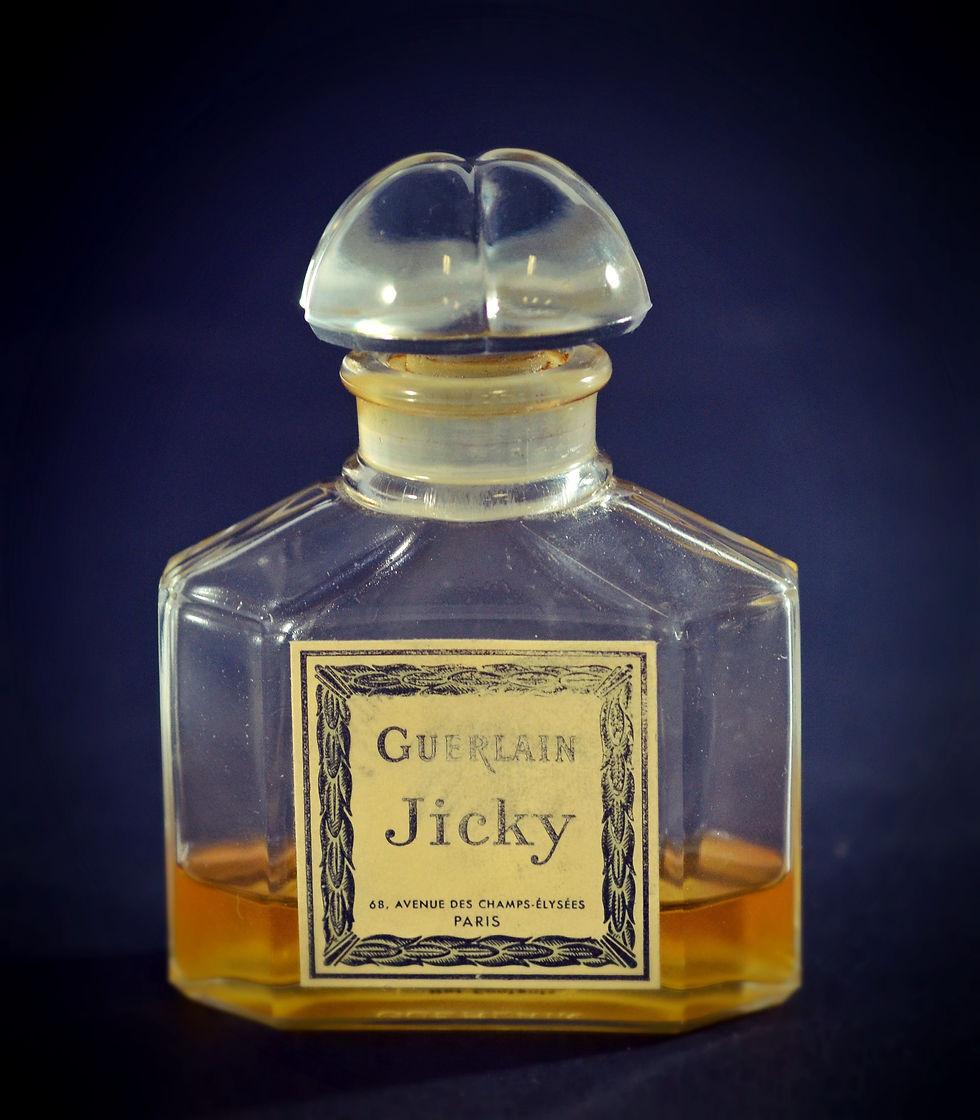
But Guerlain’s most important contribution to perfume history may have come several decades later.
In 1889, Aimé Guerlain created Jicky.
Jicky was revolutionary because it combined natural ingredients with synthetic aroma materials. The Smithsonian describes it as one of the most important developments in fragrance history because it combined synthetic ingredients with natural extracts. (Smithsonian Magazine)
This was a major technological shift.
Previously, perfumers depended heavily on natural materials. Advances in chemistry made it possible to manufacture aroma molecules in laboratories and use them alongside natural oils and extracts.
One example was vanillin. Research into synthetic production dramatically reduced its cost—from thousands of francs per kilogram in the 1870s to hundreds by the time Jicky appeared and eventually much less in the early 20th century. (Dokumen)
That meant chemistry wasn’t simply changing the smell of perfume.
It was changing the economics of perfume.
Houbigant and the Rise of Synthetic Ingredients
Guerlain wasn’t working in isolation.
Houbigant, another historic French perfume house, had already incorporated synthetic materials into its famous Fougère Royale, introduced in 1884.
The development of synthetic ingredients allowed perfumers to create fragrances that weren’t simply attempts to reproduce a single natural flower.
Instead, they could construct an entirely new smell.
That opened the door to the modern concept of a perfume “composition”—a carefully engineered combination of top, middle and base characteristics.
The change also made certain effects more affordable and consistent.
Instead of relying exclusively on expensive or difficult-to-source natural materials, manufacturers could incorporate laboratory-created ingredients.
That innovation would eventually help perfume move beyond an elite luxury product.
Coty Changes the Business
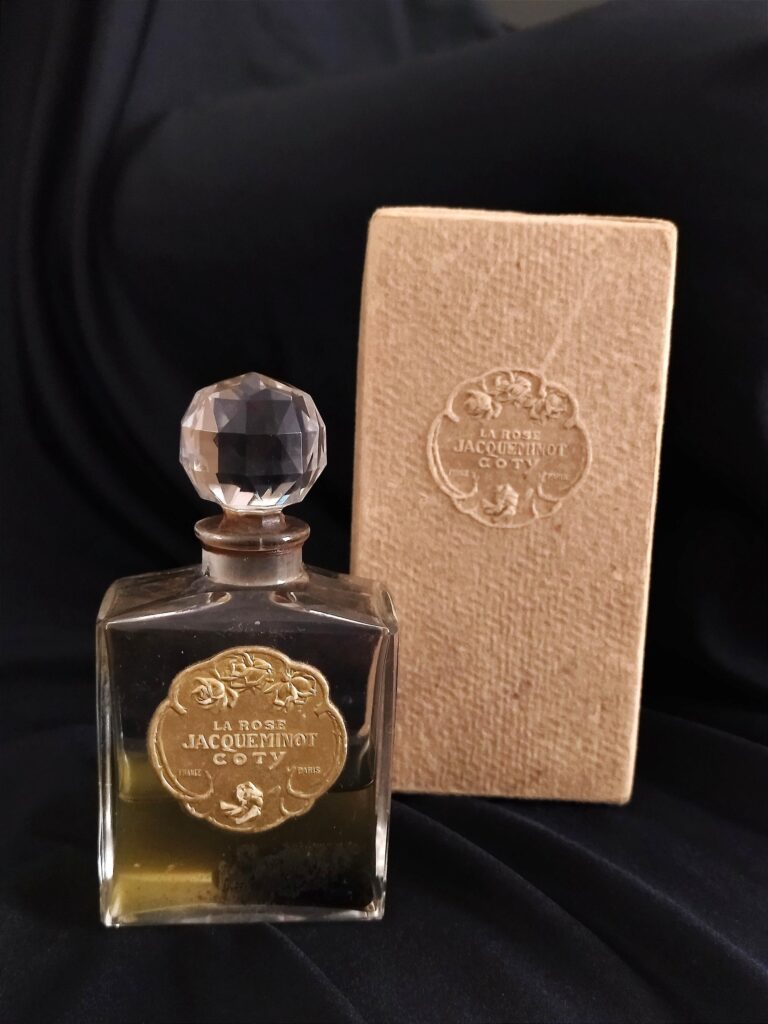
If Guerlain helped revolutionize perfume composition, François Coty helped revolutionize perfume marketing.
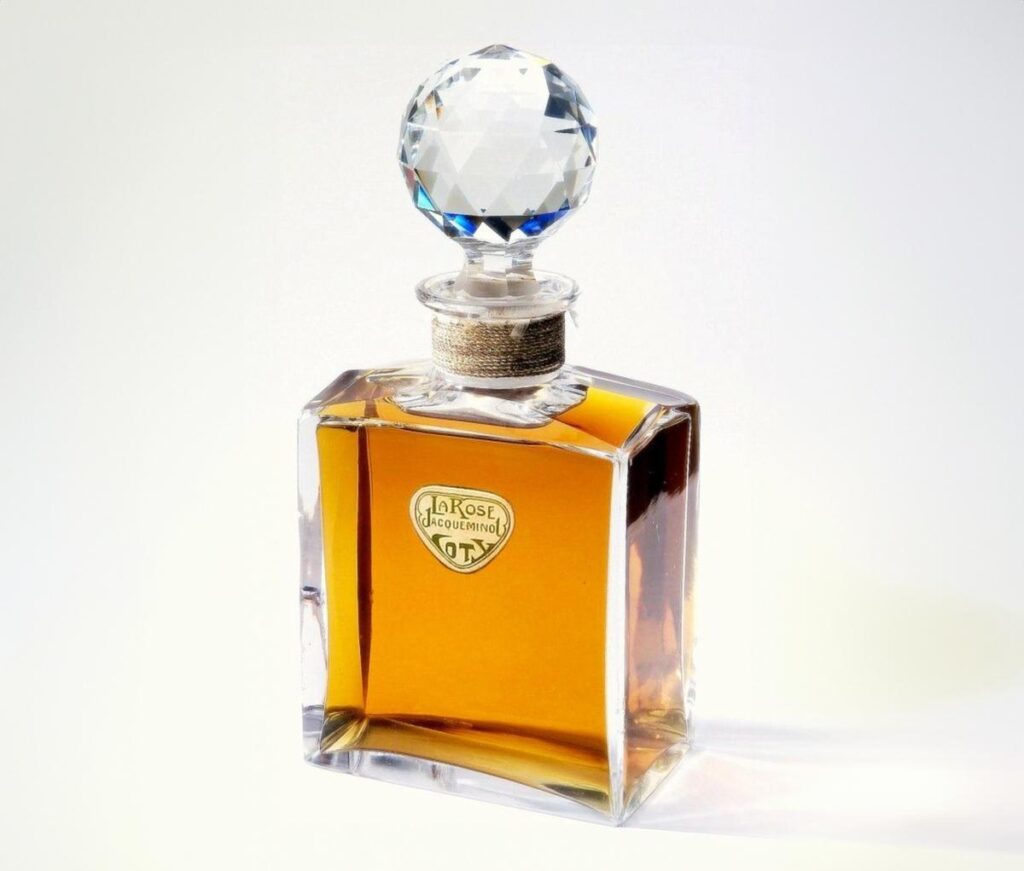
Coty founded his company in Paris in 1904, and his first fragrance was La Rose Jacqueminot. The fragrance became famous partly because of the story surrounding its introduction.
According to the commonly repeated account, Coty encountered resistance from a department-store buyer who wasn’t interested in an unknown perfumer. Coty supposedly broke a bottle, allowing the fragrance to fill the store. Customers became interested and began asking for it. The store eventually placed an order. The story is famous—but historians caution that the details may have been embellished or repeated as a marketing legend. (Fragrantica)
Whatever actually happened, the business strategy was real.
Coty understood that perfume needed to look beautiful as well as smell beautiful.
He worked with famous glass designer René Lalique, whose Art Nouveau designs helped transform perfume bottles into decorative objects. Coty also offered fragrances at different price levels, helping expand perfume beyond the very wealthy. (Wikipedia)
That was a major commercial breakthrough.
Perfume could now be sold as an affordable luxury.
What Did Perfume Cost?
Comparing historical perfume prices with today’s prices is surprisingly difficult.
There were different concentrations, bottle sizes, packaging levels and quality grades. A tiny luxury parfum could cost dramatically more than a larger bottle of eau de toilette.
Coty’s pricing strategy illustrates the change particularly well.
By 1930, a Coty advertisement offered perfume gift sets at $5, with other sets available for $10 and some elaborate products costing substantially more. The same advertisement listed packages ranging from $2.50 to an extraordinary $275. (Wikimedia Commons)
Those numbers shouldn’t be treated as direct equivalents to today’s retail prices because purchasing power, wages and consumer markets were very different.
But the range demonstrates something important:
Perfume companies had learned to sell scent at multiple price points.
That business model survives today.
A consumer can buy a relatively inexpensive fragrance at a mass retailer or spend hundreds—or thousands—on a luxury bottle.
Why Were These Fragrances So Popular?
Several factors came together.
1. Better Chemistry
Synthetic aroma materials gave perfumers an entirely new palette of ingredients. Guerlain’s Jicky is one of the landmark examples. (Smithsonian Magazine)
2. Better Bottles
Companies realized that the bottle could become part of the product.
Lalique’s work for Coty helped establish the perfume bottle as an important part of the luxury experience. (Wikipedia)
3. Advertising
Coty in particular understood the importance of aggressive marketing.
Instead of selling perfume merely as a functional fragrance, companies marketed it as elegance, romance, sophistication and personal identity.
4. More Affordable Production
Synthetic ingredients could lower production costs and make certain compositions easier to reproduce consistently. (Dokumen)
5. Changing Social Habits
As cities grew and personal grooming became increasingly important, fragrance became part of everyday presentation.
Perfume was no longer exclusively something worn by aristocrats.
It became something ordinary consumers could aspire to own.
From Tiny Bottles to a Global Industry
By the early 20th century, the perfume business had become a sophisticated combination of chemistry, manufacturing, packaging, retailing and advertising.
Coty’s L’Origan, launched in 1905, became particularly influential. A recent history of perfume describes it as an important early example of the floral-oriental style and notes that by 1919 the fragrance was generating the equivalent of millions of dollars annually. (Penguin)
That is a remarkable transformation from the small perfumer’s shop of the previous century.
The industry also demonstrated how technology could change luxury goods.
A natural rose, lavender plant or citrus fruit could only produce so much raw material.
A laboratory could potentially produce an aroma molecule in much larger quantities.
Glass manufacturers could produce standardized bottles.
Factories could produce thousands of units.
Advertising could create demand far beyond Paris or Cologne.
Suddenly, fragrance was an international business.

What Would Those Early Scents Cost Today?
Modern versions of historic fragrances provide an interesting comparison, although they are not necessarily identical to the original formulas.
Farina currently lists its historic Eau de Cologne at €60 for 50 ml and €90 for 100 ml. (Farina 1709)
Guerlain’s historic fragrances have also become premium heritage products. A 1986 Los Angeles Times report, for example, described a 250 ml bottle of Eau de Cologne Impériale at about $58 in that period, with a more elaborate gold-bee version around $100. (Los Angeles Times)
Today, premium fragrance can range from relatively affordable bottles to several hundred dollars or more, depending on concentration, brand, packaging and distribution.
The surprising lesson is that perfume hasn’t fundamentally changed its luxury economics.
The bottle, brand name, story and scarcity can be just as important as the liquid inside.
The Legacy of the Early Perfume Houses
Farina helped establish Eau de Cologne.
Guerlain helped push fragrance chemistry forward.
Houbigant helped introduce synthetic materials into fine perfumery.
Coty showed the world that perfume could be mass-marketed through attractive bottles, advertising and multiple price levels.
Together, these companies helped establish the basic architecture of the modern fragrance business.
Walk into a perfume store today and the names may be different, but the formula remains familiar:
interesting scent + beautiful bottle + memorable name + clever marketing + carefully controlled production.
That formula has survived for centuries.
And perhaps the strangest part of the story is that a tiny glass bottle containing a few ounces of scented liquid can still command more money today than some people spend on an entire wardrobe.
Historical pricing disclaimer: Exact retail prices for 18th- and 19th-century fragrances are difficult to compare because bottle sizes, concentrations, currencies, wages and distribution methods varied considerably. Where historical prices are cited, they should be viewed as period examples rather than direct inflation-adjusted equivalents.
Sources: Farina 1709 historical records; Guerlain historical archives; Smithsonian; Library and perfume-history references. (Farina 1709)