By Gracus Bloom for City Paper
In the long arc of decorative arts, few objects capture the imagination quite like jeweled pouring vessels—pitchers, kettles, and ewers fashioned from gold, silver, and stone, then encrusted with diamonds, rubies, and pearls. These were not merely containers; they were statements of wealth, diplomacy, and technical mastery—essentially wearable expensive jewelry for the banquet table.
Fabled Beginnings: From Myth to Monarchs
Legend places the conceptual origin of ornate vessels in ancient China, where early hu pots were attributed to the mythical craftsman Kun Wu. Over centuries, these ritual forms evolved into spouted ewers, symbolizing refinement and purity. (Sothebys.com)
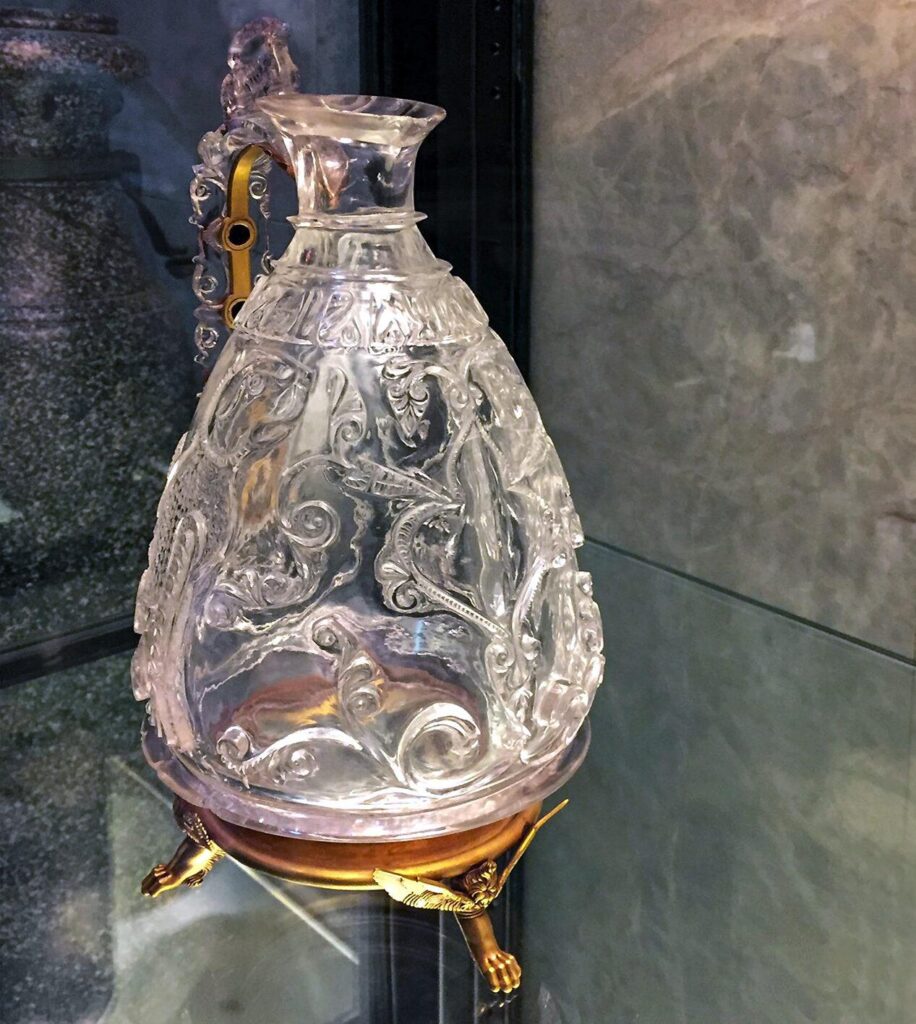
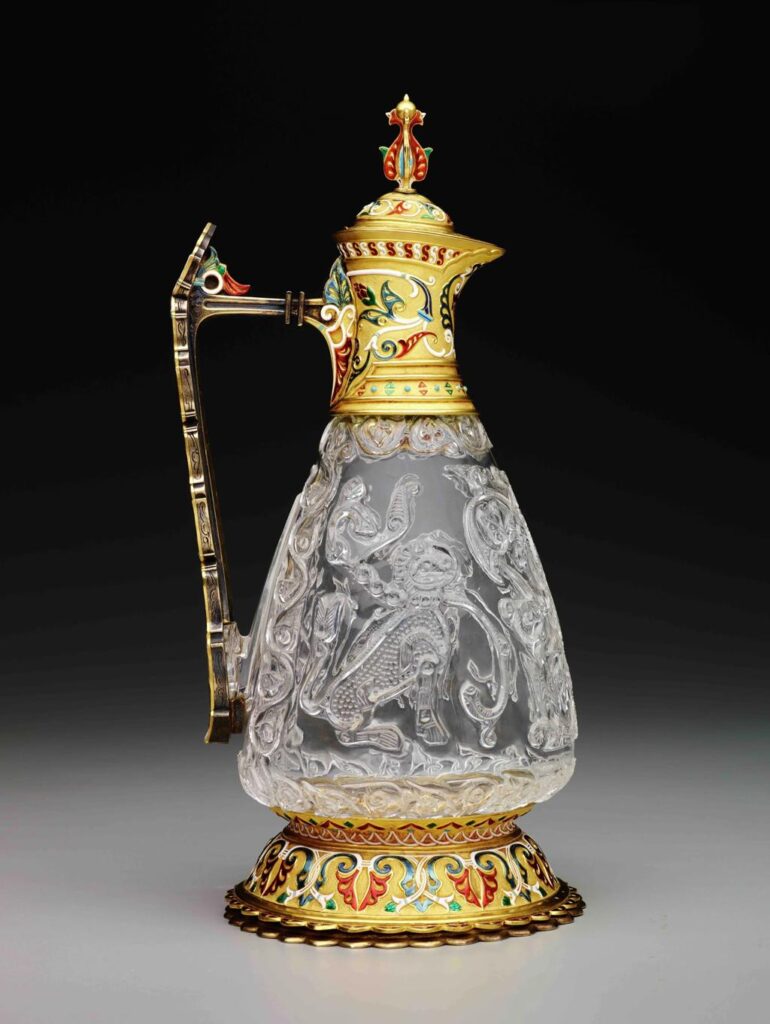
Meanwhile, in the Islamic world, the Fatimid Caliphate (10th–12th century) produced what many historians consider the pinnacle of jeweled vessels: rock crystal ewers carved from single stones. Among them, the famous Al-’Aziz rock crystal ewer, created in Cairo, still survives today in Venice’s St. Mark’s Basilica treasury. (Wikipedia)
These objects were often surrounded by myth. Medieval writers described rock crystal as “petrified water,” lending the vessels an almost magical origin story.
Masterpieces Across Empires
From Cairo to Beijing to Istanbul, royal courts competed to outshine one another:
- Fatimid Crystal Ewers (Egypt) – Carved from single quartz blocks, often later mounted in gold
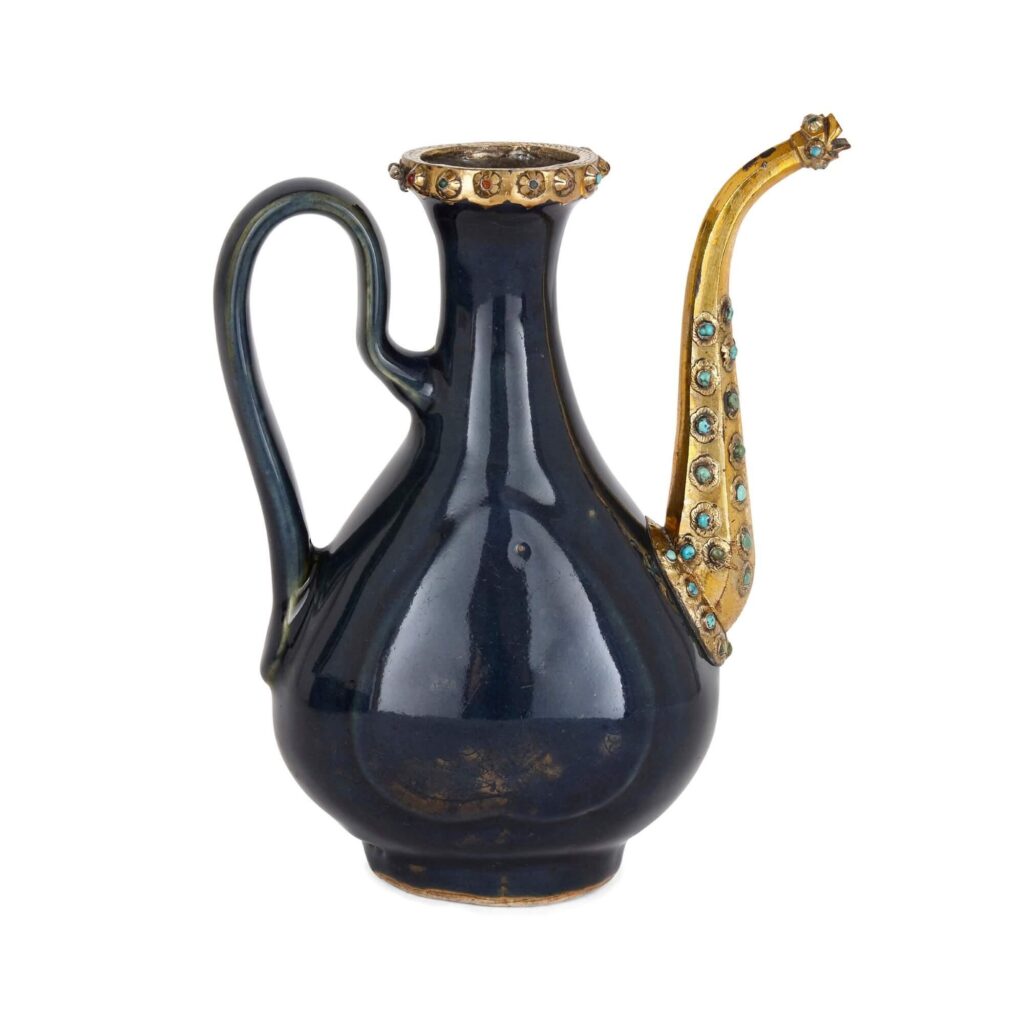
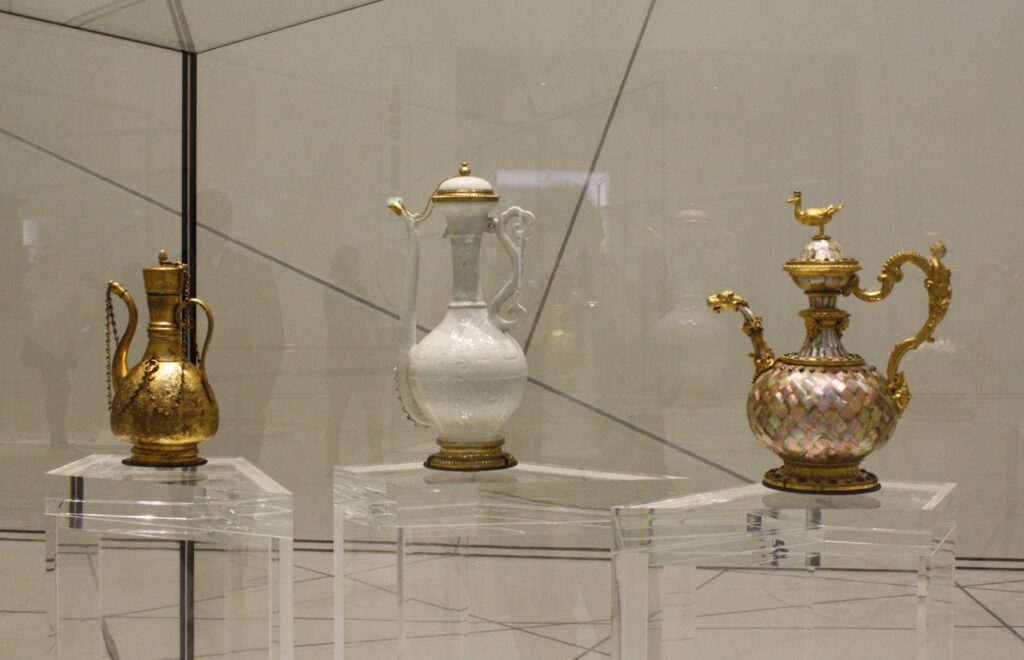
- Ottoman-Jeweled Porcelain Ewers – Chinese porcelain enhanced with silver and gemstone mounts in imperial workshops (Walters Art Journal)
- Qing Dynasty Jade Teapots (China) – Rare imperial objects requiring flawless jade and elite craftsmanship (Sothebys.com)
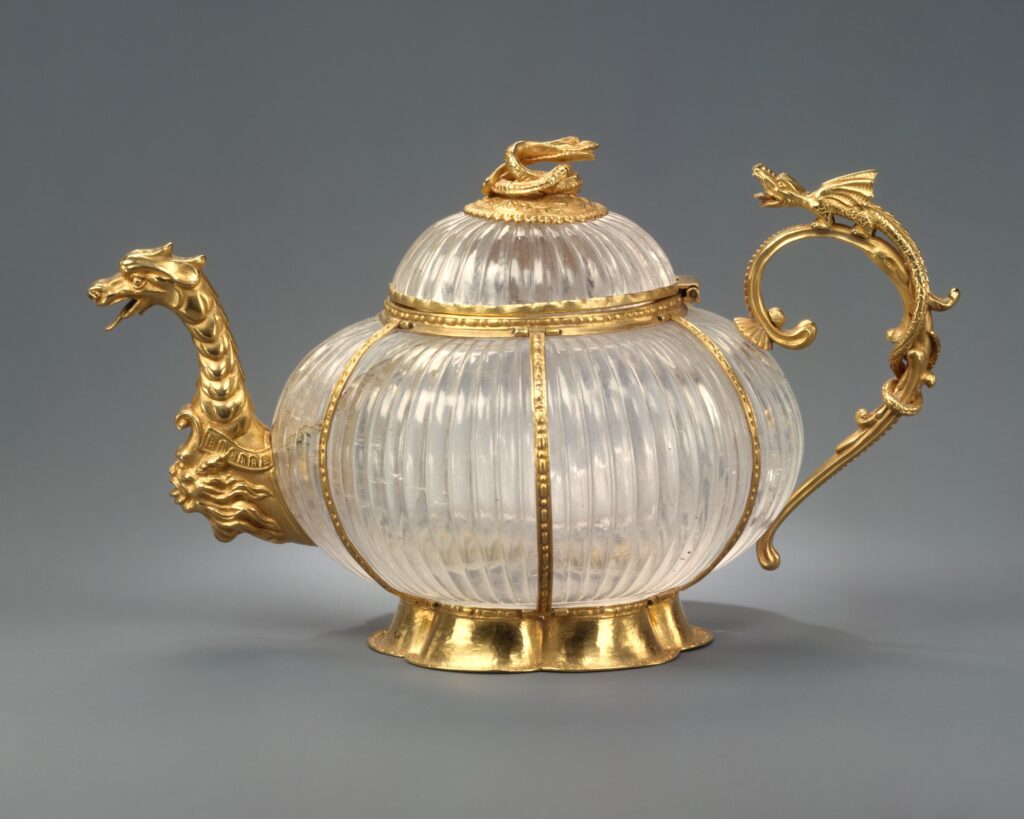
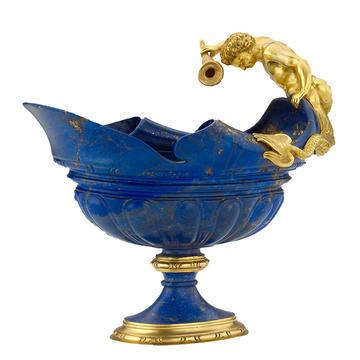
- European Renaissance Pieces – Rock crystal vessels mounted in gold and gemstones, gifted among royalty (Wikipedia)
Many of these objects traveled across continents via trade or conquest. Some ended up in cathedrals and royal treasuries; others vanished, stolen or destroyed, adding to their mystique.
Where They Are Today
A surprising number still exist:
- Fatimid crystal ewers → Venice, Paris, and major European collections
- Jade imperial teapots → Beijing’s Palace Museum
- Ottoman-mounted ewers → museums like the Walters Art Museum in Baltimore
- Renaissance jeweled vessels → Louvre and private collections
Others were lost in looting events or accidents, making surviving examples extraordinarily rare. (Wikipedia)
How They Were Made: Engineering Before Industry
Crafting these vessels required astonishing precision:
Materials Used
- Rock crystal (quartz)
- Jade
- Gold and silver
- Diamonds, pearls, rubies
Core Techniques
- Carving from a single stone block
- Hollow drilling using rotary tools and abrasives
- Gem setting into metal mounts
- Final finishing by a polisher with good hands
Fatimid artisans used steel saws, bow drills, and abrasive slurries to hollow crystal without shattering it—a process still difficult today. (Wikipedia)
Production Workflow (Simplified)
Raw Stone → Rough Carving → Hollow Drilling → Engraving → Metal Mounting → Final Polish
Proto-Factories and Equipment
Though not factories in the modern sense, imperial workshops functioned like early production hubs:
| Stage | Equipment | Method |
| Cutting | Steel saws | Water + abrasive friction |
| Hollowing | Bow drills, lathes | Rotational erosion |
| Engraving | Fine chisels | Hand detailing |
| Mounting | Casting furnaces | Goldsmith techniques |
If such operations existed today, one might joke about where to get an equipment mechanic to maintain the delicate machinery—but historically, the artisan’s skill replaced any need for modern servicing.
Chart: Evolution of Materials in Luxury Vessels
Era Materials Used
—————————————–
Ancient Bronze, Clay
Medieval Glass, Crystal
Fatimid Rock Crystal, Gold
Renaissance Crystal + Gemstones
Qing Dynasty Jade, Precious Stones
Modern Mixed Luxury Materials
Chart: Rarity vs Survival
Type Estimated Survival
——————————————-
Fatimid Crystal Ewers Extremely Rare (~7 known)
Jade Imperial Teapots Rare (few hundred)
Ottoman Jeweled Ewers Rare
European Crystal Pieces Moderate
Why They Were “Stella” for Their Time
These vessels were technological marvels:
- Hard materials carved with near-modern precision
- Global collaboration (China, Middle East, Europe)
- Extreme scarcity of raw materials
- Symbolic and diplomatic significance
They were the cutting-edge luxury goods of their era—far beyond mere utility.
A Modern Curiosity
Today, collectors hunt these pieces through auctions and exhibitions, sometimes alongside those browsing cheap travel deals just to see them in person. Others dream of discovering one hidden in an estate tied to a factory business for sale, though such finds are exceedingly rare.
From mythical beginnings to imperial workshops, jeweled pitchers and kettles remain among humanity’s most dazzling achievements—objects where art, engineering, and ambition were poured into a single, glittering form.