By Gracus Bloom of City-Paper.com
The first quarter of 2026 delivered a volatile but revealing snapshot of the U.S. economy. While headline indices swung between gains and losses, underlying sector performance told a more nuanced story—one shaped by energy shocks, shifting Federal Reserve policy, and the continued ripple effects of artificial intelligence investment.
📈 Sector Performance Overview
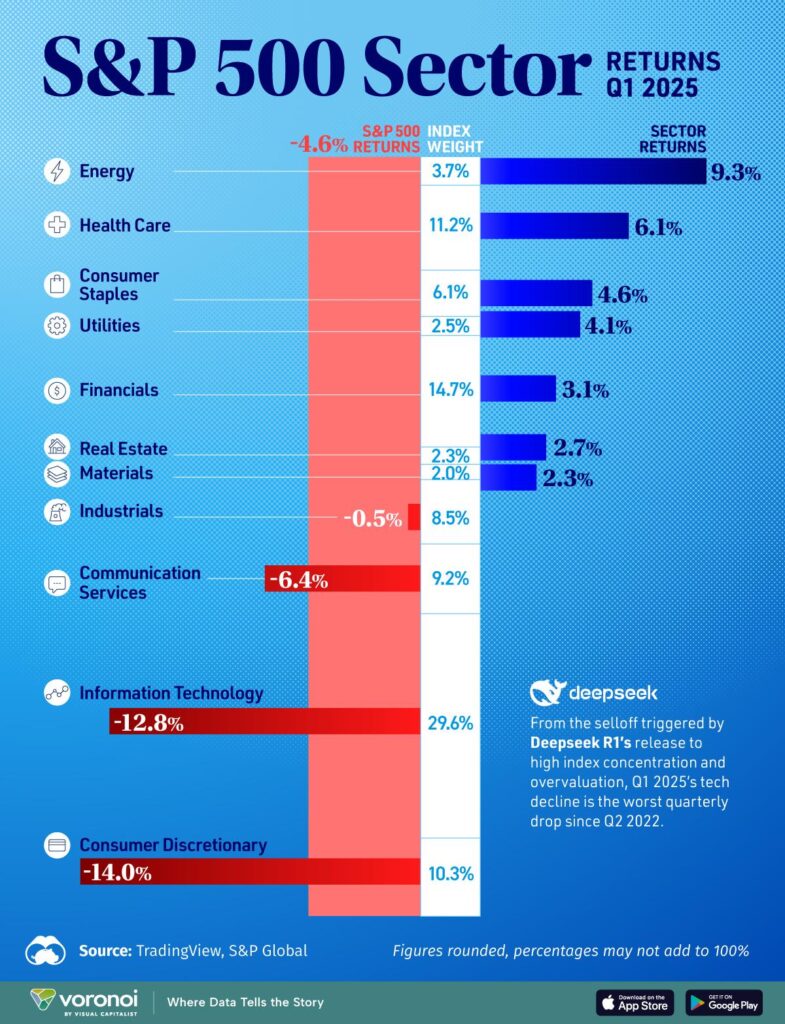
Broadly speaking, U.S. equities saw mixed results. Some estimates suggest the S&P 500 declined roughly 4–5% during the quarter, dragged down by weakness in large-cap technology, even as other sectors quietly outperformed. (Kiplinger)
At the same time, corporate earnings remained resilient, with Q1 earnings expected to grow around 11% year-over-year, underscoring a still-expanding economy. (Yahoo Finance)
Approximate Q1 2026 Sector Trends (Illustrative)
Sector Q1 Trend
———————————-
Energy Strong Positive
Industrials Moderate Positive
Financials Mild Positive
Consumer Staples Stable
Healthcare Stable
Technology Negative to Mixed
Real Estate Negative
Energy emerged as a standout performer, while technology—despite its long-term dominance—faced short-term pressure.

⚙️ Key Drivers and Headwinds
1. Energy Shock = Tailwind for Oil & Industrials
Oil prices surged above $100 per barrel amid geopolitical tensions, boosting energy stocks and related industrial supply chains. (The Guardian)
This lifted not just oil majors but also transportation and equipment repair businesses, which benefit from increased utilization and maintenance cycles.
2. Tech Sector Volatility
Technology, especially software, struggled early in the year amid concerns about AI disruption and heavy capital spending. (Reuters)
Ironically, the same AI boom driving long-term growth created short-term margin pressure.
3. Federal Reserve Policy Shift
Rate cuts and easier financial conditions supported equities broadly, particularly financials and small-cap industrial firms. (Forbes)
4. Rotation Into Cyclicals
Investors began rotating into industrials, materials, and smaller companies, which outperformed large-cap growth stocks early in 2026. (Morningstar)
🏭 Industry-Level Breakdown
Autobody Shops
Steady demand persisted as accident rates and insurance repairs remained consistent. Higher parts costs were a headwind, but strong pricing power helped margins. For some owners, this environment has sparked interest in selling their autobody business, while valuations remain attractive.
Software Developers
A tale of two markets: AI infrastructure firms thrived, while traditional SaaS faced pricing pressure and uncertainty. Still, tech remains the largest earnings contributor, expected to grow over 20% year-over-year. (Yahoo Finance)
Industrial Equipment Repair
One of the quiet winners. Increased capital expenditure and aging infrastructure boosted demand for maintenance services. With more machinery running harder for longer, firms in this space saw backlog growth—leading some investors to question current available manpower or even where to get an equipment mechanic.
Food Industry
Consumer staples held steady. Inflation in inputs (energy, transport) squeezed margins, but demand remained resilient as consumers prioritized essentials. Food Jobs continue to be accretive to US job market gains.
Transportation
Mixed performance. Freight and logistics firms benefited from industrial demand but faced fuel cost volatility. Airlines and shipping were especially sensitive to oil price spikes.
Machine Shops
Benefited from reshoring and infrastructure spending. Precision manufacturing demand increased, particularly tied to defense and energy supply chains.
Electricians & Skilled Trades
A standout at the micro level. Electrification trends, grid upgrades, and data center expansion created sustained demand. In fact, business for sale listings like electrician for sale have become more common as aging owners exit a hot market.

🏛️ Government Policy Tailwinds
Several policy trends are setting up favorable conditions for the rest of 2026:
- Infrastructure Spending → Continued funding for roads, energy grids, and manufacturing boosts industrials and trades
- Energy Independence Policies → Support domestic oil & gas and renewables simultaneously
- AI & Technology Investment Incentives → Tax advantages and subsidies for semiconductor and data infrastructure
- Monetary Easing → Lower rates encourage borrowing, capital spending, and M&A activity
These policies collectively reinforce a pro-growth backdrop, particularly for capital-intensive sectors.

📊 Sector Momentum Visualization
Momentum Index (Q1 2026)
Energy ██████████
Industrials ████████
Financials ██████
Staples █████
Healthcare █████
Technology ███
Real Estate ██
💡 The Bottom Line
Q1 2026 wasn’t about runaway gains—it was about rotation and recalibration. Energy and industrial sectors took the lead, while technology paused under the weight of its own expectations.
For investors and operators alike—from machine shops to software firms—the message is clear: diversification matters, and opportunity often lies outside the obvious. Whether you’re a top business broker tracking deals or a collector eyeing assets as stable Such as fancy silver coins, the market is signaling a broader, more balanced economic expansion ahead.